
Wheels are the part of the car that gets filthy fastest — and the part that customers notice first when they look at a finished detail. Brake dust bonds to wheel surfaces chemically if left to dwell; road film builds up in spoke recesses and barrel edges where a spray rinse does nothing useful; and dried wheel cleaner leaves white deposits in finishing grooves if it is not properly agitated and rinsed. You need a brush that gets into the spoke areas, contacts the barrel face, and provides real scrubbing agitation — not just a wipe-over.
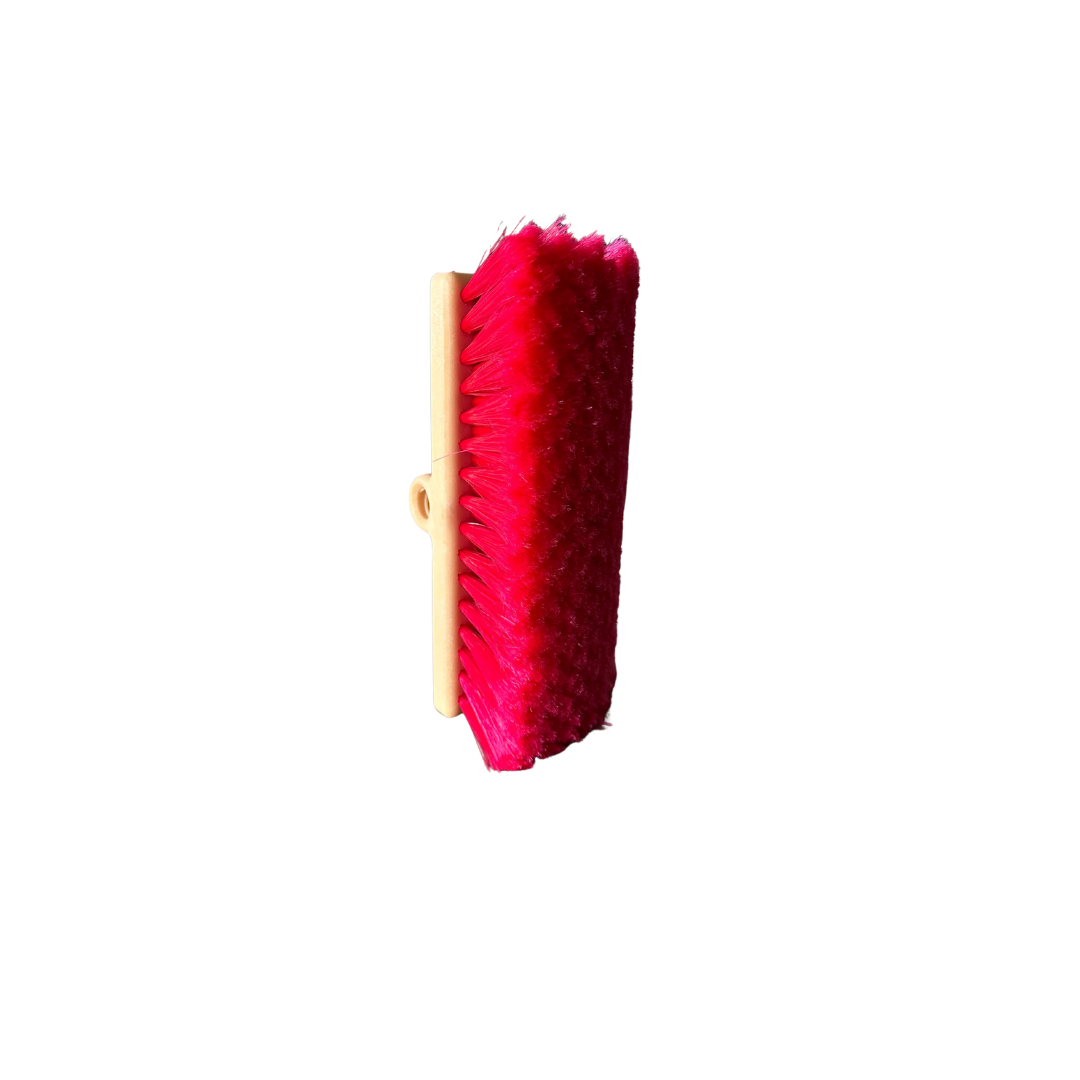
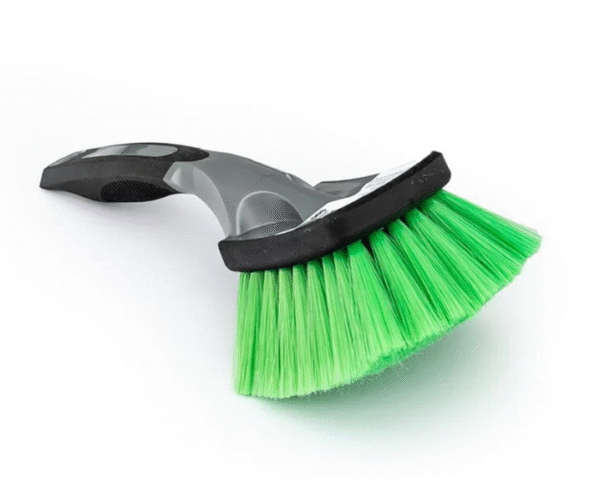
The Soft Grip Wheel Brush from Polishing Systems Inc is the standard production wheel cleaning brush for this work. The medium-length bristles reach into spoke recesses, the soft-grip handle provides fatigue-free control during the wheel cleaning step, and the bristle construction is appropriate for coated alloy and clearcoated wheel finishes when used with proper wheel cleaner chemistry.
What This Brush Is
A medium-format wheel cleaning brush with soft-grip handle and medium-stiffness bristles designed for alloy wheel face, spoke, and barrel cleaning. Compatible with wheel cleaner spray and APC wheel cleaning workflows. Appropriate for coated alloy, painted, and powder-coated wheel finishes — test on bare polished aluminum or chrome before use on those finishes.
Key Features and Why They Matter
- Soft-grip handle — reduces fatigue when cleaning four or more wheels per vehicle in a production detail environment. Better grip control in wet conditions.
- Medium bristle stiffness — enough agitation to dislodge brake dust, road film, and dry cleaner deposits; appropriate for coated wheel finishes without the scratch risk of a stiff-wire or very stiff-bristle brush.
- Spoke and barrel reach — bristle face and brush size allow contact with spoke interiors and barrel faces that a large-face pad or cloth cannot reach in one pass.
- Durable construction — handles the repeated chemical exposure and mechanical stress of daily wheel cleaning without bristle degradation or handle failure.
What This Brush Is NOT For
This brush is not rated for bare polished aluminum or uncoated chrome wheels — test on a small area first before using on these finishes. Not a dedicated caliper or lug nut detail brush — for very tight spaces inside wheel openings and around caliper hardware, a smaller spoke brush or detail brush is more effective. For heavily brake-dust contaminated bare aluminum wheels, use an appropriate wheel brightener chemistry and a brush rated for that surface.
Who Uses This
Professional exterior detailers who clean wheels on every vehicle as part of the wash stage. Mobile detailers who carry a dedicated wheel brush for the wheel cleaning step on every car. Car wash operators who hand-scrub wheels on premium service packages. Fleet wash technicians who clean commercial vehicle wheels at regular service intervals. Detail shops that include wheel cleaning as a standard component of every exterior detail service.
How to Use
- Pre-rinse the wheel: Rinse loose brake dust and debris off the wheel before applying brush agitation. Dragging a brush through loose grit increases scratch risk.
- Apply wheel cleaner: Spray wheel cleaner onto the wheel face and allow dwell time per the product instructions. The cleaner does the chemical lifting; the brush provides mechanical agitation to remove what the cleaner has broken down.
- Scrub with the brush: Work around the wheel face, into spoke areas, and along the barrel face. Use a rotating motion around spokes to contact the full spoke surface.
- Rinse thoroughly: Rinse with high-pressure water to flush out loosened brake dust, road film, and cleaning product residue from all wheel surfaces.
- Rinse the brush: Flush the brush bristles under clean water after use. Allow to dry before storing.
Why a Dedicated Wheel Brush vs. Using a Sponge or Cloth
Sponges and cloths cannot reach spoke interiors and barrel edges effectively and are not designed to handle brake dust — one of the most abrasive contamination types in detailing. A dedicated wheel brush with appropriate bristle stiffness concentrates agitation inside the wheel where a sponge slides past, and holds up to repeated brake dust contact without degrading. Pair this with a dedicated spoke brush for very tight wheel spoke areas, and appropriate wheel cleaner chemistry from the exterior cleaning products lineup.
Frequently Asked Questions
Is this brush safe on OEM clearcoated alloy wheels?
Yes, when used with appropriate wheel cleaner chemistry and moderate pressure. The medium bristle stiffness is designed for coated wheel finishes. Avoid excessive scrubbing pressure on any single area — let the wheel cleaner chemistry do most of the chemical work, and use the brush primarily for mechanical agitation to lift what the cleaner has broken down.
Can I use this brush on painted custom wheels?
Test in a small inconspicuous area first on painted custom wheels. Most properly clearcoated custom wheel finishes handle a medium-stiffness brush with wheel cleaner chemistry without issue. Very soft or single-stage painted finishes without clearcoat may be more sensitive — test first.
Does this brush reach inside the barrel to clean the inner wheel face?
The brush reaches the barrel edge and can contact the inner face of the wheel through the spoke openings on most open-face wheel designs. For deep barrel cleaning on zero-clearance or very small-opening spoke designs, a dedicated barrel brush with a longer, thinner handle profile provides better access.
How many wheels can I clean before the brush wears out?
A quality wheel brush used with appropriate wheel cleaner chemistry (rather than relying entirely on mechanical scrubbing) typically handles hundreds of wheel cleaning sessions before the bristle set wears down enough to affect cleaning effectiveness. Brush care — rinsing after each use and not storing with bristles compressed — extends the useful life significantly.
What is the best wheel cleaner to pair with this brush?
Match the wheel cleaner chemistry to the wheel finish type: acid-based brighteners for bare aluminum and diamond-plate (with appropriate care and PPE), iron-removing color-change formulas for coated alloy and painted wheels, and pH-neutral degreasers for lightly soiled wheels that need routine maintenance cleaning rather than heavy decontamination.