
Heavy paint defects — 1500-grit sanding scratches, deep oxidation on a neglected clear coat, water etch rings from months of outdoor storage — are not a job for a medium polish. Using the wrong product means spinning a polisher for twice as long to get half the result. The job demands a true heavy-cut compound with enough abrasive aggression to remove material efficiently, combined with diminishing abrasive technology that prevents the cut from leaving a secondary mess to clean up.
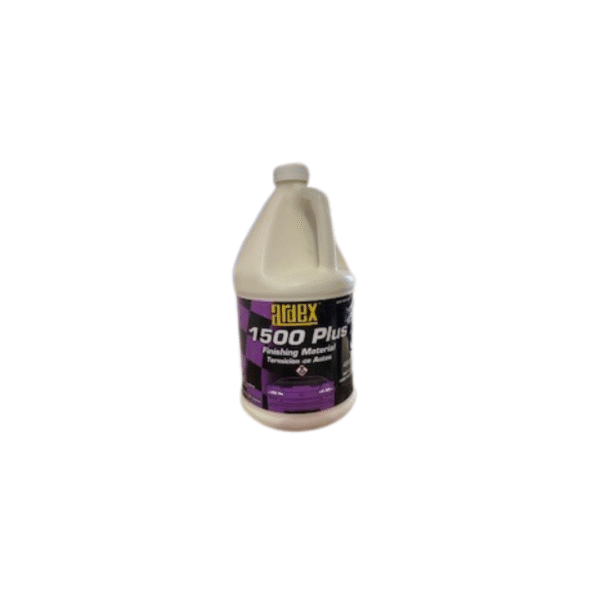
1500 Plus 1 Gallon is that product. It is formulated specifically for removing 1500-grit sanding marks and heavier defects in a single machine pass on most paint systems, returning the surface to a state ready for medium polish or finish polish without excessive additional leveling. At 1 gallon, it is the working size for production shops, fleet reconditioning operations, and serious detailers who process multiple vehicles weekly.
What 1500 Plus Is
1500 Plus is a machine-applied heavy-cut diminishing abrasive compound. The abrasive particles break down under friction during polishing, starting at aggressive cut and diminishing to a finer finish as they wear — reducing the gap between the cutting step and the finishing step. This is the compound to reach for when sanding, heavy oxidation, or deep swirl removal is the primary task.
Key Features and Why They Matter
- Heavy cutting abrasive level — removes 1500-grit and finer sanding marks, severe oxidation, and deep swirls in a single pass. So what? Less time per panel, fewer polishing stages, and faster throughput on high-defect vehicles.
- Diminishing abrasive technology — abrasive particles break down under heat and friction. So what? The compound transitions from aggressive cut to a more refined finish as you work, reducing the cleanup required before finishing polish.
- Machine-application formula — designed for use with rotary and dual-action polishers. So what? Delivers consistent results at production speed rather than the inconsistency of hand application.
- Effective on paint and gel coat — formulated for automotive clear coat, single-stage paint, and marine gel coat. So what? One product covers the compound stage for cars, trucks, RVs, and boats.
- 1-gallon professional size — enough product for repeated use in a production environment without constant reordering.
What This Is NOT For
1500 Plus is a heavy-cut compound — it should not be used as a finishing step. After cutting with 1500 Plus, a medium polish and finishing polish are typically required to achieve final clarity. Do not use on thin, single-stage paint that cannot tolerate aggressive cut without risk of burning through. Always test on a hidden panel. Not recommended for soft, fresh paint or very thin clear coat.
Who Uses This
Body shop detailers who need to level fresh blend and respray work. Paint correction specialists handling severe customer vehicles. Fleet reconditioning shops processing large numbers of oxidized commercial vehicles. Marine detailers working on neglected gel coat. Anyone who has tried to remove 1500-grit sanding marks with a medium polish and walked away frustrated.
How to Use
- Pad pairing: Use a wool or heavy-foam cutting pad for maximum cut. A firm orange or green foam cutting pad works for DA polishers on moderately defect-heavy paint.
- Apply: Place 4-5 pea-sized drops of compound on the pad before starting the machine.
- Work section: Work in 18×18-inch sections at medium-high speed (rotary: 1,200-1,800 RPM; DA: speed 4-5 on most machines).
- Multiple passes: Make 4-6 overlapping passes until the compound breaks down and becomes transparent.
- Wipe off: Remove residue with a clean, dry microfiber towel and inspect under direct light.
- Follow up: Progress to a medium polish and finishing polish to achieve final gloss and clarity.
Why Buy 1500 Plus vs. Consumer Compound
Consumer compounds from retail auto parts stores are engineered for light to moderate defect removal by hand or with entry-level DA polishers. They lack the cutting power to efficiently address 1500-grit sanding marks or serious oxidation in production settings. 1500 Plus is formulated at professional concentration and abrasive loading, meaning you get real cut per pass instead of spending hours on a single panel. The 1-gallon size also reduces per-ounce cost significantly for shops that use compound regularly.
Frequently Asked Questions
Can I use 1500 Plus by hand?
1500 Plus is designed for machine application. By hand, you will not generate the friction and heat needed to activate the diminishing abrasive chemistry properly, and the cut will be far below what the product is capable of. Use a rotary or dual-action polisher for real results.
What grit sanding marks will 1500 Plus remove?
1500 Plus is formulated for 1500-grit and finer sanding marks. For coarser sanding (800-1200 grit), a more aggressive compound or wet sanding step may be required before using 1500 Plus as a secondary compound pass.
Does it work on gel coat?
Yes — 1500 Plus is effective on marine gel coat, RV gel coat, and fiberglass surfaces. Gel coat is generally harder than automotive clear coat, so cutting times may be slightly longer. Use a wool or firm foam cutting pad for best results on oxidized gel coat.
How does 1500 Plus fit into a 3-step paint correction?
In a 3-step system: 1500 Plus handles the heavy cut (step 1), a medium polish removes the haze left by compounding (step 2), and a finishing polish delivers final gloss and clarity (step 3). For paint with moderate defects only, 1500 Plus can be skipped in favor of starting at the medium polish step.
How much does 1 gallon cover?
Coverage depends on defect severity, pad type, and panel size. As a rough guide, 1 gallon of 1500 Plus will cover approximately 15-30 full vehicle paint correction jobs at normal application rates. Severe defect correction consumes more product per panel than light sanding mark removal.