A brush that scratches paint is worse than no brush at all — it defeats the purpose of the wash and creates defects that require polishing to correct. The key variable in a wash brush is the bristle tip: an unflagged bristle with a blunt-cut end concentrates contact pressure at a point, which can mar paint at the contact tip even under light washing pressure. A flagged bristle with split, feathered tips distributes that same contact pressure across multiple soft filament ends — dramatically reducing the risk of brush-induced scratching on painted automotive surfaces.
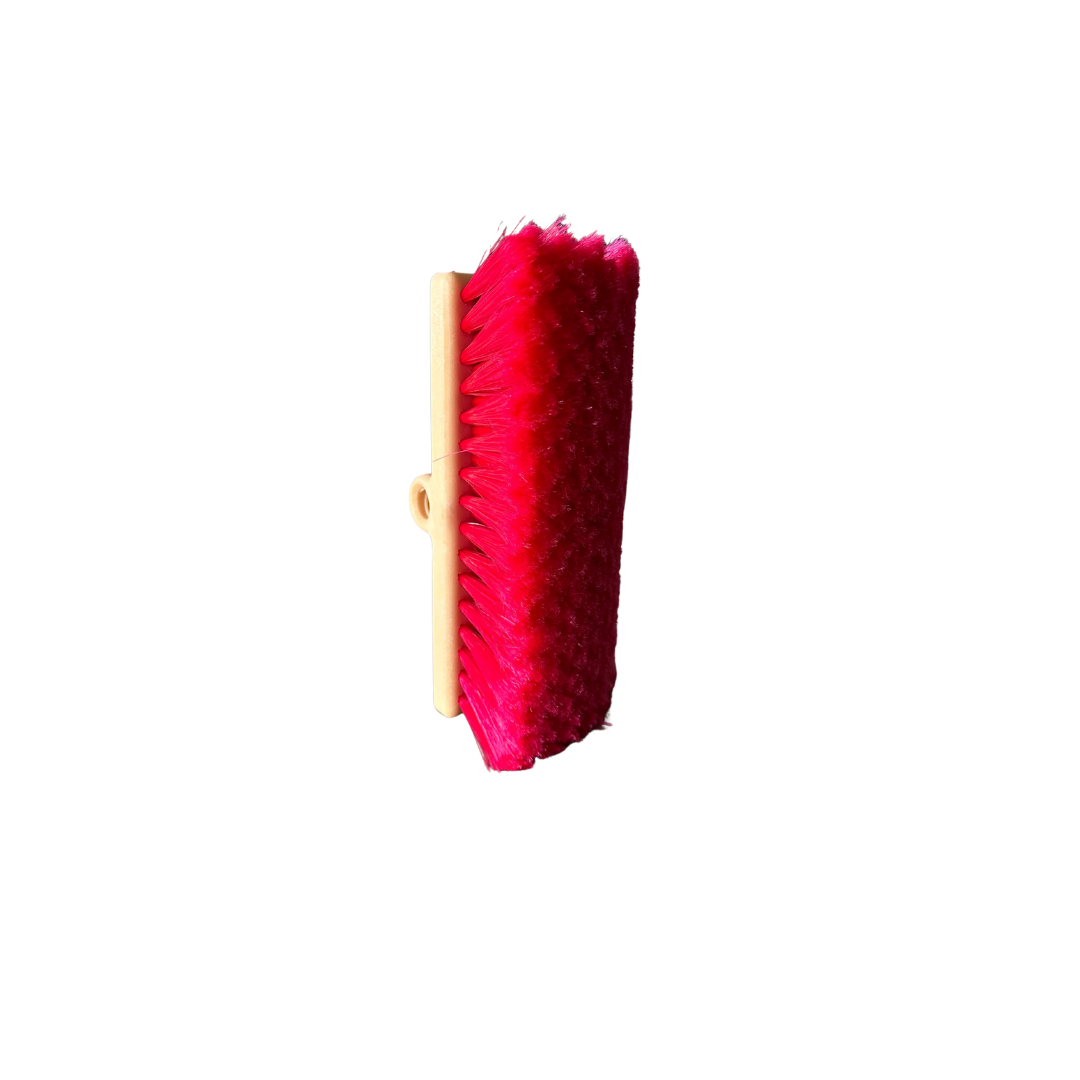
The Red Wash Brush — Flagged uses that flagged tip construction for a washing experience that is effective for loosening road film and surface contamination while safe on the clear coat of painted vehicle panels when used with appropriate wash soap lubrication.
What This Is
This is a professional vehicle exterior wash brush with flagged nylon bristles. The red brush head is mounted on a standard threaded handle connection compatible with extension poles for full-vehicle washing from ground level. Flagged bristles refer to the split-tip construction where each bristle fiber is divided into multiple fine ends at the tip — creating a softer, more paint-friendly contact surface than the same bristle material with an unflagged (blunt) tip. Compatible with the 60″ Plastic-Coated Handle Pole and the 48″ Pole & Mitt system for extended-reach washing.
Key Features and Why They Matter
- Flagged (split-tip) bristles — each bristle fiber is split into multiple fine ends at the tip, creating a dramatically softer contact surface compared to unflagged bristles. Significantly reduces the marring risk of brush washing on automotive paint when used with proper soap lubrication.
- Nylon bristle construction — nylon is the professional standard for vehicle wash brush bristle material. It holds its shape, resists chemical exposure from wash products, and does not absorb water in a way that adds weight and reduces control during washing.
- Red brush head — the red color identifies this as the exterior wash brush in a multi-brush shop system. Color-coded brush management prevents accidental use of a brush contaminated by wheel cleaning or engine work on painted panel surfaces.
- Threaded handle socket — attaches to compatible extension poles for washing rooftops, tall sides, and out-of-reach panels from a standing position without climbing.
- Professional brush head sizing — sized for efficient coverage of automotive body panels in a wash motion, with enough bristle density to carry adequate soap and water for surface lubrication during washing.
What This Is NOT For
Even flagged bristles require proper wash soap lubrication and a pre-rinsed surface to be paint-safe. Do not use this brush on a dry surface or a surface that has not been pre-rinsed — dry brushing with any bristle type will scratch paint. This brush is designed for painted exterior panels — it is not the appropriate tool for wheel cleaning (use a dedicated wheel brush), tire scrubbing (use a stiff tire brush), or interior fabric cleaning (use an interior brush). Keep the wash brush separate from wheel and tire brushes to prevent contamination transfer to painted surfaces.
Who Uses This
Car wash attendants who hand-wash vehicles as part of a tunnel pre-wash or express detail operation, mobile detailers who wash vehicles as part of a full exterior service, fleet maintenance operators washing commercial vehicles on a regular schedule, and boat and RV owners washing large exterior surfaces where a brush provides more effective cleaning than a wash mitt on textured surfaces.
How to Use
- Pre-rinse the vehicle thoroughly: Rinse all loose contamination off the surface before applying the wash brush. Dry-brushing or brushing over un-rinsed grit causes scratching regardless of bristle type.
- Load the brush with wash soap: Submerge in a wash bucket or apply soap directly to the bristles. The soap provides the lubrication that makes flagged bristle washing paint-safe.
- Work top-to-bottom: Start at the roof and work down panels. This keeps dirty rinse water from running over already-cleaned lower sections.
- Use moderate pressure: Let the soap lubrication and brush motion do the work. Heavy pressure concentrates contact force and increases scratch risk — the correct technique is light-to-moderate pressure with the brush well-loaded with soapy water.
- Rinse frequently: Rinse both the brush and the panel section frequently during washing to remove lifted contamination before it is redistributed by subsequent brush passes.
Why Flagged Bristle Brushes vs. Unflagged or Microfiber Mitts
Microfiber wash mitts are the gentlest tool for washing delicate high-gloss and corrected paint — the deep pile lifts contamination above the paint surface rather than working it against the surface. Flagged bristle brushes are more aggressive than mitts but significantly less aggressive than unflagged brushes, and they provide advantages for textured surfaces, commercial vehicles, and RV exteriors where the textured surface and large area benefit from brush cleaning over mitt washing. For corrected show-quality paint, a mitt is the appropriate tool. For commercial vehicle and fleet washing, the flagged brush is the practical choice.
Frequently Asked Questions
Is a flagged brush safe on automotive clear coat?
Flagged nylon bristles used with proper soap lubrication on a pre-rinsed surface are significantly safer than unflagged bristles on automotive clear coat. They are not zero-marring risk — no brush is. For high-polished, paint-corrected vehicles where any microscopic marring is unacceptable, a microfiber wash mitt is the appropriate tool. The flagged wash brush is the practical choice for working vehicles, commercial vehicles, and surfaces where its efficiency advantage outweighs the minor marring risk of brush washing.
Can I use this brush with a pressure washer connection?
This is a manual wash brush, not a pressure washer brush. It does not have a flow-through water connection for pressure washer use. It is designed for use with a wash bucket and dip-load or hand-spray soap loading method.
How do I clean and maintain the brush after use?
Rinse thoroughly after each use to remove all soap and contamination from the bristles. Shake excess water from the bristles and store with bristles facing down or hanging to allow drainage and drying. Inspect bristles periodically for deformation, contamination embedding, or matting that reduces washing effectiveness, and replace the brush when bristle performance degrades.
What extension pole is compatible with this brush?
The brush uses a standard threaded socket compatible with most commercial extension poles. The 60″ Plastic-Coated Handle Pole is a compatible option for rooftop and tall-side washing reach.
Should I keep a separate brush for wheel cleaning vs. panel washing?
Yes — always keep dedicated brushes for wheel and tire cleaning separate from your panel wash brushes. Wheels accumulate brake dust, iron particles, and cleaning chemistry that, if transferred to your panel wash brush, can contaminate and potentially scratch painted surfaces during the panel wash step. Color-coded brush systems (different colors for different areas) are the professional standard for managing this contamination risk.