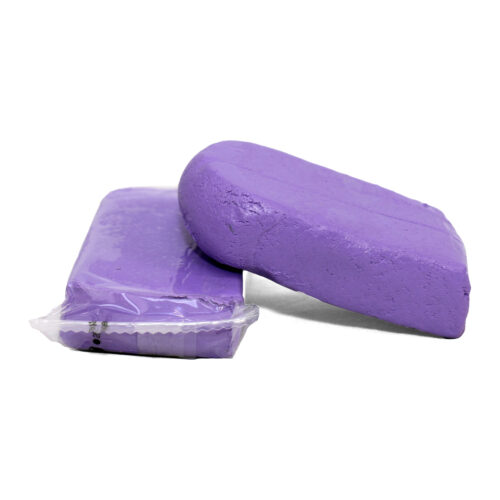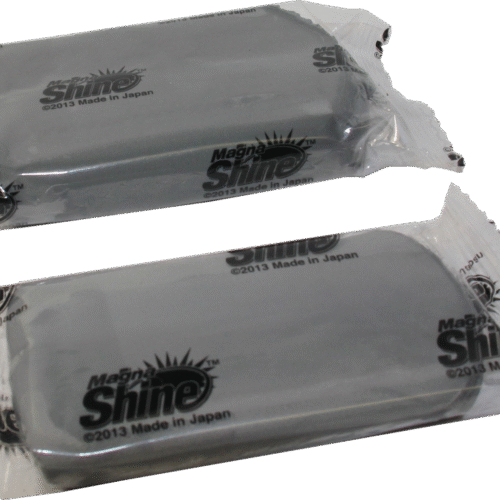

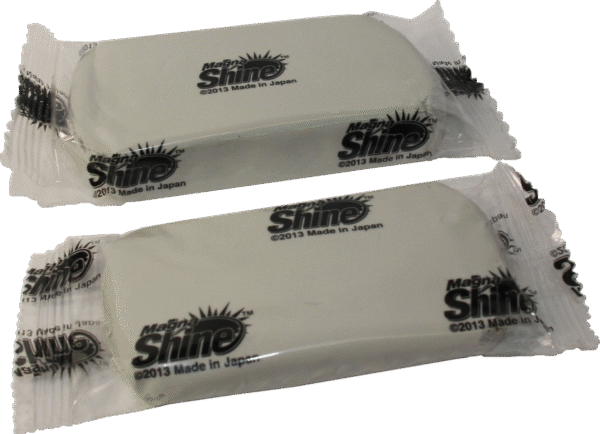
A car that has been washed and polished but not clayed still has contamination bonded to the paint surface. You can feel it with your fingertips through a plastic bag — that gritty, rough texture under the smoothness that tells you the surface is not actually clean. Spray wax and polish can mask it briefly, but the contamination is still there, and it is still oxidizing the paint underneath. Clay decontamination is the step that actually removes it.
The Magna Shine 200g White Clay Bar is the light-cut grade — engineered for paint that has been maintained regularly and needs contamination removal without aggressive abrasion. On a daily driver with normal embedded fallout, a quality light-cut clay will pull the surface completely clean and leave it smooth enough for direct application of polish or sealant. The 200-gram working size is enough for a full vehicle decontamination multiple times over before the clay needs replacement.
What Magna Shine White Clay Is
This is a polymerized clay detailing bar in a light-abrasion formulation. The clay compound physically grabs and strips bonded surface contaminants — rail dust, brake dust, tree sap, tar, industrial fallout, and road film that washing cannot remove — as it is worked across a lubricated paint surface. The white color indicates light-cut abrasion grade, which leaves less micro-marring than medium or heavy clay grades on paint in good condition.
Key Features and Why They Matter
- Light-cut abrasion grade — minimal micro-marring on well-maintained paint. Means you can clay and go straight to a finishing polish or sealant without an additional paint correction step on most vehicles.
- 200-gram professional bar — enough material to decontaminate multiple vehicles. Compared to retail 100g bars, the 200g size halves the cost-per-vehicle for high-volume shops.
- Works on paint, glass, and metal — one bar for the full exterior decontamination sequence without switching products.
- Pliable at working temperature — the clay remains workable in normal shop and outdoor temperatures without cracking or tearing under regular use pressure.
- Compatible with standard clay lubricants — works with dedicated clay lube, diluted car wash soap, or professional detailing spray.
What This Is NOT For
Light-cut clay is not the right tool for severely neglected paint with heavy industrial fallout, rail dust, or years of bonded contamination. For those situations, start with the Magna Shine 200g Dark Grey Medium-Cut Clay Bar — it has more bite for heavy contamination loads. Do not use any clay bar on dry paint — always use adequate lubricant. Never reuse dropped clay — contamination picked up from the ground will scratch paint on the next pass. Do not use on soft convertible tops or uncoated fabric.
Who Uses This
Professional detailers performing paint correction prep use light-cut clay as the first decontamination step before compounding, polishing, and sealing. Mobile detailers use it on customer vehicles during full detail packages. Enthusiasts maintaining their own vehicles between seasonal waxes rely on it to keep contamination from building up and oxidizing the clear coat. The 200g size is the right volume for solo detailers and small shops running one or two vehicles per day.
How to Use
- Wash the vehicle thoroughly and dry completely before claying.
- Break off a working piece of clay (roughly the size of a golf ball) and flatten it into a disc shape. Store unused clay in its original packaging with a small amount of clay lubricant to prevent drying.
- Mist the panel generously with clay lubricant — the surface must stay wet throughout.
- Work in straight lines across the panel, applying light pressure. Do not use circular motions — straight back-and-forth reduces the chance of marring.
- Fold and re-flatten the clay regularly to expose a clean face as it picks up contamination.
- Wipe the panel dry with a clean microfiber and check by dragging a plastic bag across the surface — it should feel completely smooth.
- Follow with polish or sealant — clay opens the surface for better bonding of waxes and coatings.
Why Buy Magna Shine Clay vs. Retail Clay Bars
Retail clay kits from auto parts stores typically include 50-100g of clay — enough for one vehicle, maybe two. The Magna Shine 200g bar gives shops and serious enthusiasts a realistic working supply at a professional cost-per-gram. The clay compound itself is formulated for consistent abrasion across the full 200g — you get the same performance on the last use as the first, not the variable results you sometimes see from low-cost retail bars that degrade quickly. Browse our full clay bars and decontamination selection for the full Magna Shine lineup.
Frequently Asked Questions
How do I know when my paint needs claying?
The plastic bag test: run a clean plastic bag over a freshly washed, dry panel. If it feels rough or gritty rather than silky smooth, there is bonded contamination on the surface that washing has not removed. Most vehicles that are driven regularly and parked outside need clay decontamination at least once or twice a year.
Should I clay before or after polishing?
Always clay before polishing. Polishing over bonded contamination reduces correction efficiency, risks scratching from trapped particles, and prevents polish and sealant from bonding properly to the paint surface. The correct sequence is: wash → clay → compound/polish → sealant or wax.
Can I drop the clay bar and keep using it?
No. A dropped clay bar must be discarded — it picks up grit and debris from the floor that will scratch paint on the next pass. This is why the 200g professional size makes economic sense: enough material that losing a piece to a drop is not a significant loss.
What lubricant should I use with this clay bar?
A dedicated clay lubricant spray is ideal. Diluted car wash soap (10:1 water to soap in a spray bottle) also works effectively. Do not use waterless wash solutions that contain wax — they can interfere with the clay’s ability to pick up contamination.
How does this compare to the dark grey medium-cut clay?
The white light-cut bar is best for well-maintained paint with normal contamination levels. The dark grey medium-cut has more aggressive bite — it removes heavier contamination faster but leaves slightly more micro-marring that requires a polish step to remove. Choose light-cut for healthy paint; choose medium-cut for neglected or heavily contaminated surfaces.