
On heavy oxidation, deep swirls, or machine-applied sanding marks, foam cutting pads can fall short — they load up, they heat up, and on severe paint or gel coat condition, they simply do not have the mechanical cutting ability to move through the defect in a reasonable number of passes. Wool pads deliver what foam cannot: genuine fiber-based mechanical cutting action that removes material efficiently on paint correction jobs where speed and aggression matter more than the final gloss out of the pad.
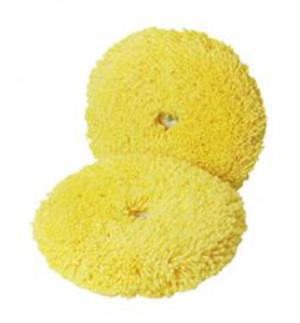
The Double-Sided Wool Blend Polishing Pad 8″ from Polishing Systems Inc adds an important efficiency advantage over single-sided wool pads: two working wool faces per pad. When the first face loads up or needs cleaning mid-job, flip to the second face and keep working. That is the difference between stopping a paint correction pass to address a loaded pad and maintaining momentum on a production-shop timeline.
What This Pad Is
An 8-inch diameter rotary polishing pad with wool blend fiber on both faces and a hook-and-loop (Velcro) or threaded back mount for attachment to a backing plate on a rotary buffer. The wool blend combines natural wool fiber — for cutting aggressiveness and heat dissipation — with synthetic fiber for durability, consistency, and reduced fiber shedding compared to 100% natural wool pads. The double-sided design provides two usable working faces per pad.
Key Features and Why They Matter
- Double-sided wool blend faces — two working sides per pad. When one face loads or fatigues during a correction pass, flip the pad and continue without stopping for pad cleaning. On a production timeline, that matters.
- 8-inch diameter — optimized for 7″ and 8″ rotary backing plates, covering substantial surface area per pass on large panel correction work.
- Wool blend construction — natural wool fiber provides the mechanical cutting action; synthetic fiber adds durability, shape retention, and reduced shedding versus 100% natural wool.
- Suitable for heavy defect removal — removes 1500-grit sanding marks, deep oxidation, heavy swirls, and marine gel coat compounding defects where foam pads fall short.
- Extended working life per pad — two faces means half the pads consumed per job compared to single-sided alternatives at the same level of correction work.
What This Is NOT For
Wool pads are cutting tools — they are not finishing pads. Do not use to apply finishing polish or to jewel clear coat. After wool pad correction, a foam polishing or finishing pad pass is required to remove the marring left by wool fiber and bring the paint to a finished surface. Not recommended for use on soft single-stage paints without careful speed and pressure control — the cutting action of wool can remove material faster than intended on very soft paint systems. Not for use on leather, vinyl, or interior surfaces.
Who Uses This Pad
Production paint correction shops running rotary machines on heavy-condition vehicles. Marine detailers compounding oxidized gel coat on boat hulls. RV reconditioning technicians addressing years of UV oxidation on fiberglass exteriors. Auto auction reconditioning shops processing large volumes of vehicles requiring cut work before finishing. For the finishing steps after this pad, pair with a foam polishing or finishing pad — see the exterior pad category for the full range.
How to Use
- Mount the pad on an 8-inch rotary backing plate. Ensure the pad is centered and securely attached before powering the machine.
- Prime the wool face with a small amount of compound or polish before the first pass — work the product into the fiber before applying to the paint surface.
- Apply compound to the pad or panel — for heavy work, apply a line of product to the panel. For lighter work, apply to the pad face.
- Start at low speed (600-800 RPM) to spread product without sling, then increase to working speed (1200-1800 RPM for most heavy correction work).
- Work in 2-foot section passes with moderate pressure, overlapping each pass by 50%.
- Flip to the second face when the working face loads or loses cutting efficiency.
- Follow with foam polishing pad to remove wool marring and finish the surface.
Why Wool vs. Foam for Heavy Correction
Foam cutting pads are excellent for moderate correction work — DA polisher compatible, easy to control, good finishing behavior. But on heavy oxidation, sanding mark removal, and production-volume paint correction, foam pads load up, require more passes, and generate more heat per unit of cutting action than wool. Wool pads move more product, cut faster, and handle heavier defects more efficiently — which is why professional production shops that do heavy correction work reach for wool pads first, then follow with foam for finishing. The compound and pad lineup at Polishing Systems Inc covers the full sequence from heavy cut to finished gloss.
Frequently Asked Questions
Can I use this pad on a dual-action (DA) polisher?
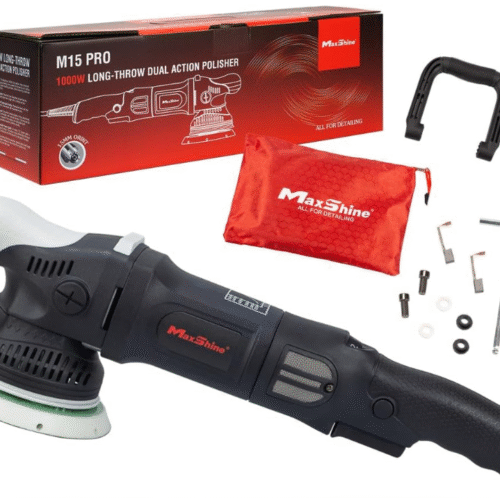
8-inch wool blend pads are typically used on rotary machines rather than DA polishers. DA polishers generate less heat and centrifugal force than rotaries, which reduces the effectiveness of wool pad cutting action. Some large-throw DA machines can work with wool pads, but for maximum cutting performance with wool, a rotary buffer is the correct machine pairing.
How do I clean a loaded wool pad?
Use a pad conditioning spur or a pad cleaning brush while the machine is running at low speed — hold the spur against the spinning pad face to eject dried compound and break up loaded fiber clumps. For thorough cleaning between jobs, wash with warm water and a wool-safe cleaner, rinse well, and allow to dry completely before the next use. Never machine-dry wool pads — heat shrinks wool fibers and distorts the pad shape.
What compound works best with this pad?
Heavy-cut compounds — like 1500 Plus or similar diminishing-abrasive compounds — are the correct product pairing for a wool cutting pad. Light polishes will not activate properly in wool fiber and will not deliver the correction benefit the pad is capable of. Match heavy pad aggression with heavy compound for efficient correction work.
Is the pad washable and reusable?
Yes — wool blend pads are washable and reusable for many correction cycles with proper care. Hand-wash with warm water and gentle detergent, rinse thoroughly, and air dry. Inspect the fiber face before reuse — if fibers are matted, compressed, or the pad backing shows wear, replace the pad to maintain consistent correction performance.