

When you are washing fleet vehicles at production speed — trucks, trailers, buses, RVs — the washing tool is as important as the chemistry. A brush that flexes unevenly, loses bristles after a few weeks, or does not hold consistent pressure against a flat trailer panel slows down every wash and delivers uneven results. The wood block backer on a quality rotary brush is not a cost-cut — it is an engineering choice. It keeps the bristle face flat and consistent against large flat surfaces, where a flexible foam-backed alternative would flex away from the surface and underperform on the flat sections.
The Direct Mount Wood Block Rotary Brush from Polishing Systems Inc is built for commercial exterior washing at speed. The wood block backer provides structural rigidity, the direct mount eliminates adapter complexity, and the bristle construction delivers consistent mechanical agitation on the surfaces that commercial vehicles actually present: painted steel, fiberglass, aluminum, and heavy-duty plastic cladding.
What This Brush Is
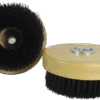
A rotary wash brush with a wood block (solid wooden disc backer) behind the bristle face, and a 5/8″-11 female thread direct-mounted to the back of the block. The wood block provides the rigid, flat backer that keeps bristle pressure consistent across the face — particularly valuable on flat trailer sides and cab surfaces where you want even agitation without the center-heavy pressure profile of a foam-backed brush. Thread it directly onto your rotary machine spindle and start washing.
Key Features and Why They Matter
- Wood block rigid backer — provides a flat, consistent bristle face for even agitation across large flat surfaces. So what? On a trailer side or bus panel, you get uniform scrubbing pressure without the center-point pressure peaks of a softer backing.
- 5/8″-11 direct threaded mount — threads directly onto standard rotary polisher and drill spindles without adapters. Clean, secure attachment with no wobble or vibration.
- Heavy-duty bristle construction — bristles are built for commercial washing frequency and chemical exposure from fleet wash concentrates, alkaline degreasers, and high-pH truck wash products.
- Production-speed washing — covers significantly more surface area per pass versus manual brush washing, reducing labor time on large commercial vehicles.
- Durable for fleet use — wood block construction resists delamination in regular wet-use environments when properly maintained and dried after use.
What This Is NOT For
Not for use on automotive clear-coated paint at rotary machine speed — will cause scratching and swirl marks. This is a commercial fleet wash brush designed for surfaces that accept mechanical brush contact: painted commercial vehicle panels, aluminum trailer surfaces, fiberglass bus shells, and similar durable exterior surfaces. Not appropriate for polished aluminum, chrome, glass, or soft-top convertible fabric. For a companion polypropylene-body rotary brush, see the Direct Mount Rotary Brush (SS-35).
Who Uses This Brush
Fleet wash operations, truck wash facilities, bus washing contractors, RV washing services, and mobile fleet detailers doing commercial exterior washing at production volume. The wood block version is particularly valued where users need the most consistent, even bristle-face pressure across wide flat panels — the characteristic strength of the block-back design. For manual washing complement tools, browse the exterior washing accessories category.
How to Use
- Thread the brush onto your machine spindle — hand-tighten firmly. Check that the thread is fully engaged before powering the machine.
- Pre-wet the vehicle surface and apply fleet wash concentrate or vehicle wash solution to the surface or the brush face.
- Run the machine at 600-1200 RPM — consistent moderate speed for even agitation without excessive product sling or surface heat.
- Work in horizontal passes across flat panels — the rigid flat face of the wood block brush is most efficient in straight, overlapping horizontal passes on trailer sides and cab panels.
- Rinse surface and brush thoroughly after washing.
- Dry the wood block after use — allow the wood block to dry completely before storage to prevent warping and extend brush life.
Why Buy a Wood Block Brush vs. a Foam-Backed Rotary Brush
Foam-backed rotary brushes are flexible — the foam compresses and conforms to curved surfaces, which is useful for washing car body panels with compound curves. But on the flat sides of trailers, buses, and large commercial vehicles, foam backing can flex away from the surface under the bristle load, creating uneven pressure across the face. The wood block back is rigid, so the bristle face stays flat and maintains consistent contact across large flat panels. If your washing work is predominantly large flat-surface fleet washing, the wood block is the more effective tool. If you need conforming action on curved passenger vehicle surfaces, consider the foam-backed standard rotary brush instead.
Frequently Asked Questions
Will the wood block warp or crack with regular wet use?
Wood blocks used in wash brush applications are typically sealed or treated to resist moisture absorption, but like any wood component in a wet environment, they benefit from proper drying after use. Do not store the brush with the block submerged or in a continuously wet environment between uses. Allow to dry completely — standing bristle-down or hanging — after each wash session. With proper care, a quality wood block brush delivers extended service life.
Is the 5/8″-11 thread the same as what my rotary polisher uses?
5/8″-11 is the standard thread for most professional rotary polishers and variable-speed tools with threaded spindles — this covers most major professional brands. If you are unsure of your machine’s thread specification, check the spindle thread listed in your machine’s documentation or measure with a thread gauge before ordering.
What is the brush diameter?
Contact us for the exact outer diameter specification for this SKU if critical clearances in your wash setup require precise dimensions. The brush is sized for standard commercial wash applications and works with typical rotary machine arm extensions.
Can I use this on an aluminum trailer surface?
Yes — for non-polished, non-anodized aluminum trailer surfaces, this rotary brush provides effective washing agitation with appropriate fleet wash chemistry. Do not use aggressive acidic cleaners on aluminum without verifying compatibility. For polished or anodized aluminum, use only soft, non-abrasive washing methods to avoid surface damage.