
The difference between a properly detailed interior and one that has simply been vacuumed and surface-wiped shows up in the seams and gaps. Between the console and the seat bolster, in the junction where the dashboard meets the door panel, along the seam between the center stack and the surrounding trim — contamination accumulates in these recessed areas and is visible to anyone who looks closely. These are also the areas that hand cleaning with a microfiber misses entirely, because a flat cloth cannot get into a concave seam channel.
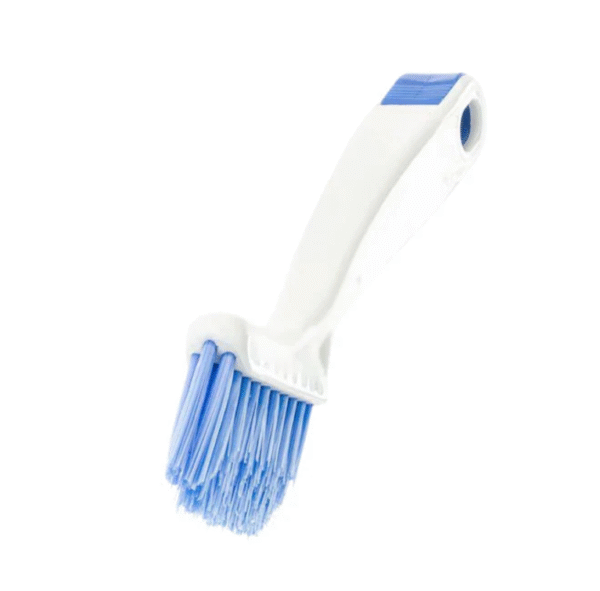
The Seam Brush is the tool for these specific areas. The short, angled bristle head accesses seam channels and panel junctions at angles that standard interior brushes and microfibers cannot manage. At under $6, it is the lowest-cost high-impact addition to an interior detail kit that consistently makes the difference between a thorough and a surface-level interior result.
What the Seam Brush Is
The Seam Brush (SMB-2) is a general interior detailing brush designed for seam line, gap, and crevice cleaning in automotive and marine interiors. It is broader than the Narrow Seam Brush, making it appropriate for slightly wider seam channels and panel gap areas. The bristle construction provides agitation in concave surfaces to loosen compacted dust and contamination for wipe-out.
Key Features and Why They Matter
- Seam-cleaning head geometry — angled and profiled to access concave seam channels. So what? Cleans the concave recesses between panels and trim pieces where flat tools cannot make contact with the contaminated surface.
- Short, dense bristle construction — effective agitation in tight spaces. So what? Loosens compacted contamination from seam channels rather than just sweeping the opening without reaching the dirt inside.
- Interior-safe bristle material — appropriate for dashboard plastic, vinyl trim, leather seams, and fabric edges. So what? One brush handles seam cleaning across all the material types encountered in an automotive or marine interior without switching tools.
- Affordable price point — low barrier to adding dedicated seam cleaning to the interior kit. So what? No reason to skip this tool when the cost of including it is minimal and the impact on interior thoroughness is visible.
What This Is NOT For
The Seam Brush is designed for detail-level seam and crevice cleaning, not for primary surface scrubbing of large interior areas. Use it specifically for the gaps, seams, and concave junctions that standard interior cleaning brushes miss. For the narrowest seam access (tight stitching rows, very narrow panel gaps), the Narrow Seam Brush provides a smaller head profile.
Who Uses This
Professional interior detailers who include seam and crevice cleaning as a standard part of every full-service interior package. Mobile detailers building a complete brush kit that covers all the access points a professional interior detail requires. Marine detailers cleaning cockpit panel junctions, cabin trim seams, and deck crevices. Detailing instructors teaching complete interior technique to technicians.
How to Use
- Apply a small amount of interior APC to the brush or spray directly into the seam area.
- Insert the brush into the seam channel or panel gap at the appropriate angle.
- Use short, firm strokes along the seam to agitate and loosen contamination.
- Wipe out with a microfiber immediately after brushing — the loosened contamination is ready for removal.
- Work systematically through all seam lines and gaps in each interior section before moving on.
Why Seam Cleaning Is a Differentiator in Interior Detailing
Clients who evaluate interior detail quality look at seams — the gap between the center console and seat, the junction where the dashboard meets the A-pillar, the trim seam around the infotainment system. These are the surfaces that get missed by surface-level interior work and show up immediately to anyone who looks. Including proper seam and crevice work as a standard step is one of the clearest differentiators between thorough professional interior detailing and a surface-level clean. For the complete interior brushes range, browse Interior Brushes at Polishing Systems Inc.
Frequently Asked Questions
What is the difference between the Seam Brush and the Narrow Seam Brush?
The Seam Brush (SMB-2) has a slightly wider profile appropriate for panel gaps and broader seam channels. The Narrow Seam Brush (SMB-1) has a narrower head for the tightest seam access — stitching rows and very thin panel gaps. Both tools in a kit provide complete seam access across the range of seam widths found in vehicle interiors.
Is this brush safe for leather seam stitching?
Yes — the interior-safe bristle material is appropriate for leather seam areas. Use light pressure and a leather-safe cleaner in seam areas to avoid over-wetting or abrading leather around stitching lines.
How do I know where to use the Seam Brush vs. my regular interior brush?
Use your regular interior brush for flat, accessible surfaces — dashboard face, door panel center sections, seat cushion tops. Switch to the Seam Brush for any area that has a recessed, concave, or gap geometry: console-to-seat channels, trim piece junctions, switch surround channels, and stitching seam lines.
How do I clean the brush after interior detail work?
Rinse with clean water after each use. For heavy loading from interior cleaning solutions or contamination, clean with a mild brush wash or soap solution and rinse thoroughly. Allow to dry completely before storage.
Can this brush be used on marine cockpit and cabin surfaces?
Yes — cockpit trim seams, cabin panel junctions, and deck fitting channels in marine interiors are appropriate applications for the Seam Brush. In saltwater environments, rinse with fresh water after use to prevent salt crystal accumulation in the bristles.