
Interior detailing thoroughness is measured in the spaces between surfaces, not on top of them. Anyone can wipe a dashboard flat — the contamination that tells you whether a vehicle was actually detailed is in the seams: the dust packed into the stitching channels on a leather seat, the grime in the gap between the center console and the seat, the debris trapped in the narrow channel where the door panel meets the door frame. These seam spaces require a brush narrow enough to fit inside them and stiff enough to dislodge the compacted dirt.
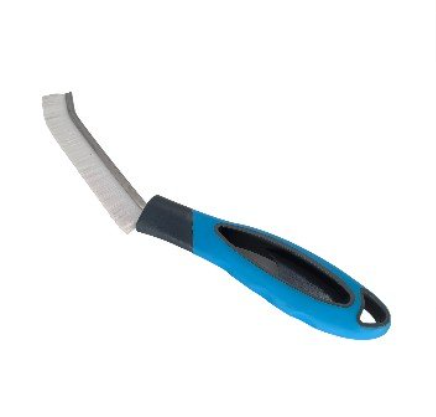
The Narrow Seam Brush is built for this specific job. The tapered, narrow head accesses seam channels that a full-size interior brush or detailing brush cannot reach. The bristle density provides the agitation needed to loosen compacted dust and contamination from tight spaces before an APC spray and wipe-out clears the residue.
What the Narrow Seam Brush Is
This is a narrow-profile interior detailing brush for seam line cleaning in automotive and marine interiors. The brush is designed for the specific geometry of seam cleaning — long, narrow, straight channels — rather than for broad surface scrubbing. The tapered head fits into stitching rows, panel gaps, and trim channels; the bristles agitate and loosen contamination for APC or cleaning solution wipe-out.
Key Features and Why They Matter
- Narrow profile head — fits into tight seam channels and gaps. So what? Reaches the contamination that accumulates in exactly the places that are visible to clients who look closely at detailing quality.
- Dense bristle construction — provides effective agitation in confined spaces. So what? Physically loosens compacted contamination rather than just skimming the surface of the seam.
- Precision cleaning application — designed for the specific geometry of seam lines and panel gaps. So what? A tool designed for the job is more effective and faster than improvising with a standard brush or swab.
- Interior-safe bristle material — soft enough for leather and fabric seams, effective enough for hard plastic panel gaps. So what? One brush handles the full range of interior seam materials without risk of scratching leather seaming or fabric edges.
What This Is NOT For
The Narrow Seam Brush is a precision detail brush — it is not a primary cleaning brush for large surface areas. Use it specifically for seam lines, panel gaps, and tight crevices after completing main surface cleaning with appropriate brushes and microfibers. It is not a scrubbing brush for removing heavy contamination; it is an agitation tool that loosens contamination for wipe-out with a microfiber or extraction. Not for use on glass surfaces.
Who Uses This
Professional interior detailers who include seam and crevice cleaning in their full-service detail package. Mobile detailers who understand that seam cleanliness is where clients evaluate thoroughness. Marine detailers cleaning seam lines in boat cabin upholstery, teak seam caulking channels, and cockpit panel gaps. Detail shop owners training technicians on complete interior technique where seam cleaning is a standard step.
How to Use
- Spray a small amount of interior APC or cleaning solution into or along the seam before brushing.
- Insert the narrow brush head into the seam channel at a low angle.
- Use short, firm strokes along the seam direction to agitate and loosen contamination.
- Follow immediately with a microfiber to remove the loosened debris — the seam should be clear after wipe-out.
- For stubborn contamination, repeat with a slightly higher APC concentration and a longer dwell time before brushing.
Why a Dedicated Seam Brush vs. Improvised Tools
Detailers working without a dedicated seam brush often resort to swabs, old toothbrushes, or the corner of a microfiber — tools that work to varying degrees but are not designed for the specific geometry and access requirements of seam channels. A purpose-built narrow seam brush is faster, more effective, and safer on leather and fabric seam edges than improvised alternatives. Pair it with a Seam Brush for the broader seam cleaning applications and a general interior brush for surface cleaning. For the complete interior brushes range, browse the Interior Brushes category.
Frequently Asked Questions
Is this brush safe for use on leather stitching seams?
Yes — the interior-safe bristle construction is appropriate for leather stitching seams. Use with light pressure and an appropriate leather-safe cleaner in the seam area. Avoid over-saturating leather with APC in seam areas — use minimal product and focus agitation directly in the seam channel.
What cleaning solution should I use with this brush?
Use a diluted interior APC appropriate for the surface type. For leather seams, use a leather-safe cleaner diluted appropriately. For fabric and plastic seams, a standard interior APC at 5:1 to 10:1 dilution is appropriate for most soiling levels.
How do I clean the brush between uses?
Rinse thoroughly with clean water after each detailing session. For stubborn bristle loading from carpet fiber or debris, use a brush comb or rinse under running water while flexing the bristle head. Allow to air dry bristle-side down or hung before storage.
What is the difference between the Narrow Seam Brush and the Seam Brush?
The Narrow Seam Brush (SMB-1) is designed for the tightest seam access — stitching rows and very narrow panel gaps. The Seam Brush (SMB-2) handles broader seam and crevice cleaning applications. Both tools complement each other in a thorough interior detailing brush set.
Can this brush be used on marine interior seams?
Yes — marine cabin and cockpit seam channels, upholstery stitching lines, and teak seam caulk channels are appropriate applications for the Narrow Seam Brush. In saltwater environments, rinse the brush thoroughly with fresh water after each use to prevent salt crystal accumulation in the bristles.