Interior detailing is a precision job. The difference between a thorough interior detail and a surface-level clean is what happens at the edges — the seat seam where the carpet meets the vinyl bolster, the dashboard vent slat where dust packs in over months, the door jamb channel where road grime accumulates, and the trim gap where pet hair or food debris hides. No mitt, no towel, and no larger brush gets into those areas effectively. The detail toothbrush does.
The Nylon Detail Toothbrush is the everyday interior agitation tool for professional detailers. Its nylon bristles are stiff enough to dislodge packed dust and debris from textured plastic and fabric, while soft enough to be safe on painted interior trim, soft-touch dashboards, and delicate leather edges without leaving scratch marks.
What This Is
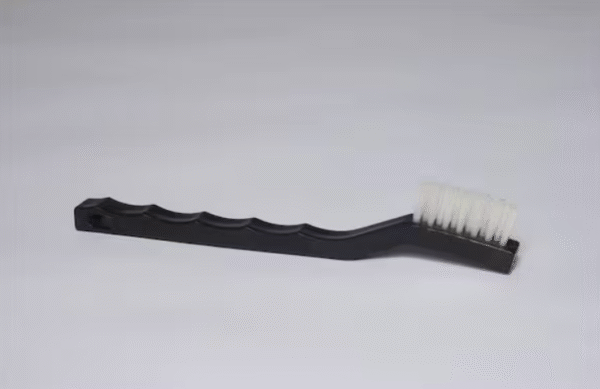
This is a detail brush with a plastic handle and nylon bristles, shaped in the standard toothbrush profile for comfortable grip and precise reach in tight spaces. Nylon bristles provide moderate agitation suitable for interior cleaning on fabric, vinyl, leather edges, plastic trim, and rubber seals. The compact brush head accesses spaces that larger detailing brushes cannot reach. For metal surface work where harder bristles are needed, see the Brass Detail Toothbrush.
Key Features and Why They Matter
- Soft nylon bristles — safe on painted interior trim, soft-touch surfaces, leather edges, and delicate materials. Provides enough agitation to loosen dust and light soiling without surface damage.
- Toothbrush profile — compact head and comfortable handle give precise placement and control in tight interior spaces.
- Plastic handle — lightweight, chemical-resistant, and easy to clean. Will not absorb cleaning products or degrade from repeated exposure to interior detailers and all-purpose cleaners.
- Reaches vent slats, seam edges, and trim gaps — accesses the specific interior crevices most commonly missed by standard detailing tools.
- Low unit cost — allows stocking dedicated brushes per chemical type without significant cost. Prevents cross-contamination between product types in a professional kit.
What This Is NOT For
Nylon bristles lack the stiffness for scrubbing heavily contaminated metal, chrome, or wheel surfaces. For metal detail work, use the brass detail toothbrush. This is also not designed for heavy fabric stain agitation — for that, a dedicated upholstery brush with stiffer bristles is more effective. This is a precision crevice tool, not a broad scrubbing brush.
Who Uses This
Professional interior detailers who perform thorough vehicle interior work, mobile detailers who carry a complete kit and need a dedicated crevice brush for trim and fabric edge work, auto dealers running reconditioning prep on trade-in vehicles, and enthusiasts doing a careful seasonal detail of their own vehicles.
How to Use
- Apply interior detailer or APC to the area being cleaned — or mist the brush lightly with product before agitating.
- Agitate with short strokes in the direction of the surface texture or seam. For vent slats, work the brush into the gap and pull along the length of each slat.
- Wipe with a microfiber immediately after agitating to capture lifted dirt before it resettles.
- Work in sequence: Move systematically through the interior — dashboard, door panels, center console, seat seams — to avoid spreading contamination to cleaned areas.
- Rinse or replace when bristles are heavily loaded with product and dirt. Rinsing and reshaping the brush between sections maintains effectiveness.
Why a Dedicated Detail Toothbrush vs. Improvising
Detail shops that use old household toothbrushes are working with brushes designed for low-chemical environments with soft bristle profiles optimized for tooth cleaning, not surface agitation. A dedicated detail toothbrush is designed with the correct bristle stiffness and head geometry for automotive interior work. At this price point, there is no reason to use improvised tools when a purpose-built brush is available.
Frequently Asked Questions
Is this brush safe on leather seats?
Nylon bristles are safe for light agitation on leather surfaces — working leather cleaner into the grain, cleaning leather seams and perforations, and agitating leather conditioner into pored leather. Use light pressure with the surface lubricated with leather cleaner. Do not use stiff or dry brushing on unprotected leather as this can cause surface damage.
Can I use this brush on carpet or fabric?
Yes. The nylon toothbrush is effective for agitating fabric cleaner and shampoo into carpet edge seams, seat fabric bolsters, and fabric-covered trim panels. For broad carpet scrubbing, a larger carpet brush is more efficient — the toothbrush is the right tool for edge and seam work specifically.
How do I clean the brush between uses?
Rinse under running water immediately after use to flush product and debris from the bristles. For thorough cleaning, work a small amount of dish soap or APC through the bristles, rinse, and allow to air dry with bristles up. Separate brushes by product type to prevent cross-contamination.
How often should I replace the brush?
Replace when bristles spread significantly beyond the head width, show visible deformation, or when the brush no longer reaches effectively into tight crevices. At this price point, replacement should be routine rather than delayed when the brush shows wear.
Should I stock both the nylon and brass versions?
Yes — they serve different surfaces. The nylon brush handles interior, fabric, plastic, and painted trim. The brass brush handles chrome, polished metal, wheel spokes, and lug pockets. Most professional kits include both.