
Cleaning the tight recesses of a wheel’s lug nut pocket, the back side of a polished chrome emblem, or the intricate metal spokes of a classic car wheel requires a brush with bristles stiff enough to scrub contamination loose but soft enough not to leave scratches on the metal surface. Steel brushes are too aggressive for finished metal. Nylon brushes are too soft to effectively agitate baked-on brake dust or heavy road grime in deep pockets.
The Brass Detail Toothbrush is engineered for exactly this gap. Brass bristles are significantly harder than nylon, providing real scrubbing action on metal contamination, while being softer than chrome plating, polished aluminum, and most automotive metals — making them safe on finished metal surfaces when used appropriately.
What This Is
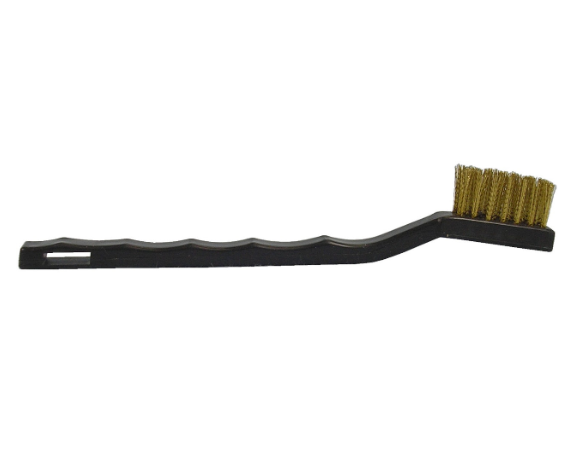
This is a detail toothbrush with a plastic handle and brass wire bristles, shaped in the standard toothbrush profile for access to tight detail areas. The compact head fits into wheel lug nut pockets, between brake caliper cooling fins, behind emblems, and into other small recesses that full-size brushes cannot reach. For nylon bristle work on interior and trim surfaces, see the Nylon Detail Toothbrush.
Key Features and Why They Matter
- Brass wire bristles — harder than nylon for effective scrubbing of metal contamination, but softer than most automotive metals to avoid scratching chrome, polished aluminum, and plated surfaces under normal use.
- Toothbrush profile — compact head and standard handle give precise control in tight detail areas where larger brushes cannot maneuver.
- Plastic handle — chemical-resistant, comfortable grip, lightweight. Will not corrode or degrade in a wash chemical environment.
- Precise reach — accesses lug nut pockets, wheel spoke backs, valve stem recesses, caliper bolt channels, and metal trim detail recesses that other brush sizes miss.
- Low unit cost — allows stocking multiple brushes for different chemical stations without significant cost. Consumable tool category.
What This Is NOT For
Brass bristles are safe on chrome and polished aluminum but are NOT appropriate for use on painted surfaces, clear-coated parts, or soft plastic trim — brass wire will scratch these. Do not use on painted bumpers, plastic wheel center caps, or any surface with a coated finish. For painted trim and plastic surfaces, use the nylon bristle detail brush instead.
Who Uses This
Professional wheel detailers who clean lug nut pockets, spoke backs, and chrome trim as part of a complete wheel detail, classic car enthusiasts maintaining chrome emblems and polished trim, body shop technicians cleaning metal surfaces before paint prep, and mobile detailers doing thorough wheel cleaning work on intricate spoke designs.
How to Use
- Apply wheel cleaner or APC to the area being cleaned. Allow brief dwell time for the chemistry to loosen contamination before agitating.
- Agitate with the brass brush using short, firm strokes in the direction of the surface detail. Work in small sections.
- Rinse frequently to remove loosened contamination from the brush bristles and the surface.
- Follow with a final rinse of the entire wheel or trim area after brushing is complete.
- Inspect and replace when bristles show significant wear that reduces the brush’s ability to reach into tight recesses.
Why Brass vs. Nylon vs. Steel for Metal Detail Work
Nylon bristles are safe on virtually any surface but lack the stiffness to scrub heavy contamination off metal. Steel bristles are aggressive enough for heavy work but will scratch chrome, aluminum, and finished metals. Brass is the professional middle option — stiff enough for real metal cleaning work, safe enough on finished surfaces. For a detail shop stocking one brush type for chrome and polished metal work, brass is the correct choice.
Frequently Asked Questions
Will brass bristles scratch chrome wheels?
Brass is softer than chrome plating, so under normal use with appropriate pressure and a wet, chemistry-lubricated surface, brass bristles do not scratch chrome. Using the brush dry or with excessive force can cause marring. Always work with the surface wet and use moderate pressure — you are agitating the contamination loose, not grinding it off mechanically.
Can I use this brush with acid wheel cleaner?
Brass reacts with strong acids over time — the bristles will corrode if regularly submerged in or heavily exposed to acid-based wheel brighteners. For use with acid chemistry, rinse the brush immediately after use. A dedicated acid-safe brush or nylon brush is the better choice if routinely working with concentrated acid wheel cleaners.
What is the difference between the brass and nylon detail toothbrush?
The brass toothbrush is for metal surfaces — chrome, polished aluminum, and similar finished metals where nylon lacks the stiffness to clean effectively. The nylon detail toothbrush is for painted trim, plastic, rubber, fabric edges, and interior crevices where brass bristles would be too aggressive and risk scratching the surface.
How many of these should a mobile detailer carry?
Most mobile operators carry 2–4 detail toothbrushes — one for wheel and metal work (brass), one for interior and trim work (nylon), and spares. At this price point, stocking extras means you always have a fresh brush available even when one becomes heavily contaminated mid-job.
Do the bristles shed during use?
New brass brushes may shed a small number of bristles during initial use. Inspect the surface for stray wires particularly around wheel lug nut pockets and painted trim areas before moving on. A brief break-in rinse before first use on a vehicle can reduce initial shedding.