

The polishing step is where paint correction either closes out cleanly or carries swirl marks into the protection layer. A cutting compound removes the visible defects but always leaves behind micro-marring from the abrasive process. If you skip the polishing step and go straight to a sealant or wax, those fine holograms and swirls are sealed in — and under proper lighting they will show. The polishing disc is the bridge that connects cut paint to finished paint.
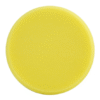
The Meguiar’s Soft Buff DA Foam Polishing Disc — 5 inch is a medium-density foam polishing pad engineered for DA polisher use in the second step of a paint correction sequence. It removes the marring left by cutting pads and compounds, refines the surface to a clean gloss base, and prepares the paint for either a final finishing step or direct application of a sealant or light wax. The 5 inch diameter works with standard DA 5 inch backing plates.
What This Pad Is
This is the second-step pad in a 3-step DA polishing system. Medium-density foam provides less mechanical aggression than a cutting disc but enough to remove the holograms and micro-marring left by cutting compounds. The cell structure is calibrated for medium-polish formulas that refine without adding new scratches. At the end of a polishing step with this pad, paint should be clean, reflective, and free of visible swirls under most lighting conditions.
Key Features and Why They Matter
- Medium-density foam — balances refining ability with surface safety on DA speeds. Means you remove cutting marks without introducing new defects from over-aggressive pad choice.
- Designed for DA polisher dynamics — foam density and cell structure matched to the oscillating motion of dual-action machines. Means consistent polishing performance across the full panel without hot spots or uneven marring.
- 5 inch diameter — matches the standard 5 inch DA backing plate for full machine compatibility and coverage on typical vehicle panels.
- Works with medium polish formulas — pairs with Meguiar’s Ultra Finishing Polish and comparable medium polish products to deliver a refined surface in one polishing step.
- Hook-and-loop backing — fast pad changes between steps without downtime or tools.
What This Pad Is NOT For
The polishing disc is not a cutting pad — it will not remove deep scratches, heavy oxidation, or 1500-grit sanding marks efficiently. Use the Soft Buff DA Foam Cutting Disc for the defect removal step first. Equally, it is not a finishing pad — for the highest gloss output and pre-coating surface prep, use the Soft Buff Foam Finishing Disc as the final pad step. Do not use on rotary polishers.
Who Uses This
Professional detailers running DA-based paint correction systems, enthusiasts who want predictable, system-based correction results, and shops offering paint correction services as a standard menu item. The polishing disc is not optional in a professional correction sequence — it is the step that determines whether the final result is genuinely defect-free or just compound-clean. Pair with the Meguiar’s professional polish lineup for a matched system.
How to Use
- After the cutting step: Remove cutting compound residue with a clean microfiber and inspect under a panel light to confirm defect removal.
- Mount the polishing disc: Swap the cutting disc for the polishing disc on your DA polisher.
- Apply medium polish: Place 3–4 drops on the pad face in a cross pattern.
- Spread at low speed: Engage the polisher at low speed to spread before polishing.
- Polish at medium speed: Work 2×2 foot sections with moderate pressure at medium DA speed setting.
- Wipe and inspect: Remove residue with a clean microfiber and check for remaining holograms under a focused light.
- Proceed to finishing step: Move to the finishing disc and finishing polish, or apply protection if surface clarity is acceptable.
Why Use a Dedicated Polishing Disc
Skipping from a cutting disc directly to a finishing disc and expecting the finishing disc to remove cutting marks is a common shortcut that consistently produces mediocre results. Polishing discs exist because the transition from cut to finished surface requires a dedicated intermediate step — you cannot rush it without visible consequences under proper lighting. The Meguiar’s Soft Buff DA system is built around this reality: each step does its specific job, and the final result is reliable, not accidental.
Frequently Asked Questions
Can I skip the polishing step if the cutting step looks clean?
Cutting compounds always leave micro-marring visible under direct or concentrated lighting — a detail panel light, direct sunlight, or a fluorescent bay. What looks clean in ambient workshop lighting often shows holograms under a focused light. A polishing step eliminates that uncertainty and produces a surface that holds up under close inspection.
What polish should I use with this disc?
Meguiar’s Ultra Finishing Polish (M205) or Ultra Pro Finishing Polish (M21032) are natural pairings with this pad for the refining step. Match the polish aggression to your surface condition — for moderate cutting residue, a medium polish works efficiently.
How do I clean the polishing disc after use?
Rinse with water, work out residue with a pad cleaning brush or pad cleaning spray, and air dry flat. Do not wring or twist the foam — this tears the cell structure. Store flat in a clean bag or case.
How many vehicles can I correct with one pad?
With proper cleaning after each session, a foam polishing disc typically handles 15–25 vehicles before foam compression affects performance. Inspect the pad face for permanent compression or breakdown that does not recover after washing.
Is this compatible with a 5 inch random orbital?
Yes — the 5 inch diameter and hook-and-loop backing are compatible with any dual-action or random orbital polisher using a 5 inch Velcro backing plate, regardless of brand.