Plastic scratches, hazes, and oxidizes differently than paint. The problem is that most detailers reach for their automotive compound when they see a yellowed headlight lens or hazed plastic panel — and compound abrasives are calibrated for the hardness of clear coat, not the softness of polycarbonate. The result is either not enough cut on older, heavily oxidized plastic, or micro-scratching on softer lenses that takes longer to correct than the original haze.
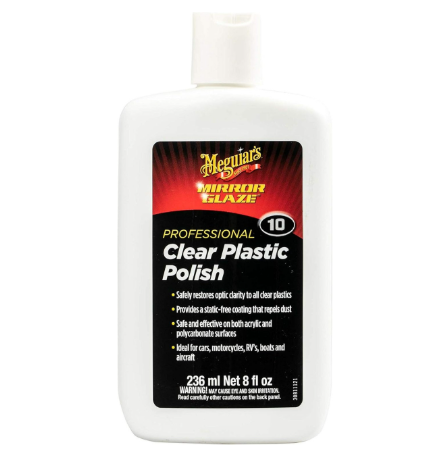
Meguiar’s Plastic Polish — 8 oz is a purpose-built plastic surface polish with mild abrasives sized and calibrated for polycarbonate and acrylic surfaces. It removes light scratches, surface hazing, water marks, and UV yellowing from headlight lenses, instrument panels, motorcycle windshields, marine acrylic, and other transparent or opaque plastic surfaces. The 8 oz bottle is appropriately sized for one-at-a-time restoration jobs.
What Meguiar’s Plastic Polish Is
This is a purpose-formulated plastic polishing compound. The abrasive particles are finer and softer than those in automotive paint compounds, matched to the hardness and scratch threshold of polycarbonate, acrylic, and ABS. It removes defects from plastic without the micro-scratching risk of using a paint compound on a softer substrate. It is not a sealant or UV coating — those are follow-up steps.
Key Features and Why They Matter
- Plastic-calibrated abrasives — sized for polycarbonate and acrylic hardness. Means you remove haze without adding new scratches from over-aggressive abrasives.
- Works on clear and opaque plastic — headlight lenses, interior trim, instrument cluster covers, marine windshields. One product for multiple plastic surfaces on the same vehicle.
- Hand or machine application — works with a foam applicator by hand or with a DA polisher for faster results. Flexible for mobile detailers and shop use.
- Removes UV yellowing and surface oxidation — the practical use case for most headlight restoration work. Restores optical clarity for safer nighttime driving.
- 8 oz working size — appropriately sized for occasional lens polishing jobs. Not excessive volume for a specialty product you may use a few times per month.
What This Product Is NOT For
Meguiar’s Plastic Polish is for surface polishing and does not replace UV sealant or headlight coating. After polishing a headlight lens, always apply a UV protectant or headlight lens sealant — polished bare polycarbonate will re-yellow faster than factory-coated lenses. Do not use this product on automotive clear coat, painted panels, or rubber. For deep gouges or heavy cracks in plastic, mechanical wet sanding is required before polishing.
Who Uses Meguiar’s Plastic Polish
Professional detailers offering headlight restoration services, mobile detailers adding lens work to their service menu, body shops dealing with interior panel restoration, and boat detailers working on acrylic windshields and instrument covers. The 8 oz size suits operations that do headlight work as an add-on service a few times per week rather than as a primary revenue line. For higher-volume headlight restoration workflows, see the full compounds and polishes category.
How to Use
- Clean: Wash the plastic surface and dry completely. Remove any surface wax or coating.
- Tape surroundings: Mask adjacent paint panels when working near headlight housings.
- Apply: Apply a small amount of Plastic Polish to a foam applicator or DA polisher pad.
- Work in sections: Polish using firm circular or overlapping passes. On a DA, run at medium speed.
- Wipe: Remove residue with a clean microfiber towel. Inspect under light.
- Repeat: For severe yellowing, two to three passes may be required before optical clarity returns.
- Protect: Apply a UV sealant or dedicated headlight coating immediately after polishing.
Why Buy This vs. a Headlight Restoration Kit
All-in-one headlight kits include sandpaper, compound, and a small UV coating in a kit format — good for one-time DIY use. Detailers who do restoration work regularly are better served by individual components they can replenish as needed. Meguiar’s Plastic Polish pairs with your existing sanding and coating products and lets you calibrate each step independently. It also pairs naturally with Meguiar’s surface prep and finishing products already on your shelf.
Frequently Asked Questions
Can I use this on my car’s headlights?
Yes — polycarbonate headlight lenses are the primary use case for this product. After wet sanding (for heavy oxidation) or directly for light hazing, apply Meguiar’s Plastic Polish to restore optical clarity. Always follow with a UV headlight coating to slow re-yellowing.
Will this work on scratched boat windshields?
Yes — marine acrylic and polycarbonate windshields respond well to Meguiar’s Plastic Polish for light surface scratches and hazing. For deeper scratches, wet sanding with progressively finer grits before polishing is required. Always finish with a marine UV protectant.
How is this different from Meguiar’s PlastX?
Both are plastic polishes. M10 Plastic Polish is from Meguiar’s professional Mirror Glaze line and is formulated for shop use. PlastX is the consumer product line equivalent. The Mirror Glaze formula is typically preferred in professional settings for consistency and formulation quality.
Do I need a machine polisher to use this?
No — Meguiar’s Plastic Polish can be applied effectively by hand with a foam applicator for light hazing removal. A DA polisher speeds up the process significantly on more oxidized surfaces and delivers more consistent results across larger plastic panels.
How much does 8 oz cover?
Eight ounces is enough product for 20–40 headlight lens restoration jobs depending on severity. Each headlight requires only a small amount of product per polishing pass, so a single bottle lasts a meaningful number of service appointments.