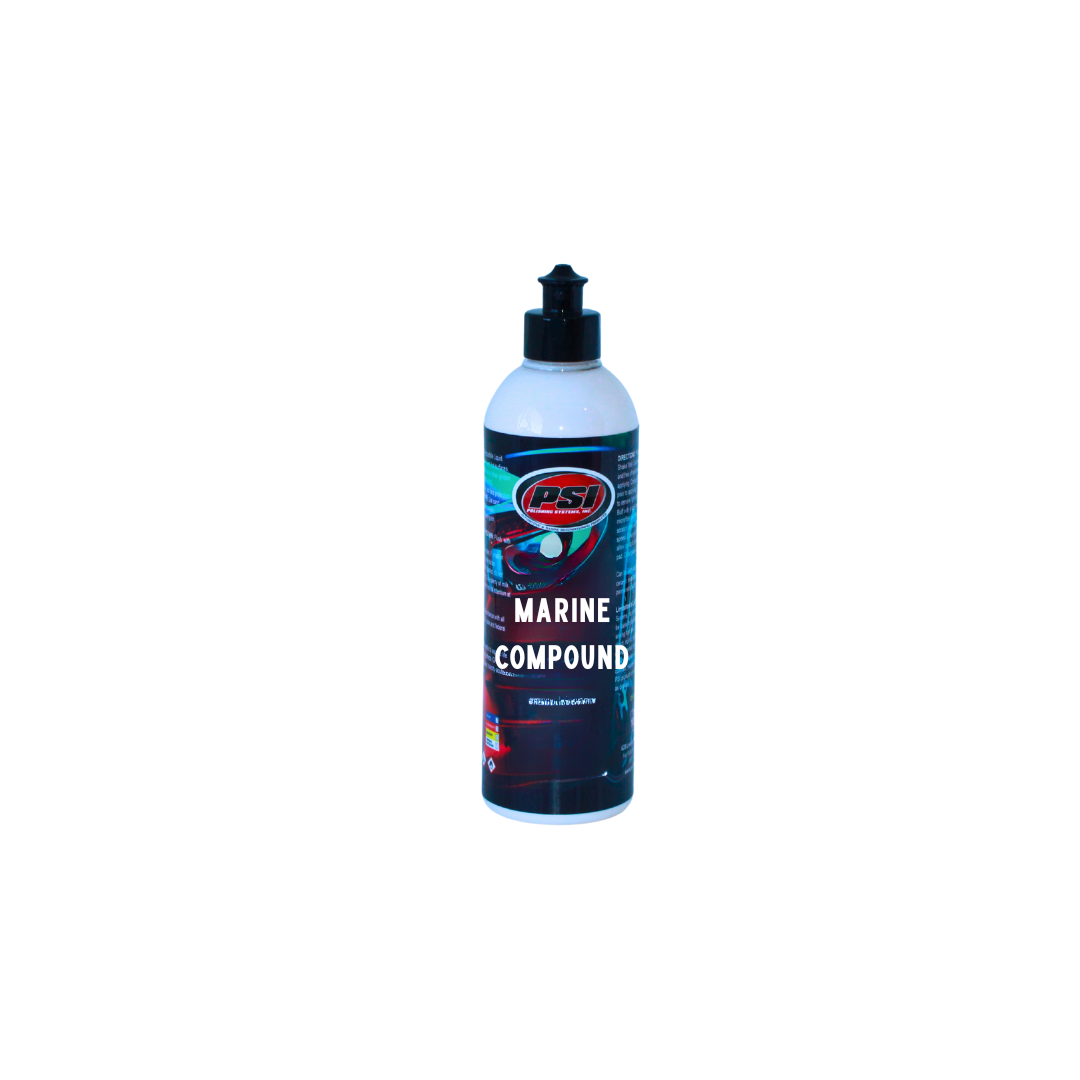
Severe gelcoat oxidation is one of the more demoralizing sights in marine detailing — a surface that was once bright white or deeply glossy now chalky, dull, and powdery to the touch from years of UV and saltwater exposure. This is not a cleaning problem. It is a degradation problem that requires real abrasive chemistry to reverse — the kind of compound that removes the damaged layer of gelcoat oxidation and exposes the undamaged material beneath.
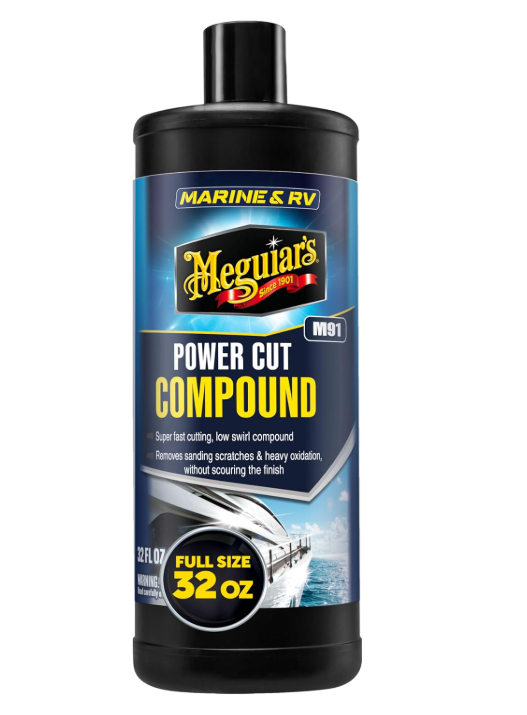
Meguiar’s Marine/RV Pro Grade Power Compound 32 oz is the machine compound built for that work. Professional-grade abrasive technology, formulated specifically for fiberglass gelcoat and marine-grade paint chemistry — in the 32-oz working size for detailers restoring marine and RV surfaces to a standard that lighter maintenance products cannot produce.
What This Compound Is
Meguiar’s Marine/RV Pro Grade Power Compound is a professional heavy-cut machine compound formulated for severe oxidation removal, deep scratch removal, and surface restoration on fiberglass gelcoat, marine painted surfaces, and RV exterior finishes. It is engineered for the specific chemistry and UV-exposure profile of marine surfaces, which oxidize more aggressively and require higher-cut correction chemistry than most automotive clear coat systems.
Key Features and Why They Matter
- Heavy-cut marine/RV specific formula — abrasive technology sized and formulated for the harder, thicker gelcoat and marine paint surfaces that respond differently to compounding than modern automotive clear coat. So what? Using automotive compound on gelcoat frequently produces inadequate correction because the abrasive particle size is calibrated for softer automotive clear coats.
- Severe oxidation removal — removes chalky, powdery oxidation from heavily UV-degraded gelcoat and marine paint surfaces. The level of correction that transforms a neglected hull from dull-and-chalky back to a workable surface.
- Rotary and DA polisher compatible — the compound works on both direct-drive rotary polishers (maximum cut) and dual-action polishers (controlled heavy correction). Rotary application is recommended for severely oxidized surfaces requiring maximum cutting action.
- 32-oz working bottle — the practical supply size for professional marine and RV correction work on individual vessels and units. Enough compound for multiple correction sessions on large surfaces.
What This Is NOT For
This is a heavy-cut compound for surfaces in poor condition — not a maintenance or touch-up product. It is not appropriate for light swirl removal on well-maintained gelcoat where a lighter compound or cleaner-wax would be the correct correction step. After using this compound, a polishing step with a medium marine polish and a wax or sealant application are required before the surface is protected. See the marine compounds and polishes category for the full correction sequence. Also not designed for below-waterline or antifouling-painted surfaces.
Who Uses This Compound
Professional marine detailers restoring vessels that have not had compound and polish treatment in multiple seasons. Boat yard service technicians performing seasonal detail packages on high-hour commercial vessels. RV reconditioning specialists working on painted RV exteriors with significant UV-induced paint oxidation. Mobile marine detailers who handle both maintenance detailing and oxidation restoration work and need the compound capability for the most challenging surface conditions. The 32-oz size is the working volume for individual project work — not a bulk supply for high-volume compound shops, who should consider the larger size options.
How to Use
- Wash surface: Wash the hull or exterior fully to remove all loose contamination before compounding.
- Pad selection: Rotary polisher with a cutting pad (wool or foam cutting disc) for maximum cut. DA polisher with a cutting foam or microfiber cutting disc for controlled heavy correction.
- Apply compound: Apply 5–6 pea-sized dots to the pad or disc face. Spread at lowest machine speed before working at cutting speed.
- Work speed: Rotary 1200–1800 RPM for severe oxidation. DA at speed 5–6 for controlled correction. Work in 2×2 foot sections on large hull surfaces.
- Multiple passes for severe oxidation: Severe oxidation may require 3–5 overlapping passes before the chalk layer is fully removed. Inspect between passes under natural light.
- Follow with polish and wax: After correction, apply a marine polish to remove compound swirl marks, then protect with a marine wax or sealant.
Frequently Asked Questions
How do I know if my gelcoat is too far gone for compound restoration?
If the oxidized layer is very thick and the chalk extends deep into the gelcoat (more than the surface millimeter), compounding may eventually expose the substrate or a color layer that was embedded below the oxidation. The test: apply compound to a small test area and see if a bright surface returns after 2–3 machine passes. If yes, the surface is restorable. If the surface remains dull even after aggressive compounding, the gelcoat may be too depleted for standard compound restoration.
Can this compound be used by hand on small areas?
The compound can be applied by hand on small spot areas, but the correction effectiveness is significantly reduced compared to machine application. For gelcoat that is severely oxidized, hand application rarely produces adequate correction. Machine application is strongly recommended for any surface requiring meaningful oxidation removal.
What marine polish should I use after this compound?
After correcting with the Meguiar’s Marine/RV Pro Grade Power Compound, follow with a medium marine finishing polish to remove compound swirl marks, then apply a marine wax or polymer sealant for UV protection. The Polishing Systems Inc marine finishing products category includes appropriate follow-up options.
Is it safe on painted RV fiberglass sidewalls?
Yes — the marine/RV formula is engineered for both gelcoat and painted RV fiberglass surfaces. RV exterior paint and gelcoat finishes face the same UV and weather degradation profile as marine surfaces. Standard application technique and pad selection apply.
How many correction sessions will a 32-oz bottle cover?
For a heavily oxidized 30-foot boat hull (topsides and cockpit), a full restoration compound session typically uses 6–12 oz of compound at heavy application rates. One 32-oz bottle covers 2–5 full heavy-correction sessions on a boat of that size, depending on oxidation severity and number of passes required.