
Gel coat oxidation is a different problem from automotive clear coat oxidation. Gel coat is thicker, harder, and more porous than automotive paint — and when it oxidizes, the chalking runs deep into the surface rather than sitting in a thin clear coat layer. Automotive compounds reach for the surface and miss; they are calibrated for automotive chemistry, not the specific hardness and porosity of marine gel coat. The result is hours of work for partial restoration.
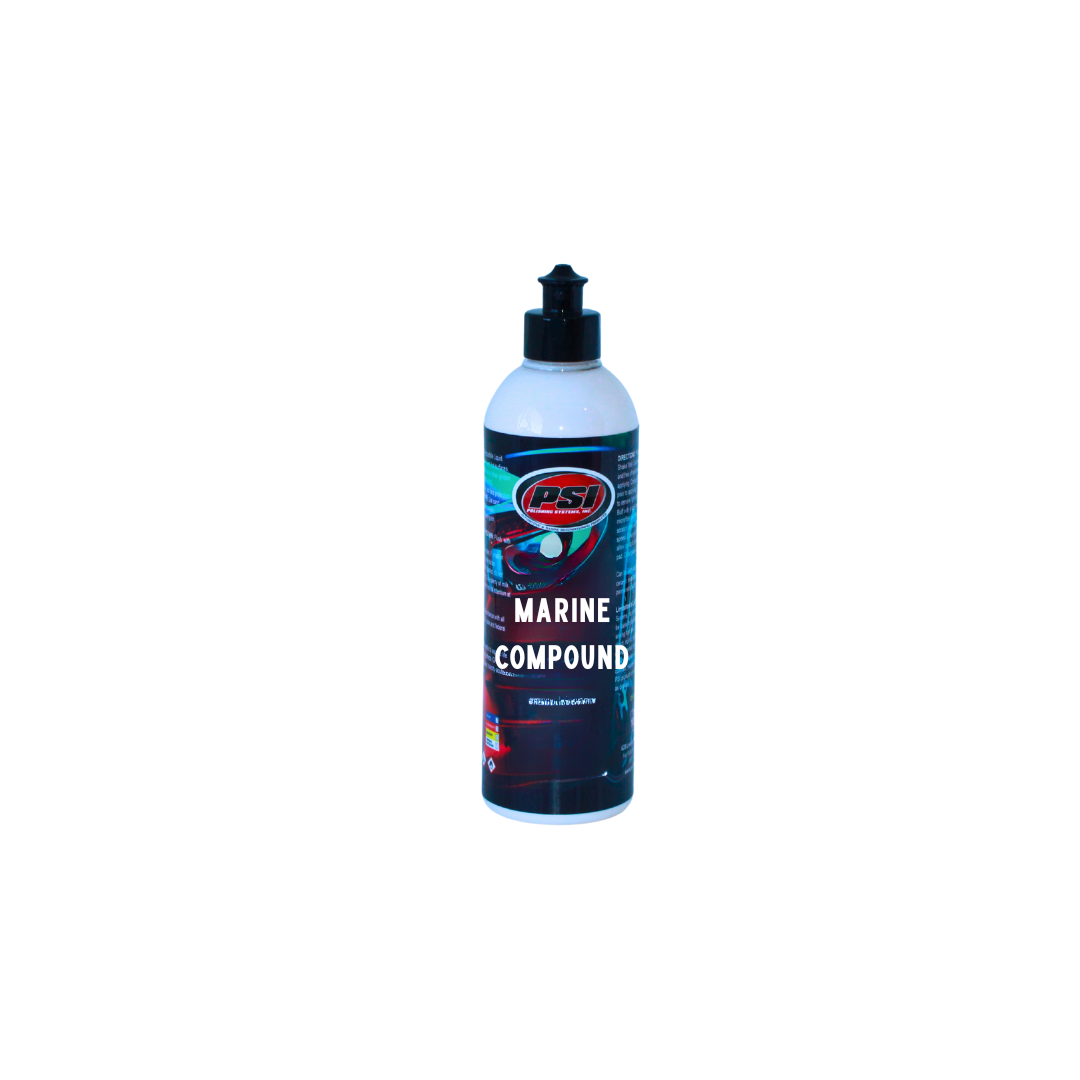
Marine Compound 32 oz is formulated specifically for gel coat — the abrasive type, particle size, and carrier chemistry are calibrated to cut through heavy marine oxidation, restore color depth, and remove surface scratches on the gel coat substrates found on fiberglass boats, RVs, and marine accessories. The 32-ounce size provides enough working volume for a full boat compounding session or several smaller gel coat restoration projects.
What Marine Compound Is
This is a marine-specific cutting compound — a gel or liquid abrasive formulated to remove oxidation, chalking, and surface defects from gel coat. It uses a different abrasive chemistry than standard automotive compound, addressing the specific hardness and surface texture of gel coat rather than the softer, thinner automotive clear coat. It is applied by machine polisher or by hand on smaller areas.
Key Features and Why They Matter
- Marine gel coat abrasive formulation — calibrated for the hardness and porosity of fiberglass gel coat, not automotive clear coat. Means you get effective oxidation removal in fewer passes rather than spinning a polisher all day for marginal results.
- Heavy oxidation removal capability — designed to recover gel coat that has gone chalky and dull, restoring color depth and gloss that looks like restoration rather than a light polish.
- 32-ounce working size — practical volume for a full hull and deck compounding session on a mid-size vessel, or multiple projects for marine detail operations.
- Works by machine or hand — flexible application for different vessel geometries, from flat deck panels accessible to a machine polisher to tighter areas requiring hand application.
- Compatible with follow-up marine polish and wax — use as the first step in a marine 2-step or 3-step restoration sequence.
What This Is NOT For
Marine Compound is formulated for gel coat surfaces — do not use it on painted boat hulls, awlgrip or linear polyurethane paint finishes, or vinyl graphics. It is also not a substitute for a proper marine finishing polish on gel coat in good condition — the cut is too aggressive for maintenance polishing on already-restored gel coat. For follow-up steps after compounding, use a dedicated marine polish and marine wax for protection and gloss. Do not use on antifouling bottom paint.
Who Uses This
Marine detailers performing full boat restoration work use marine compound as the first step in the process — the cut that takes oxidized, chalky gel coat back to a compounded base ready for polish and protection. Boat owners handling their own seasonal maintenance use it on topside and deck gel coat before laying on protective wax for the season. RV detailers dealing with fiberglass panel oxidation use it on gel coat exterior surfaces. Marina service shops and boat yards keep marine compound in working supply for the vessel reconditioning work that comes in after every off-season.
How to Use
- Wash and rinse the gel coat surface thoroughly before compounding.
- Work in sections — marine vessels are large surfaces; manage your working area in 2-3 square foot sections.
- Apply compound to a foam cutting pad or apply a small amount directly to the gel coat section.
- Work by machine (dual-action or rotary with a foam cutting pad) at moderate speed, or by hand with a foam applicator on smaller areas.
- Buff to a haze and wipe clean with a microfiber towel.
- Inspect the section under good light — oxidation should be removed. Repeat passes on stubborn areas.
- Follow with marine polish then Marine Spray Wax for full restoration.
Why Buy Marine Compound vs. Automotive Compound
Automotive compound is engineered for automotive clear coat — a softer, thinner surface than marine gel coat. Using automotive compound on gel coat usually means more passes, more work, and less oxidation removal than the job demands. Marine-specific compound addresses the actual chemistry of the surface you are working on. The 32-ounce size from Polishing Systems Inc is the practical professional supply for marine detailing work where having enough product matters as much as having the right product.
Frequently Asked Questions
Can I use marine compound on RV fiberglass panels?
Yes — RV exterior fiberglass panels are typically gel coat, the same surface chemistry as fiberglass boat hulls. Marine compound is well-suited for RV gel coat restoration. Use the same application technique and follow with polish and wax for full protection.
Do I need a machine polisher or can I apply by hand?
For large areas — full hull sides, deck areas, large fiberglass panels — a machine polisher is dramatically more efficient and will deliver better results. For small areas, touch-up work, or tight geometry, hand application with a foam applicator works. Do not expect the same level of oxidation removal by hand that a machine polisher delivers on severely oxidized gel coat.
What polish and wax should I use after marine compound?
Follow compounding with a dedicated marine finishing polish to refine the surface, then apply Marine Spray Wax for UV protection and gloss. For high-use vessels in harsh environments, consider a 5-gallon size for the full restoration sequence on larger boats.
How many coats of compound does severely oxidized gel coat need?
Severely oxidized gel coat may need 2-3 compounding passes on the worst areas before the gel coat color and gloss begin to recover. Work progressively — compound, inspect, re-compound as needed — rather than trying to pull everything out in one aggressive pass, which risks thinning the gel coat.
Is marine compound safe for colored gel coat?
Yes — marine compound restores color depth as it removes oxidation from pigmented gel coat. After compounding, the restored color is typically noticeably deeper and more saturated than the oxidized starting state. Follow with a UV-protective wax to slow re-oxidation.