Not every vehicle that comes through the shop has light swirl marks and average paint condition. Some vehicles have severe oxidation from years of neglect. Some have deep 1200-grit sanding scratches from body work that need to be leveled before polishing. Some are marine vessels with gel coat that has never been properly maintained and is now chalky and deeply weathered. For these vehicles, a medium compound or finishing polish is not the starting point — heavy cut is.
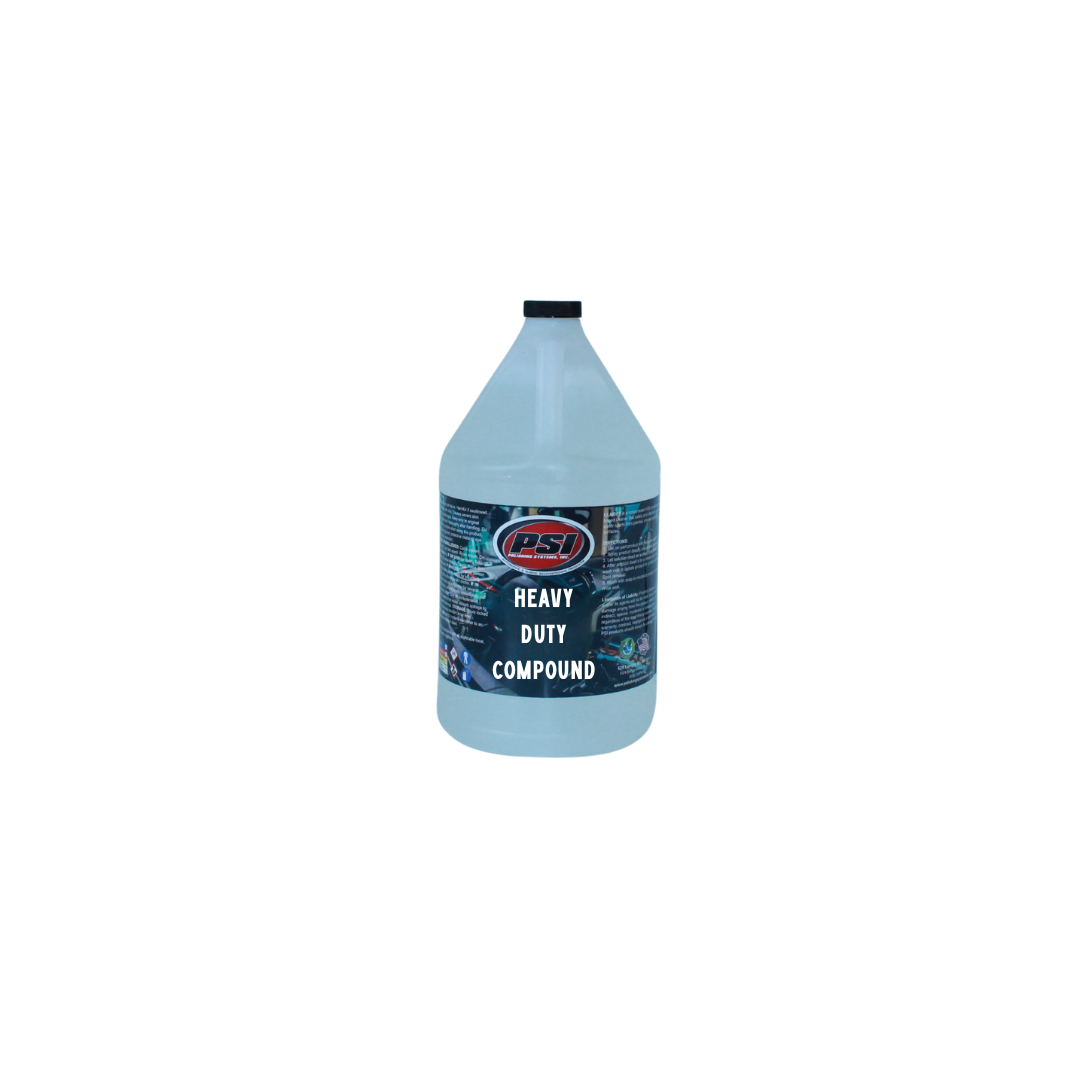
Heavy Duty Compound 1 Gallon is the high-cut compound in the Polishing Systems Inc lineup. It is formulated for maximum defect removal per pass — the product you reach for when the job calls for real abrasion and the schedule does not allow multiple compounding stages to do what one heavy-cut pass should accomplish. The 1-gallon working size is appropriate for production shops and restoration specialists who use heavy compound regularly.
What Heavy Duty Compound Is
This is a machine-applied heavy-cut polishing compound. It contains high-loading aggressive abrasives that remove more paint material per pass than medium or light compounds, enabling efficient removal of severe defects without excessive polishing time. It is designed for rotary polisher use at production speeds, though it is also usable on dual-action polishers at appropriate speed settings for less experienced operators.
Key Features and Why They Matter
- High abrasive loading — maximum cut for severe defect removal. So what? Fewer passes and less time per panel on heavily defective paint, which is where production efficiency matters most.
- Works on paint and gel coat — automotive clear coat, single-stage paint, and marine gel coat. So what? One compound handles the full spectrum of hard-surface paint correction in an auto and marine detail shop.
- Machine-application formula — designed for rotary and dual-action polishers at appropriate speed settings. So what? Consistent, controllable cut at production speeds rather than the inconsistency of hand application.
- 1-gallon production size — working volume for shops processing multiple high-defect vehicles. So what? Cost-effective size for operations where heavy compound is a regular part of the workflow.
What This Is NOT For
Heavy Duty Compound is an aggressive cutting product — it should not be used on thin clear coat, fresh paint, or paint in good condition that only requires light polish work. Always use on a test panel before treating a full vehicle to verify paint thickness tolerance. This is not a finishing product; heavy compound work must be followed by medium polish and finishing polish to achieve final clarity and gloss. Not for use on soft or delicate surfaces.
Who Uses This
Paint restoration specialists working on severely oxidized or neglected vehicles. Body shops leveling 1200-grit and finer sanding scratches after blend or respray work. Marine detailers restoring heavily weathered gel coat on older vessels. Fleet reconditioning operations processing high-defect commercial vehicles. Production detail shops that handle a variety of paint conditions and need a reliable heavy compound on the shelf for the worst cases.
How to Use
- Pad selection: Wool cutting pad or heavy foam cutting pad (orange/purple). Wool pads provide maximum cut on rotary polishers.
- Application: Apply 4-6 dime-sized amounts to the pad before starting the polisher.
- Work section: 12×12 to 18×18 inch sections. Rotary speed: 1,500-2,000 RPM. DA: speed 5-6.
- Passes: 4-8 overlapping passes until compound becomes transparent.
- Wipe and inspect: Remove residue with clean microfiber. Inspect under direct light.
- Follow-up: Progress to medium polish and finishing polish to remove compound haze and achieve final gloss.
Why Heavy Duty Compound vs. Multiple Medium Polish Passes
The math on cut is straightforward: a heavy compound removes more paint material per pass. Trying to achieve what a heavy compound does in one or two passes by making five or six medium polish passes costs more time and more product, and often still does not achieve the same depth of defect removal. For severe defects, the correct tool is the heavy compound. For everything after that, step down the correction sequence toward finishing. For the full paint correction range, browse Compounds & Polishes.
Frequently Asked Questions
What is the difference between this and a medium cutting compound?
Heavy Duty Compound has a higher abrasive loading and cuts more aggressively than medium compounds. It removes deeper defects more efficiently but requires more follow-up polishing to restore final gloss. Medium compounds are appropriate for light to moderate defects and produce a result closer to finished gloss after compounding.
Can I use heavy compound on soft single-stage paint?
Use caution on soft single-stage paint — heavy abrasive loading can cut through to primer on thin or soft paint quickly. Always test on a panel edge or door jamb before treating the full surface. Reduce machine speed and use a softer cutting pad if the paint is soft or thin.
What follows heavy compound in a correction sequence?
After heavy compound: medium polish to remove the scratching left by the heavy compound, then finishing polish to achieve final gloss and clarity. Two follow-up steps after heavy compound is a normal paint correction sequence for severely defective paint.
Does this compound work on plastic bumpers?
Heavy compound is designed for painted surfaces. For raw plastic bumpers or plastic trim, light or medium polishing compounds at lower aggressiveness are more appropriate. Confirm surface material before applying heavy compound to any panel.
How much does 1 gallon cover?
Coverage depends heavily on defect severity, pad type, and application rate. On severely oxidized paint requiring multiple passes per section, 1 gallon may cover 10-20 full vehicles. On moderately heavy defects with efficient technique, coverage can extend to 25-35 vehicles.