
A compound that corrects fast but leaves you with three more steps to fix the haze it created is a slow compound by any practical measure. Production shops doing paint correction need the compound to do as much of the work as possible — correct the defects, break down as it works, and leave a surface close enough to refined that one follow-up polish step closes the job. That is the practical standard that makes a compound worth buying.
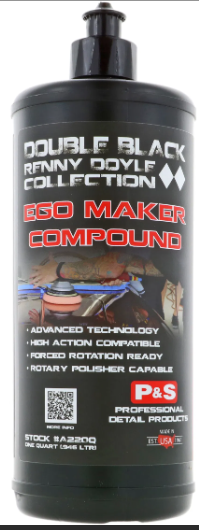
Ego Maker Compound Quart is formulated for exactly this standard. The diminishing-abrasive system starts with enough cut to remove moderate-to-heavy defects and transitions to a refined finish as the abrasives break down, minimizing the holograms and buffer trails that require additional polishing to remove. The quart format is the standard working size for paint correction work — enough volume for multiple vehicles without the bulk of a gallon.
What Ego Maker Is
Ego Maker is a machine-applied automotive paint correction compound using diminishing abrasive technology. The abrasives are designed to start at a cutting grade appropriate for moderate-to-heavy defect removal and break down progressively as the product is worked — transitioning from correction to refinement in a single product application. Designed for use with DA and rotary polishers on automotive clear coat, single-stage, and gel coat surfaces.
Key Features and Why They Matter
- Diminishing-abrasive formula — abrasives break down from cutting to finishing grade as you work. Means fewer follow-up polishing steps for most vehicles — the compound does both jobs in one pass on many paint types.
- Removes moderate-to-heavy defects — effective on swirls, oxidation, buffer trails, water etching, and moderate sanding marks. Not limited to light defects the way a polish is.
- Machine-applied formulation — designed for DA and rotary polisher application. Not a hand-polish product. The heat and speed generated by a machine polisher activates and breaks down the abrasives correctly.
- Works on clear coat, single-stage, and gel coat — one compound for the full range of correction surfaces encountered in professional detailing and marine work.
- Quart working size — practical volume for paint correction detailers doing 3-8 correction jobs per week. Less waste and product management overhead than a gallon for moderate-volume users.
What Ego Maker Is NOT For
Ego Maker is not designed for 800- or 1000-grit sanding mark removal — for that level of defect, a dedicated heavy-cut compound with a cutting pad is needed. Also, the diminishing abrasive technology requires a machine polisher to activate properly; hand application will not generate sufficient heat and speed to break down the abrasives correctly. Not for matte or satin paint finishes.
Who Uses Ego Maker
Detail shops running paint correction as a regular service line. Mobile detailers offering full correction packages. Reconditioning operations at dealerships processing trade-in vehicles with moderate paint defects. Marine detailers working on boat and RV gel coat with seasonal oxidation and surface defects.
How to Use Ego Maker Compound
- Prep surface: Wash, dry, and clay bar the paint. Remove all surface contamination before compounding.
- Select pad: Use a medium-cut or heavy-cut foam pad (orange or yellow) or a light cutting pad on a DA polisher. On a rotary, use an appropriate foam or wool cutting pad.
- Apply compound: Spread 4-5 pea-sized dabs across the pad face or spread directly on the panel.
- Spread at low speed: Prime the surface by spreading compound at low polisher speed before increasing to working speed.
- Work the correction: Increase to working speed (speed 4-6 on DA, 1200-1800 RPM on rotary). Work in overlapping passes with consistent pressure.
- Continue until clear: Work the product until it breaks down and clears — the surface will show increasing refinement as the abrasives diminish.
- Wipe and inspect: Remove residue with a clean microfiber. Inspect under direct light for remaining defects.
Frequently Asked Questions
Does Ego Maker work as a one-step compound on clear coat?
On softer or moderately defective clear coats, Ego Maker’s diminishing abrasive technology can correct defects and refine close to finished in a single compound pass, reducing or eliminating the need for a separate medium polish step. On harder clear coats or more severely defective paint, a follow-up polish pass will be needed for full optical clarity.
What pad gives the best results with Ego Maker?
A medium-cut or orange foam pad on a DA polisher is a good starting point for most correction work. For heavier defects, a more aggressive cutting pad or a cutting compound on a wool pad may be needed first. The pad choice should match the severity of the defects being corrected.
Is Ego Maker safe on thin or delicate clear coats?
Use with caution on thin clear coats, soft single-stage paints, or previously corrected paint with minimal clear coat thickness remaining. The diminishing abrasive technology provides some protection against over-cutting compared to non-diminishing compounds, but proper technique (speed, pressure, pass count) is still the primary safety factor.
Can Ego Maker be used on gel coat?
Yes — Ego Maker is formulated for use on gel coat in addition to automotive paint. Gel coat is typically softer than modern clear coat; monitor your correction progress carefully and adjust speed and pressure accordingly.
What is the difference between a quart and gallon of Ego Maker?
Same formula. The quart is the practical size for detailers doing 3-8 correction jobs per week; the gallon (if available) suits higher-volume operations. Contact us for availability of additional sizes.