
There is a difference between a degreaser and a degreaser that works on serious contamination. Engine bay cleaning on a high-mileage diesel that has been leaking, frame rail cleaning on a truck that was never washed, or floor cleaning in a maintenance bay with months of oil accumulation — these are not jobs for a citrus-scented spray from the retail aisle. They require a product with alkaline chemistry strong enough to saponify and emulsify heavy petroleum contamination in a short dwell time.
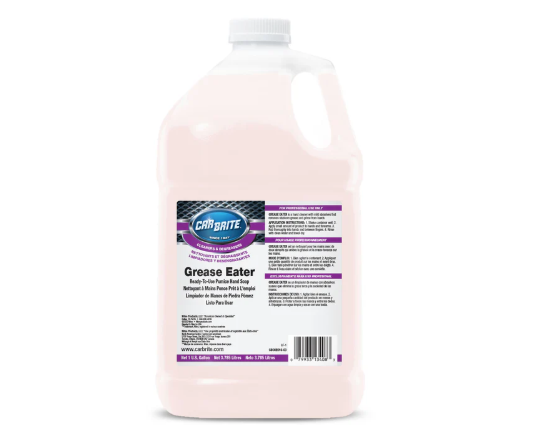
Grease Eater is that product. A high-alkaline concentrated degreaser engineered for the heavy contamination encountered in fleet and industrial detailing work — where applying a less aggressive product means applying it three times to get the same result.
What Grease Eater Is
Grease Eater is a high-alkaline, concentrated degreaser formulated for heavy petroleum-based soil removal. The alkaline chemistry (caustic base) saponifies grease and oil, converting it from a surface-adhering substance to a water-emulsifiable material that rinses away cleanly. It is not a citrus-based light APC — it is a heavy-duty degreaser for the contamination that lighter chemistry cannot move in a single application.
Key Features and Why They Matter
- High-alkaline formula — aggressive caustic chemistry designed for heavy grease, oil, hydraulic fluid, and industrial petroleum contamination. Cuts through the contamination load that lighter degreasers require multiple applications to address.
- Concentrated formula — dilutes from light degrease (4:1 or higher) to heavy-duty straight application for extreme cases. One product handles the full contamination severity range when mixed correctly.
- Rapid dwell chemistry — begins breaking down grease on contact. Shorter dwell times needed vs. lighter degreasers for equivalent soil loads, which speeds the cleaning process on large surfaces.
- Multi-surface industrial use — effective on vehicle undercarriages, engine bays, fleet frames, shop floors, equipment surfaces, and concrete where petroleum contamination is the primary soil.
What Grease Eater Is NOT For
Grease Eater is a heavy-duty high-alkaline degreaser — it is not for painted exterior vehicle body panels, clear coat, or freshly waxed surfaces. At high concentration, it will strip wax, damage clear coat, and etch some metal surfaces if not rinsed promptly. Use on undercarriages, frames, engine components, and surfaces where paint protection is not a concern. Always rinse thoroughly and promptly after the dwell period. Not for use on aluminum without careful dilution and short contact time testing.
Who Uses Grease Eater
Fleet maintenance facilities cleaning truck frames and undercarriages on regular wash cycles. Engine detail specialists performing engine bay cleaning on commercial trucks, heavy equipment, and performance cars. Shop floor maintenance crews cleaning petroleum contamination from concrete floors. Industrial cleaning operations where standard commercial degreasers are not sufficient for the contamination level.
How to Use Grease Eater
- Select dilution: For light greasing and maintenance cleaning, dilute 4:1 to 8:1 with water. For heavy contamination, 1:1 or straight application.
- Protect surrounding surfaces: Mask or protect any painted surfaces adjacent to the degreasing area before applying high-concentration product.
- Apply: Apply to the contaminated surface with a pressure washer low-pressure chemical injector, pump sprayer, or brush. For heavy soiling, apply aggressively to ensure complete coverage.
- Dwell: Allow 2-5 minutes for the chemistry to penetrate and break down the grease load. Do not allow to dry.
- Agitate (optional): Agitate with a stiff brush or pressure washer for severe contamination to help break up surface soil.
- Rinse: High-pressure rinse completely and thoroughly. Ensure no product remains on the surface, especially near painted components.
Frequently Asked Questions
Can Grease Eater be used in a pressure washer?
Yes — Grease Eater is compatible with pressure washer chemical injector systems. Use through the low-pressure chemical injector at appropriate dilution, not through the high-pressure nozzle directly. Many pressure washer chemical injectors apply chemistry at a 16:1 to 32:1 dilution from the chemical inlet — check your specific machine’s injector ratio and adjust your starting concentration accordingly.
Is Grease Eater safe on aluminum engine components?
High-alkaline degreasers can etch bare aluminum with extended contact. Use with caution on aluminum engine components — apply at lower dilution, agitate and rinse quickly, and avoid letting the product dwell for extended periods on polished or coated aluminum surfaces.
Will Grease Eater damage painted engine compartment covers?
At high concentration with extended contact, high-alkaline degreasers can damage paint and clear coat. Use at appropriate dilution for painted surfaces, apply and rinse promptly, and avoid pooling product on painted components. Mask sensitive painted areas if using at full strength nearby.
What personal protective equipment is needed when using Grease Eater?
Use chemical-resistant gloves (nitrile or neoprene), splash goggles or safety glasses, and appropriate protective clothing when handling high-alkaline degreasers at working concentration. Ensure adequate ventilation. Follow the Safety Data Sheet (SDS) for complete PPE and handling guidance.
How does Grease Eater compare to a citrus degreaser?
Citrus degreasers (like Citra Clean) use d-limonene chemistry for general-purpose organic soil removal — effective for road film, bug splatter, and light grease. Grease Eater uses high-alkaline caustic chemistry for heavy petroleum soils that citrus chemistry cannot break down in a single application. They address different contamination levels and use cases.