
A 6-inch backing plate on a 6-inch pad covers flat panels efficiently. Put that same setup on a bumper with compound curves, a door pillar with a radius, or a wheel arch with tight geometry, and the pad bridges across the contour — spending most of its travel time on the high points while the recessed areas remain uncorrected. The answer is a smaller plate and a smaller pad, sized for the actual work surface geometry rather than the largest theoretical contact area.
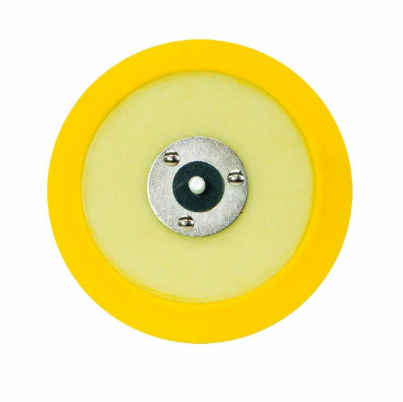
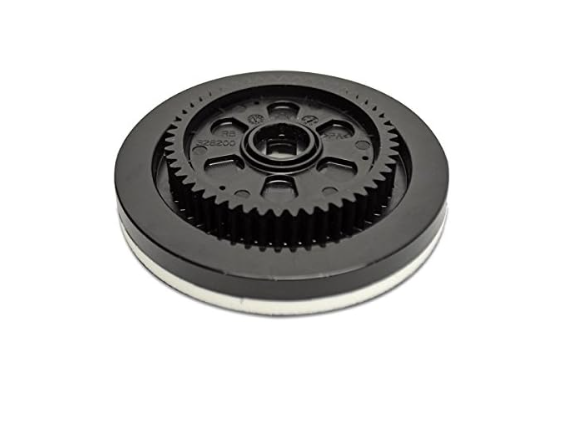
The Flex Backing Plate 4-3/8″ from Polishing Systems Inc is a compact, flexible polisher plate for correction work in areas where a full-size backing plate is the wrong tool. The flex construction allows the plate to follow body curves rather than bridge them, improving foam pad contact across non-flat surfaces and reducing the edge skip and pressure inconsistency that causes swirl marks and uneven correction in tight areas.
What This Product Is
This is a 4-3/8″ flexible foam pad backing plate for dual-action and random orbital polishers. It accepts 4″ and 5″ foam pads and attaches to any polisher with a 5/16″-24 (UNF) or M8 spindle thread — the standard for most consumer and professional DA polishers including Porter Cable, Griots, Flex, Rupes, and similar machines. The flexible plate construction differs from rigid aluminum backing plates in that it bends under load to conform to contoured surfaces.
Key Features and Why They Matter
- Compact 4-3/8″ diameter — sized for use with 4″ and 5″ foam pads on tight body areas. Means correction access to bumpers, door pillars, A/B/C pillars, and wheel arches that full-size plates cannot work cleanly.
- Flexible construction — plate flexes to follow contoured surfaces rather than bridging across curves. Means consistent pad contact on non-flat panels — better correction uniformity and reduced skip marks compared to rigid backing plates.
- Standard spindle compatibility — 5/16″-24 or M8 thread fits all major DA polisher brands. Means no specialty adapter needed to add this plate to an existing polisher setup.
- Hook-and-loop surface — accepts any compatible hook-and-loop foam pad. Means access to the full range of cutting, polishing, and finishing foam pads at this size.
What This Plate Is NOT For
Do not use this backing plate on a high-speed rotary polisher — flex plates are designed for the lower-force orbital motion of DA polishers. Rotary use can stress the plate beyond its design limits. Not for sanding discs — use a firm sanding backing plate for abrasive disc applications. For large, flat panel work, a 6-inch rigid backing plate is more appropriate — the smaller flex plate is specifically for tight and contoured areas.
Who Uses This Product
Professional detailers who run full correction systems on complete vehicles and need a compact plate for the areas that full-size plates cannot work cleanly. Body shop technicians doing paint correction on blend panels and bumper corrections after repair. Marine detailers working gel coat on curved hull sections, bow areas, and transom details. RV detailers correcting curved side panels and front cap sections where large plates bridge across surface curves.
How to Use
- Thread the backing plate onto your DA polisher’s spindle and tighten hand-firm. Do not over-torque — these threads are fine and the plate should seat securely without excessive force.
- Attach a 4″ or 5″ foam pad to the hook-and-loop surface. Center the pad on the plate and press firmly for full hook engagement.
- Apply product (compound or polish) directly to the pad face — 3–5 pea-size dots for a 4″ pad.
- Work at 3,000–4,500 OPM on your DA polisher, using the flex plate’s compliance to follow curves and contours in tight areas.
- Work in small sections on complex surfaces — the smaller contact area means faster polish removal per pass. Monitor correction progress frequently.
- For complementary foam pad options at this size, see the foam pads and accessories lineup.
Why Buy This vs. Running a Smaller Consumer Plate
Consumer backing plates sold in kit form are typically rigid — they do not flex with contoured surfaces. On curved body panels, a rigid small plate tilts at the leading edge under contact pressure rather than conforming, causing uneven abrasive distribution. The flex construction in this backing plate is the key functional difference — it is designed specifically for contoured-surface correction work, not as a simple size reduction. For other backing plate sizes and detailing machine accessories, see the backing plates category.
Frequently Asked Questions
What polisher brands is this compatible with?
Compatible with any DA polisher using a 5/16″-24 (standard U.S.) or M8 spindle thread. This covers Porter Cable, Griots Garage, DeWalt, Flex XCE, Rupes LHR series, and most other consumer and professional DA polishers sold in the U.S. market. Confirm your polisher’s spindle thread spec if uncertain — both thread types are common, and an adapter is available if needed.
What size foam pad should I use with this plate?
The 4-3/8″ plate is designed for 4″ and 5″ foam pads. Using a pad larger than 5″ will overhang the plate edge and result in pad fold-over and uneven correction pressure. Using a pad smaller than 4″ creates a gap around the plate edge that reduces correction effectiveness in the target area.
How do I know when the backing plate needs replacement?
Replace the plate when: the hook surface loses its grip and pads slip during use; the plate develops a permanent warp or set in the flat position; or the spindle thread shows wear or feels loose during tightening. A worn backing plate that allows pad movement during orbital motion is a source of uneven correction and swirl marks.
Can I use this plate for sanding with film disc abrasives?
No — this is a foam pad polisher backing plate. Sanding discs require a firm, flat backing plate that does not flex during abrasive contact. Flex plates used for sanding produce inconsistent cut depth and surface flatness. Use a firm sanding backing plate for any abrasive disc work.
Is this the same as a standard Lake Country or Meguiar’s backing plate?
The specifications (4-3/8″ diameter, flex construction, standard spindle thread, hook-and-loop surface) are comparable to industry-standard flex plates. This plate is sourced through Polishing Systems Inc’s professional equipment supply channel and is designed to the working tolerances required for production shop use.