
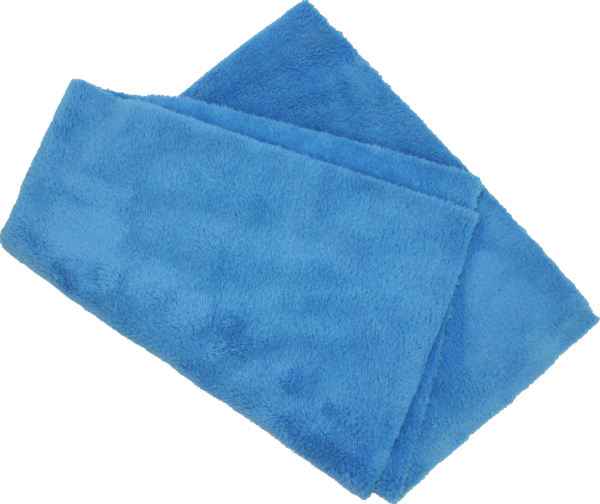
Polishing residue left on paint after a machine polish pass is forgiving of towel contact — you are buffing, the paint is being worked. The final buff-off of a wax or paint sealant is a different situation. That is a freshly corrected, freshly coated panel where what the towel does to the surface matters. A low-pile, edged microfiber in that moment is a mistake. A borderless, high-pile plush microfiber is the right tool — it lifts residue, buffs without pressure marring, and keeps contamination in the towel rather than dragging it across the surface.
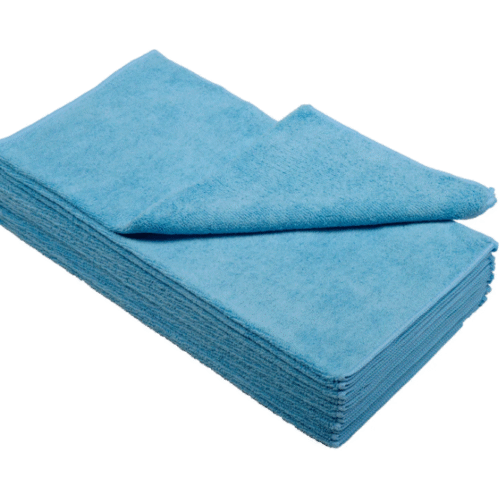
The Edgeless Ultra Plush Microfiber Towel — Blue 16×24 from Polishing Systems Inc is sized and built for the buff-off, final wipe, and light drying applications where towel construction makes a measurable difference in surface outcome. Ultra-plush pile for high absorption and gentle contact. Edgeless construction for safe use edge-to-edge on clear coat. 16×24 rectangular format for efficient panel coverage.
What This Towel Is
A high-GSM ultra-plush microfiber towel with edgeless (borderless) construction in a 16×24 inch format. The edgeless design means no sewn perimeter seam — the microfiber pile extends uniformly to the edge of the towel. The ultra-plush pile construction is significantly thicker and softer than standard-weight microfiber, providing higher absorption, more surface-contact cushioning, and better product-pickup performance during wax, sealant, and polish buff-off applications.
Key Features and Why They Matter
- Ultra-plush high-GSM pile — absorbs and holds product residue more effectively than standard-pile microfiber. Picks up wax and sealant without requiring heavy pressure — so what? Less pressure means less risk of swirl marks during the buff-off step.
- Edgeless construction — no sewn border to catch on paint, ceramic coating, or glass. The entire surface area of the towel, including all four edges, is safe contact microfiber.
- 16×24 inch format — the rectangular size covers more panel surface per fold than a square towel, making panel buff-off efficient on hoods, doors, and roofs.
- Blue color designation — standard blue identification for polishing and finishing towels in a professional color-coded towel system.
- Dual-pile construction — many ultra-plush edgeless towels use a dual pile height (long fiber on one face, shorter on the other) to provide versatility between heavy product absorption and refined surface finishing.
What This Is NOT For
Not for wheel cleaning, underbody work, or engine bay use — contaminating a plush paint-safe towel with brake dust or grease is a waste of a quality product and a risk to any subsequent paint contact. Not appropriate for use in dirty or abrasive environments. Do not use with fabric softener — it destroys microfiber performance. Not a substitute for a proper waffle-weave drying towel on a full-vehicle wet wash drying step.
Who Uses This Towel
Professional detailers doing final buff-off after wax, sealant, or paint protection product application. Ceramic coating installers buffing leveling wipe stages. Enthusiasts who have invested in paint correction and need a safe final contact towel for the finished surface. For a smaller edgeless format, see the Gray 16×16 Edgeless Microfiber Towel. For a different edgeless option, see the HT-EL20A Edgeless Microfiber Towel.
How to Use
- Fold in half, then in half again — creates eight usable faces from the 16×24 towel. Use one face per panel buff to avoid redistributing product residue.
- Apply light-to-moderate pressure during buff-off — the plush pile does the lifting. Heavy pressure is unnecessary and increases swirl risk.
- Work in straight, overlapping passes on painted surfaces. Avoid circular motions on the final buff-off step.
- Flip to a clean face after each panel section is buffed.
- Launder promptly after use — wax and sealant residue that hardens in the pile is harder to remove and reduces towel performance over time.
Why Ultra-Plush vs. Standard-Weight Microfiber for Buff-Off
Standard-weight microfiber (250-350 GSM) is appropriate for interior wipes, glass cleaning, and general product application. For the final buff-off of a wax or sealant — particularly on corrected or coated paint — ultra-plush (500+ GSM) construction provides the cushioning, absorption, and gentle contact needed to lift residue without requiring the pressure that causes contact marring. The higher pile holds more product between the fibers rather than depositing it back on the surface, which is why professional detailers maintain separate towel types for application versus removal steps.
Frequently Asked Questions
What GSM is this towel?
This is an ultra-plush specification towel — contact us for the exact GSM rating on this specific SKU. Ultra-plush edgeless towels in professional detailing typically range from 450-600 GSM, well above the standard microfiber range. The plush construction is visually distinguishable — thick, soft pile that compresses under your fingers.
Can I use this towel for ceramic coating installation?
Ultra-plush microfiber is commonly used in certain coating installation steps, but specific coating manufacturers have specific towel recommendations. Consult your coating manufacturer’s instructions for the preferred towel type and GSM for each installation step. Generally, a clean, lint-free edgeless microfiber works for many coating leveling and buffing steps.
How do I launder ultra-plush microfiber correctly?
Wash separately from cotton towels, in warm water (not hot), with a microfiber-safe detergent or a small amount of regular unscented detergent — no fabric softener. Tumble dry on low heat or air dry. Avoid high heat, which can melt and mat the microfiber pile. Wash inside-out if the towels have accumulated significant wax or sealant buildup.
Does the blue color bleed or fade in wash?
Quality professional microfiber uses colorfast dye processes that resist bleeding and fading through normal laundering. Wash in warm rather than hot water for best color retention. If you notice color bleeding in the first wash of a new towel, that is normal — wash separately from other towels on the first cycle.