The distinction between a polishing pad and a compounding pad is not just marketing — it is the difference between a tool that removes paint defects efficiently and one that spends three extra passes achieving what the right pad would do in one. Compounding pads — wool specifically — are built to move material. They load compound, hold abrasive in the fiber as it works, and deliver the mechanical cutting action that removes heavy oxidation, 1500-grit sanding marks, and deep defect layers from paint and gel coat without requiring an unreasonable number of passes.
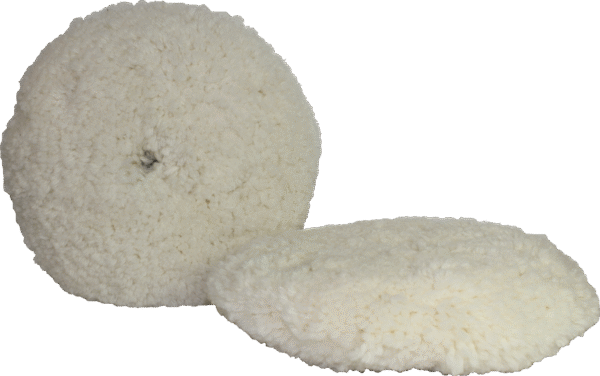
The Double-Sided Wool Compound Pad 8″ from Polishing Systems Inc is built specifically for compounding work at rotary machine speed. The wool face delivers the cutting aggression needed for heavy correction; the double-sided design gives you two working faces before the pad needs washing. This is the pad for the jobs where getting it done right and getting it done efficiently are equally important.
What This Pad Is
An 8-inch rotary compounding pad with natural or wool-blend fiber faces on both sides, designed for heavy-cut compounding work on rotary machines. The wool fiber engages compound abrasives differently than foam — it holds abrasive particles in the fiber structure, provides a scrubbing action that loosens paint contamination and defects, and dissipates heat more efficiently than foam during aggressive high-speed passes. The double-sided design provides two working surfaces per pad, extending working time between pad maintenance.
Key Features and Why They Matter
- Wool fiber compound face — the correct material for heavy compounding work. Wool fiber holds abrasive, agitates mechanically, and removes defects faster than foam at equivalent machine settings.
- Double-sided construction — two wool faces per pad. Flip when one face loads to maintain cutting performance without stopping to clean mid-job.
- 8-inch working diameter — covers significant surface area per pass, making production-scale compounding work on large panels and marine surfaces practical.
- Heavy-cut optimized — built for the aggressive compound products and machine speeds required for removing 1500-grit marks, oxidation, and severe paint defects.
- Reusable and washable — proper care extends pad life across many compounding sessions, making per-job cost reasonable at professional volume.
What This Is NOT For
This is a heavy-cut compounding tool — it is not a polishing, finishing, or jeweling pad. Follow every wool compound pad pass with appropriate foam polishing and finishing passes to remove the marring left by the wool fiber. Not for use on soft single-stage paints without careful speed and pressure management. Do not use on vinyl, leather, rubber trim, or interior surfaces. Not for use on chrome, polished aluminum, or bare metal without appropriate product and technique guidance.
Who Uses This Pad
Body shops doing production paint correction on collision-repaired vehicles. Marine detailers compounding oxidized fiberglass hulls and gel coat surfaces. RV reconditioning shops addressing heavy UV oxidation on exterior fiberglass. Fleet reconditioning operations running multiple cut-and-polish workflows per day. For the finishing steps after this pad, pair with a foam polishing pad and finishing pad — see the full exterior pads and compounds lineup. For smaller format wool pads, see the Double-Sided Wool Blend Polishing Pad 8″ for a related option.
How to Use
- Mount on an 8-inch rotary backing plate. Ensure centered, secure attachment before powering the machine.
- Prime the wool face with a small amount of compound before the first pass to saturate the fiber.
- Apply compound to the panel in a cross-hatch or line pattern across the work area.
- Start at low speed (600-800 RPM) to distribute product without sling, then increase to working speed for the compound and defect type (typically 1200-1800 RPM for heavy compounding).
- Apply moderate to firm pressure and work in 2-foot overlapping section passes.
- Flip to second face when the first face loads — do not continue working a heavily loaded face, which reduces cutting efficiency and can create uneven results.
- Inspect the surface after the compound pass for defect removal before moving to the polishing step.
Why Buy Professional Wool Compound Pads vs. Hardware-Store Buffing Pads
Hardware-store buffing pads are generally designed for wax and polish application — not aggressive compounding. They use low-density foam or bonnet-style covers that do not engage heavy compound abrasives the way wool fiber does. For a shop doing real paint correction work, using the wrong pad is as costly as using the wrong compound — it means more passes, more time, and often less correction depth achieved per session. Professional wool compound pads deliver the mechanical performance the job requires. Browse the complete compound and pad selection at Polishing Systems Inc for a matched system from heavy cut to final finish.
Frequently Asked Questions
What is the difference between this pad (HB777) and the wool blend pad (HB711)?
Both are double-sided 8-inch wool pads, but the HB777 is a compound-specific pad typically built with a more aggressive wool face suited for heavy compounding work. The HB711 wool blend may use a softer fiber blend or slightly less aggressive wool structure for polishing-range correction rather than maximum-aggression compounding. If you are removing sanding marks or heavy oxidation, the HB777 is the appropriate choice. For lighter correction, the HB711 may be sufficient.
How do I know when the wool face is loaded and needs to be flipped?
A loaded wool face loses its texture — the fiber clumps together, the surface looks glazed or slick, and the machine resistance decreases as the pad is no longer engaging the surface aggressively. You may also notice reduced cutting on a panel section that should still be showing defect removal. When you see these signs, flip the pad or clean the current face before continuing.
Can this pad be used with spray compound or only paste compound?
Both spray and paste compounds work with wool compound pads. Spray compound (liquid) penetrates the wool fiber quickly and is easy to apply, making it a common choice for professional shops using spray bottles. Paste compound requires a priming pass to saturate the fiber before it works efficiently. Spray format is generally more convenient for production-speed wool pad workflows.
How many correction passes does a typical double-sided pad provide before washing?
Under normal production conditions — one face per correction pass on a panel, flipping to the second face for the next job — a double-sided pad typically provides 2-4 full-vehicle correction passes before requiring washing, depending on defect severity and compound load per pass. Heavy compounding on severely oxidized surfaces loads pads faster than moderate defect correction. Clean pads consistently for best results.