When your shop is running ceramic coating installations five days a week, or your body shop is prepping panels before primer on every vehicle through the door, a 1-gallon or even a 5-gallon pail of surface prep solvent becomes a logistical problem. You are either paying someone to reorder constantly, interrupting jobs when you run dry, or spending a premium on retail-packaged prep products that are sized for hobbyists. The 55-gallon drum format solves all three problems at once — and for a shop with the volume to support it, the economics are not even close.
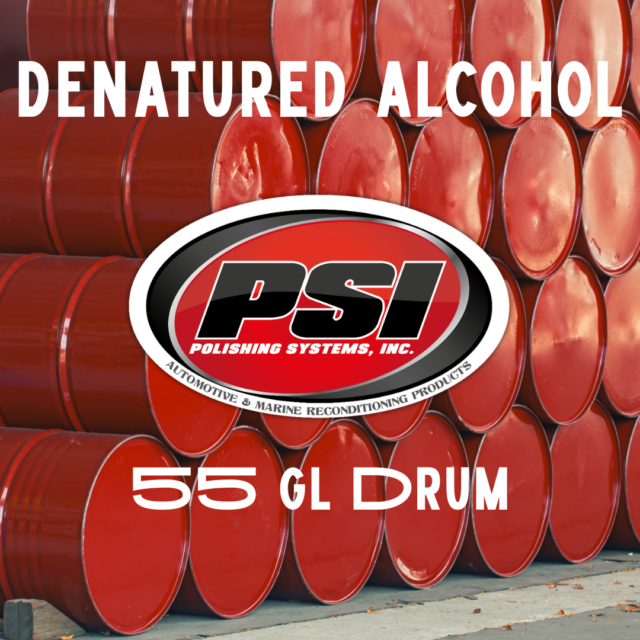
Denatured Alcohol 55 Gallon Drum from Polishing Systems Inc is the highest-volume format for this professional-grade prep solvent. Industrial-strength denatured ethanol, properly packaged for drum pump dispensing, at the per-gallon cost that high-volume operations require. Set it in your prep bay, attach your drum pump, and it becomes a continuous, on-demand supply point for every wipe-down job that comes through.
What Denatured Alcohol Does in a Professional Shop
Denatured alcohol is a fast-evaporating ethanol-based solvent that strips the surface contamination invisible to the eye but fatal to coating bonds: polishing lubricant oils, silicone residue from prior detailing products, wax traces, fingerprints, and airborne contamination. It evaporates completely in 30-60 seconds at room temperature, leaving the surface chemically clean and ready for coating, film, or paint application. At 55-gallon volume, it becomes a facility-wide resource rather than a per-job purchase.
Key Features and Why They Matter
- 55-gallon drum format — the industry standard for high-throughput shops. Compatible with standard 2-inch bung drum pumps and direct-mount dispensing systems.
- Industrial-grade denatured ethanol — professional concentration, not diluted for retail. What you get is what you use — no water cuts or additives that reduce performance.
- Lowest per-gallon cost in the product line — bulk pricing at drum volume reduces prep solvent cost to pennies per application for most jobs.
- Fast, complete evaporation — no residue means no re-contamination of the surface between prep and coating application.
- Continuous supply — eliminates the workflow interruption of running out mid-job or mid-day.
Critical Safety — High Volume Flammable Liquid Handling
A 55-gallon drum of denatured alcohol is a significant quantity of highly flammable liquid. Proper facility handling is mandatory:
- Store the drum in a compliant flammable-liquid storage area — dedicated flammable storage room or approved outdoor enclosure
- Bond and ground the drum and dispensing pump to prevent static discharge during transfer
- Never store near ignition sources, welding equipment, or open-flame heating
- Ventilation is required — vapors are heavier than air and accumulate at floor level
- Have appropriate fire suppression equipment accessible in the storage and dispensing area
- Comply with local fire code requirements for flammable liquid storage quantities
- Denatured alcohol is toxic if ingested due to denaturing agents — store securely and label prominently
Who Uses Denatured Alcohol by the Drum
Ceramic coating installers running multiple jobs daily, body shops prepping panels at scale, fleet reconditioning facilities, and auto auction reconditioning centers are the primary drum buyers. If your monthly consumption of prep solvent is approaching 5 gallons per week or more, the drum format is almost always the better economic and logistical choice. The 5-gallon pail is the right step down for shops not yet at drum volume. The 1-gallon size works for very low-volume or occasional use.
How to Dispense and Use
- Install a drum pump on the 2-inch bung fitting. Ground the drum per your facility’s flammable liquid protocol before first dispensing.
- Fill spray bottles at the drum rather than moving the drum to individual work bays. Use solvent-rated HDPE or glass spray bottles.
- Apply to a clean microfiber towel — spray the towel, not the surface directly, when doing pre-coating wipe-downs.
- Wipe panel by panel with a fresh microfiber face every 2-3 panels.
- Allow 30-60 seconds flash time before applying coating or film.
- Replace drum cap securely after each dispensing session to prevent evaporation loss.
Why Buy Drum Volume vs. Multiple Pails
The math is straightforward. At drum pricing, denatured alcohol costs significantly less per gallon than buying eleven 5-gallon pails to get the same volume. Add in the reduced handling, the elimination of repeated ordering, the single delivery versus multiple shipments, and the drum format wins on every dimension for shops doing serious volume. For facilities that also use other bulk chemistry — car wash soap, degreasers, dressing — standardizing on drum-format purchasing simplifies chemical inventory management across the board.
Frequently Asked Questions
What drum pump fits this product?
A standard 2-inch bung drum pump fits the 55-gallon drum. Stainless steel or polypropylene pump bodies are compatible with denatured alcohol. Avoid aluminum pump bodies — denatured alcohol can corrode aluminum over time. We also carry the compatible 2″ Drum Faucet if you prefer a gravity-feed dispensing approach.
How long does a 55-gallon drum last in a production ceramic coating shop?
A shop installing ceramic coatings on 3-5 vehicles per day will typically consume approximately 1-2 gallons of prep solvent per full-vehicle installation. At that rate, a 55-gallon drum lasts roughly 1-2 months for a single-bay operation, and 2-4 weeks for a multi-bay shop with multiple installers working simultaneously.
Does LTL freight apply to drum orders?
Yes — 55-gallon drums of flammable liquid ship as hazardous materials via LTL freight. We handle all hazmat documentation and packaging compliance. Delivery requires a loading dock or forklift at the receiving location. Contact us before ordering if you need lift-gate delivery or inside delivery arrangements.
Is this the same product as the 5-gallon pail, just in a larger container?
Yes — the drum and pail formats contain the same industrial-grade denatured alcohol formulation. The drum format simply reduces the per-gallon cost and eliminates the need for frequent reordering. There is no difference in product chemistry or concentration between the two sizes.