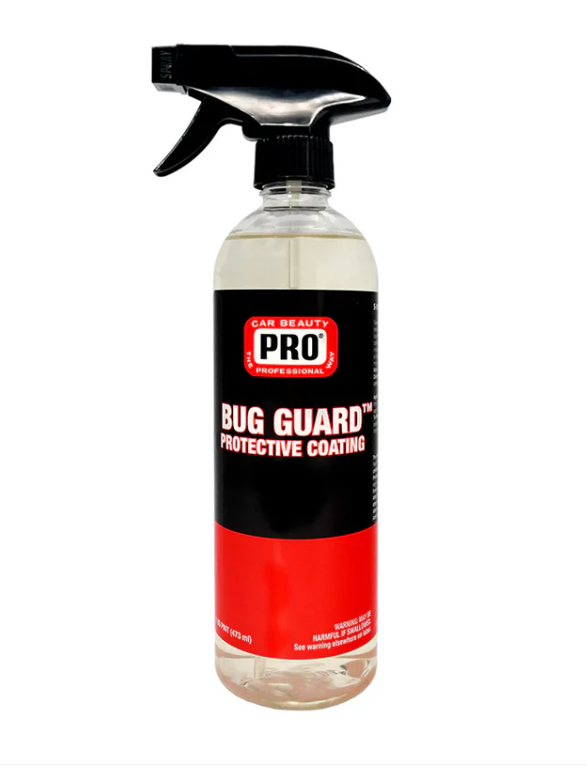
Preventing bug splatter is almost impossible for vehicles that spend time on highways during insect-active months. But the difference between bugs that wipe off at the next rinse and bugs that are baked into the clear coat after a summer drive through agricultural country comes down to surface preparation. A properly protected paint surface gives insects a slick surface that does not allow them to bond during impact — making cleanup dramatically faster and safer for the paint.
Bug Guard 16 oz is a pre-travel surface treatment that builds that low-adhesion barrier on automotive surfaces. Applied after washing, the product leaves a protective film on paint, glass, and plastic that reduces insect adhesion and makes bug removal at the next wash faster and less aggressive.
What Bug Guard Is
Bug Guard is a spray-on surface treatment that creates a slick, low-adhesion barrier on automotive paint, glass, chrome, and plastic trim. It is applied after washing and reduces insect adhesion during highway travel, making the next bug cleanup faster and less mechanically aggressive. It is not a bug remover — it is a preventive surface treatment that makes removal easier.
Key Features and Why They Matter
- Low-adhesion surface barrier — slick film on paint and glass prevents insects from bonding at impact with the same force they would on an untreated surface. So what? Bugs at the next wash rinse off more easily with less scrubbing risk to the paint.
- Protects paint from protein etching — the barrier slows the contact between insect protein acids and the clear coat surface, reducing the etching risk from extended insect dwell time.
- Works on paint, glass, chrome, and plastic — one product covers the full front-end surface area that takes insect impact during travel.
- 16 oz ready-to-use spray — no dilution or measuring required. Apply, spread, and buff for fast pre-trip treatment.
What Bug Guard Is NOT For
Bug Guard is a preventive surface treatment — it is not a bug remover for insects already on the vehicle. For removing existing bug contamination, use a dedicated bug remover spray or wash chemistry before applying Bug Guard as the protective step. Not for use on surfaces incompatible with polymer-based spray protectants — test on a small area if applying to specialty or non-standard automotive finishes.
Who Uses This
RV owners preparing for summer travel routes, fleet operators running highway-heavy vehicles through high-bug-season areas, car enthusiasts protecting fresh paint correction work before road trips, and anyone who regularly deals with heavy bug contamination uses Bug Guard as part of their pre-trip detailing routine. Browse the full exterior protection category for complementary surface protectants and wash products.
How to Use Bug Guard
- Start with a clean, dry vehicle — wash, dry, and decontaminate before applying Bug Guard.
- Mist Bug Guard onto one section at a time (hood, bumper, windshield).
- Spread evenly with a clean microfiber applicator or towel.
- Buff to a uniform finish with a second dry microfiber.
- Apply before highway travel for maximum protection during the trip.
- Reapply after each wash for continued protection.
Why Buy Bug Guard vs. Skipping Surface Protection
An unprotected clear coat surface allows insect protein to bond directly to the paint chemistry on impact. The protein then begins acidic etching within hours in hot conditions. Bug Guard’s surface barrier creates a meaningful delay in that bonding process, buying time for cleanup and reducing the physical agitation needed at the next wash — protecting both the paint and the time required for bug cleanup.
Frequently Asked Questions
Can Bug Guard be used over a ceramic coating?
Bug Guard is a surface treatment compatible with most cured automotive coatings. For ceramic-coated vehicles, verify with the ceramic coating manufacturer whether additional polymer protectants are appropriate on top of the coating before applying. Many ceramic coatings already provide a degree of surface slickness that aids bug removal.
How long does Bug Guard protection last?
Bug Guard protection on typical automotive surfaces lasts through one to several wash cycles, depending on wash chemistry, weather exposure, and application thickness. Reapply after each wash for sustained protection during high-insect-traffic travel seasons.
Is Bug Guard safe on rubber trim and seals?
Bug Guard is formulated for use on paint, glass, chrome, and plastic. Test on a small hidden area of rubber trim before full-surface application to verify compatibility with your vehicle’s specific trim material.
Does Bug Guard work in all seasons?
Bug Guard is most relevant during spring, summer, and early fall when insect activity is highest and highway bug splatter is a regular issue. In winter, it provides general surface protection benefits but the specific insect-adhesion prevention value is seasonal.
Can I apply Bug Guard with a foam applicator pad?
Yes — Bug Guard can be applied with a foam applicator, a soft microfiber cloth, or a direct spray onto the surface. Buff with a second clean microfiber for a uniform finish regardless of application method.