Not every correction job is a lightly swirled daily driver that light compound handles in one pass — and not every job is a wet-sanded repaint that requires heavy compound and a wool pad. The majority of serious correction work falls in the middle: paint that has accumulated 3–5 years of car wash damage, an older vehicle with real oxidation on the hood and roof, a neglected clear coat with moderate water etching and moderate swirling that a light compound would take too many passes to address efficiently. This is where medium compound earns its place in the kit.
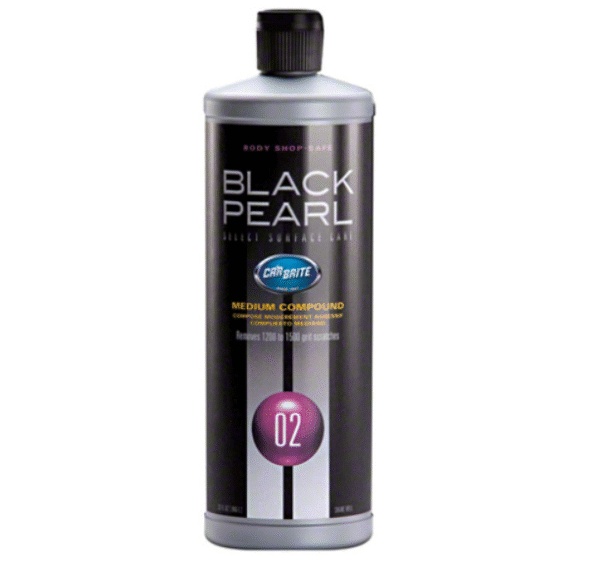
Black Pearl Medium Compound 32 oz (SKU CBOOBP02-02) is the workhorse of the Black Pearl correction system — the compound for the moderate correction jobs that make up the majority of serious paint correction work. More aggressive than the light compound for faster progress on deeper defects; less aggressive than the heavy compound so the finishing work afterward is manageable. Diminishing abrasive technology reduces the finishing work needed after the cutting stage. The 32-oz size is the professional working format for shops doing this work week after week.
What This Product Is
Black Pearl Medium Compound is a mid-cut, diminishing-abrasive correction compound for moderate paint defects — moderate swirling, light to moderate oxidation, water etching, and minor sanding marks that require more correction than a light compound can efficiently deliver but do not require the maximum aggressiveness of heavy compound. It is the most versatile product in the Black Pearl system — the right starting point for the range of correction jobs a professional shop encounters most frequently.
Key Features and Why They Matter
- Mid-cut abrasive level — the practical balance between correction speed and finishing refinement. Removes moderate defects efficiently without requiring the extensive polishing stages that heavy compound demands.
- Diminishing abrasive technology — abrasives break down during the polishing pass, progressively refining the surface even as correction work proceeds. Reduces total polishing pass count across the full correction sequence.
- Versatile across machine types — effective on DA polishers with cutting foam, and on rotary polishers with polishing foam for moderately aggressive correction work.
- 32-oz working volume — professional working size for shops doing compound correction as part of a regular service offering. Enough for multiple correction sessions without restocking.
What This Is NOT For
Medium compound will not efficiently remove deep sanding marks or severe oxidation that requires heavy compound aggressiveness. For those situations, start with Black Pearl Heavy Compound before transitioning to medium for the refinement stage. Conversely, on lightly swirled paint that light compound handles in a single pass, medium compound is unnecessary aggressiveness that creates additional finishing work. Match the product to the defect level.
Who Uses This
Detail shops offering paint correction services use medium compound as their standard starting product for vehicles with real correction work needed — not the light enhancement polish jobs, and not the extreme bodywork corrections, but the core of what a professional correction service addresses. Mobile detailers doing comprehensive paint correction services start with medium compound on the majority of their correction clients before stepping down to light compound and final finish. For the complete Black Pearl system: Heavy Compound for maximum correction, Medium Compound for moderate correction, Light Compound for light correction, and Final Finish for the polishing stage.
How to Use
- Select pad: Medium to aggressive cutting foam on DA; polishing or cutting foam on rotary, depending on defect severity.
- Apply: 4 pea-sized drops on the pad. Spread at low speed before beginning correction passes.
- Set speed: DA polisher: setting 4–6. Rotary: 1,200–1,600 RPM, adjusted for paint hardness.
- Work in sections: 18–24-inch sections. Moderate to firm pressure. Work until compound works clear.
- Inspect: Check defect removal under a panel light. Moderate swirling and oxidation should be significantly reduced or removed in 1–2 passes.
- Follow up: Proceed to light compound or directly to Final Finish depending on the surface refinement level achieved by the medium compound stage.
Frequently Asked Questions
When should I use medium compound vs. starting with light compound?
If light compound removes the defect efficiently in 1–2 passes, use light compound and save medium for situations that need it. If you are running the machine through 3+ passes with light compound and the defect is not resolving, step up to medium compound — it will get the result in fewer passes, reducing total machine time on the panel and the risk of heat-related paint damage from excessive polishing passes.
What is the typical correction sequence using the full Black Pearl system?
For a heavily defected vehicle: Heavy Compound → Medium Compound → Light Compound → Final Finish. For moderate defects: Medium Compound → Final Finish. For light defects: Light Compound → Final Finish. Not every job requires all stages — start at the appropriate compound level and use only the stages needed to reach the correction target.
Can medium compound be used as a single-stage correction product?
On moderately defected paint, medium compound with a finishing foam pad at moderate speed on a DA can produce a one-step result that avoids a separate finishing stage — the diminishing abrasive technology helps the compound self-refine to a reasonable gloss. For a show-quality or ceramic-coating-prep result, a Final Finish stage after medium compound is still recommended to maximize surface clarity.
How does Black Pearl compare to other compound brands?
Black Pearl is a professional-grade correction compound system positioned for shops doing serious paint correction work on dark and deep-colored paint. The diminishing abrasive technology and dark-paint-optimized formulation are the distinguishing characteristics. Compare performance on your specific paint and correction workflow — professional compounds at this level often have small performance differences that depend on the specific paint system, pad pairing, and machine type.
Is medium compound appropriate for marine gel coat correction?
Yes — medium compound is commonly used for marine gel coat correction on moderately oxidized fiberglass. Gel coat is typically softer than automotive clear coat and cuts faster — use conservative machine speeds and monitor surface temperature frequently when compounding gel coat with any product, including medium compound. For heavily oxidized gel coat, start with heavy compound before medium for the refinement stage.