
Water hides in places a chamois and a drying towel will never reach. Door jambs, mirror housings, lug nut recesses, emblems, trim channels, sunroof drains, fuel door hinges — every vehicle has a collection of water-retention points that turn a freshly dried car into a drip-spotted disappointment five minutes after it rolls out of the bay. The solution is not more towels; it is compressed air.
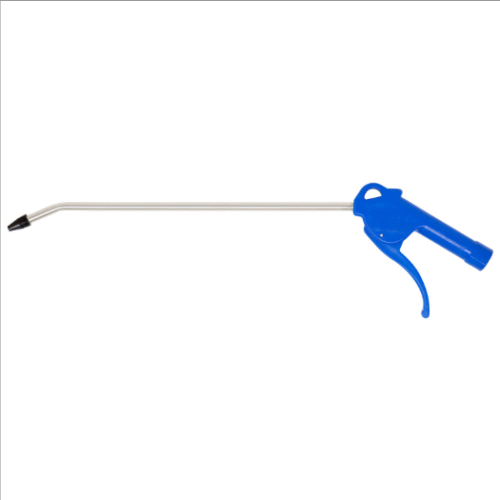
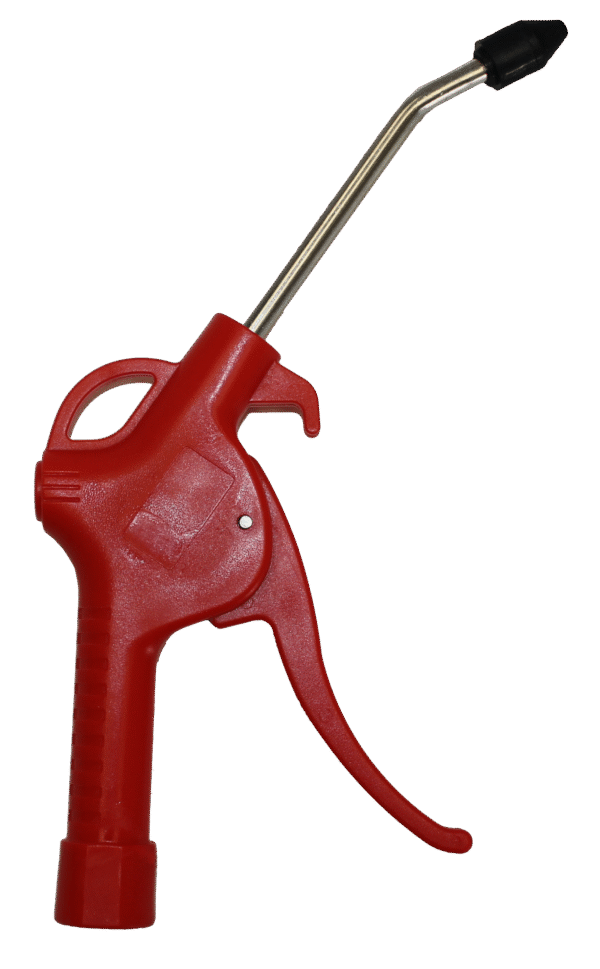
The Air Blow Gun with 4″ Rubber Tip (SKU AG-001) from Polishing Systems Inc is the standard detail-shop air blow gun — the tool that gets water out of gaps and recesses before it has a chance to bead out onto a dry panel. The 4-inch rubber tip is the critical detail: it blows with enough velocity to clear water from tight spaces without the steel or bare-aluminum nozzle tip that would scratch paint and trim if it makes contact with a surface.
What This Product Is
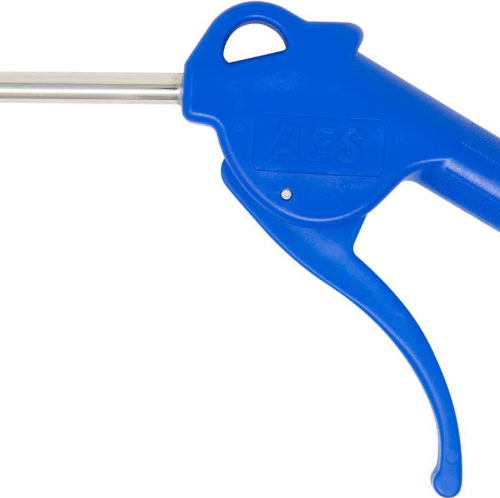
This is a shop air blow gun with a 4-inch rubber-tipped nozzle and a 1/4-inch NPT male inlet fitting, compatible with standard shop air hose quick-connect couplers. The trigger-controlled airflow delivers a concentrated air stream for displacing water, dust, and debris from panel gaps, wheel components, and interior surfaces. The rubber tip is the distinguishing feature for detail applications — it protects paint and trim on contact.
Key Features and Why They Matter
- 4-inch rubber nozzle tip — flexible rubber protects paint, trim, and glass surfaces if the nozzle tip makes contact during use. A bare metal nozzle in a detail environment is a scratch waiting to happen in tight panel gaps and around chrome trim.
- Trigger-controlled airflow — delivers on-demand air with simple trigger operation. Consistent airflow control lets you clear water from door jambs without blasting product off adjacent surfaces.
- 1/4″ NPT inlet — standard fitting compatible with the quick-connect couplers on most shop air hose setups. No adapter required for most detail and body shop air systems.
- Compact 4-inch nozzle length — short enough for maneuverability in tight spaces without the reach problems of longer nozzles in confined work areas.
What This Is NOT For
This air blow gun is for standard shop-pressure applications in a detail and light-duty shop environment. It is not a high-pressure industrial air gun for heavy metal fab or pneumatic scale applications. Do not use at pressures above the tool’s rated PSI — consult the product spec sheet. Do not direct high-velocity air at bare eyes without protective eyewear — always wear safety glasses when operating any air blow gun. The rubber tip is for surface protection, not for sealing against surfaces for pressure containment.
Who Uses This
Professional detailers use an air blow gun as a standard step in the drying process — clear water from door gaps, mirror housings, and trim channels before towel drying so water does not wick back out after the car is dried. Body shops use blow guns to clear sanding dust from panel surfaces before applying sealer or primer — compressed air dust removal is faster and more complete than a tack cloth alone. Mobile detailers with compressor setups use them for the same drying process on client vehicles. Any detail or light-body shop with a compressed air supply should have at least one blow gun on each working station.
How to Use
- Connect: Attach to your shop air hose via the 1/4″ NPT fitting with the appropriate quick-connect coupler.
- Set pressure: Use at regulated shop pressure appropriate for the application. For paint-safe detail work, 40–70 PSI is typical. Higher pressures may displace trim seals or water bead excessively on fresh product applications.
- Clear water: Work from the top of the vehicle down. Blow water from roof channels first, then door gaps, mirror housings, trim channels, lug nut recesses, and wheel wells.
- Interior use: Use at lower pressure to blow dust from interior vents, filter housings, gauge clusters, and crevices before interior detailing passes.
- After use: Release trigger and disconnect from air supply. Store out of direct sun and away from chemical exposure to prolong rubber tip life.
Why Buy This vs. a Standard Industrial Blow Gun
Industrial steel-tip blow guns are designed for metal fabrication and manufacturing environments where contact with a soft surface is not a concern. The rubber tip on this detail-specific blow gun prevents the nozzle from marring paint, trim, and glass when used in the confined working spaces of a vehicle detail environment. The cost difference between a rubber-tip detail blow gun and the damage from a chrome scratched by a steel nozzle tip makes the rubber-tip version the obvious choice for any shop doing paint correction and quality finish work. See the full range of air tools at Polishing Systems Inc for blow guns, air guns, and pneumatic detail accessories.
Frequently Asked Questions
What air pressure should I use for drying cars?
For panel gap water removal during drying, 40–70 PSI is the typical range for a detail environment. Higher pressure clears water faster but can blow water into adjacent areas and displace trim seals if sustained for long periods. Adjust to the lowest effective pressure for your specific application.
Will a rubber tip wear out faster than a metal tip?
Rubber tips do wear from abrasion over time, particularly if used frequently in coarse or gritty environments. In a detail shop where the nozzle tip contacts clean painted surfaces and trim, tip wear is slow. Replace the tip if it becomes cracked or deformed in a way that changes the airflow pattern or exposes underlying metal.
Does this come with a 1/4″ quick-connect coupler?
The blow gun includes the 1/4″ NPT male inlet. A compatible quick-connect coupler (1/4″ female) is typically required to connect to standard shop air hose setups. If your shop uses a different fitting size, an appropriate adapter is needed. Most detail and body shops with existing air systems already have the required coupler infrastructure.
What is the difference between this and the 11″ nozzle blow gun?
The 11″ nozzle blow gun provides additional reach for blowing into deep recesses, engine compartments, and areas not accessible with the shorter 4-inch nozzle. For most body panel, door gap, and wheel work, the 4-inch nozzle is sufficient and more maneuverable. For engine bay detailing and deep access applications, the 11-inch nozzle version is the appropriate choice.
Can I use this for blowing out carpet and upholstery?
Compressed air is very effective for blowing debris — pet hair, crumbs, sand — from carpet fibers and seat crevices before vacuuming. Use at moderate pressure and keep the nozzle moving to avoid concentrating the airflow on one spot too long. The rubber tip is safe for interior fabric and trim surfaces.