
Buying chemicals in 55-gallon drum volumes makes economic sense for high-volume operations — the cost-per-gallon difference over smaller packaging is significant. But a drum without a proper dispensing pump is an ergonomic and safety problem. Lifting and tipping a 55-gallon drum to pour from it is not practical at any volume. A properly fitted drum pump is the equipment that makes drum-volume purchasing operationally viable.
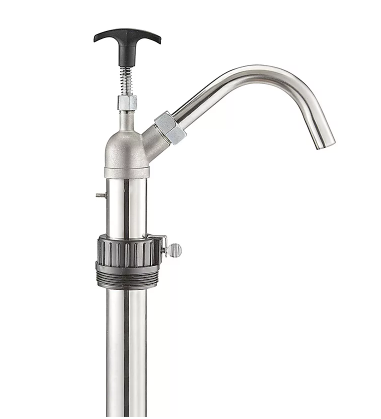
The 55 Gallon Metal Drum Pump is a hand-operated piston pump designed for inserting into the bung of a standard 55-gallon drum for manual fluid transfer. The metal body resists degradation from the cleaning concentrates, degreasers, and automotive fluids typically stored in 55-gallon drums in professional shop environments. It dispenses fluid without tipping, tilting, or straining — making drum-volume operations safe and efficient for one-person shops and large operations alike.
What This Pump Is
This is a manual piston-action drum pump. The pump body inserts into the 2-inch bung opening of a standard 55-gallon drum. Hand-pumping the handle draws fluid up through the pump tube and dispenses it from the outlet into a bucket, spray bottle, or other container. Metal construction throughout the body and discharge tube makes it compatible with more chemical types than plastic equivalents.
Key Features and Why They Matter
- Metal pump body and discharge tube — resists degradation from cleaning concentrates, degreasers, and mild acids better than plastic. Means longer service life when used with aggressive chemistry common in professional detailing supply drums.
- Standard 55-gallon drum bung fit — installs directly into the 2-inch bung opening on standard steel and plastic drums. Means no adapter required for most drum suppliers’ standard packaging.
- Manual piston operation — no electrical connection required. Means use in any shop location — outdoors, at a drum storage rack, or in areas where electrical access is limited.
- Safe dispensing without drum tipping — eliminates the ergonomic risk and spill hazard of manually tilting a full or partially full 55-gallon drum. Means safer chemical handling for shop staff.
- Adjustable dispensing volume — each pump stroke dispenses a consistent volume. Means controlled dispensing for dilution into buckets and spray bottles without overfilling.
What This Pump Is NOT For
Verify chemical compatibility before use. Metal drum pumps are not appropriate for all fluid types — concentrated hydrofluoric acid, extremely high-pH caustics, and some solvent mixtures can degrade metal pump components or cause unsafe chemical reactions. Always check the pump manufacturer’s chemical compatibility guide against the specific product in your drum. This is a manual pump — not for continuous or high-volume fluid transfer where a motorized drum pump would be more appropriate.
Who Uses This
Any operation storing chemicals in 55-gallon drums needs a drum pump. Car washes storing soap concentrate or protectant in drum volumes, detail shops working with drum quantities of all-purpose cleaner or degreaser, fleet maintenance operations dispensing corrosion inhibitor or wash concentrate, and marine service facilities storing hull cleaner or wash compound all use drum pumps as basic equipment. See the full shop equipment and supplies for additional dispensing and storage tools.
How to Use
- Verify compatibility: Confirm the pump materials are compatible with the chemical in the drum before installation.
- Insert the pump tube: Remove the 2-inch drum bung plug. Insert the pump tube into the drum bung opening.
- Thread the pump body: Thread or seat the pump body into the bung until secure and sealed.
- Position discharge tube: Direct the outlet into the receiving container — bucket, bottle, or jug.
- Pump: Operate the pump handle with steady up-and-down strokes to dispense fluid.
- Store properly: When not in use, leave the pump installed in the drum with a cap over the discharge outlet to prevent contamination and evaporation.
Why Buy Metal vs. Plastic Drum Pumps
Plastic drum pumps are lower in initial cost but are limited in chemical compatibility. Many cleaning concentrates and degreasers used in professional detailing degrade plastic pump bodies and tubes over time, leading to pump failure and potential chemical spills. Metal construction tolerates a broader range of chemical exposures without degradation — particularly the alkaline degreasers and mild acid-based cleaners that are common in shop drum storage. For a shop operating with drum-volume chemical supply, the metal pump is a one-time equipment purchase that pays for itself in reliability and longevity.
Frequently Asked Questions
Does this fit both steel and plastic 55-gallon drums?
Yes — most 55-gallon drums use a standard 2-inch bung opening regardless of whether the drum is steel or plastic. Verify your drum’s bung size before purchasing if you have non-standard drum packaging from your chemical supplier.
How much does each pump stroke dispense?
Stroke volume varies by pump design and tube depth. Most manual drum pumps are designed to dispense approximately one ounce per stroke, though this varies. Check the product specifications for the rated output per stroke.
Can I use this with acetone or other solvents?
Metal body construction improves compatibility with many solvents compared to plastic, but some seals in the pump mechanism may be made of material not compatible with specific solvents. Check the pump’s material compatibility list before using with acetone, MEK, or other aggressive solvents.
How do I clean the pump between different chemicals?
Pump a volume of fresh water through the pump until the discharge runs clear, then pump until dry. For thorough cleaning between incompatible chemicals, disassemble and clean the pump components before switching to a new drum.
Is a separate hose or dispensing wand included?
Check the product packaging for included components. Most drum pumps include a discharge tube or hose — verify the included accessories meet your dispensing needs before purchase.