
Wet sanding is precision work. You are mechanically removing paint from a vehicle’s surface — cutting down orange peel, leveling a dust nib, smoothing a sanding scratch, or flattening an over-sprayed panel before compound correction. The tools that work are precise, consistent, and matched to the defect depth you are addressing. The sandpaper that delivers those results is waterproof silicon carbide on a flexible backing that cuts cleanly, loads slowly, and provides the feedback a skilled technician needs to control the cut.
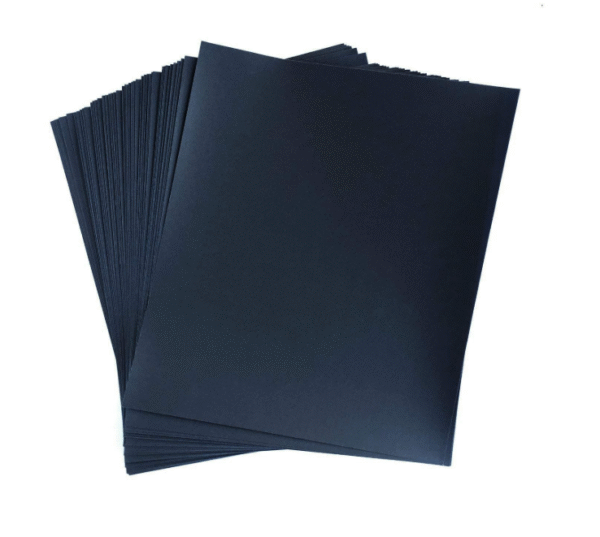
These are 5-1/2 by 9-inch waterproof silicon carbide sandpaper half sheets in a 50-sheet pack — the professional supply format for body shops, paint shops, and detailers who wet-sand regularly. Half sheets fit standard sanding blocks and dual-action sanding pads directly without cutting, making them the practical working format for most automotive wet-sanding applications.
What 600-Grit Waterproof Half Sheets Are
600-grit is a coarse wet-sand grit in the automotive refinish range — used for initial material removal, leveling coarse surface conditions, removing dry primer sanding marks, and preparing surfaces for finer grit progression in a full wet-sand correction sequence. At 600-grit, the cutting rate is aggressive relative to finish grits, making it appropriate for serious surface leveling work while remaining finer than the block-sanding grits (80–320) used in bodywork. The 600-grit scratch pattern requires progression through 800, 1500, and 2000-grit plus machine compounding before the surface is ready for final polish.
Key Features and Why They Matter
- 600-grit silicon carbide abrasive — aggressive cutting rate for initial material removal on coarse surface conditions. The appropriate grit for the most severe wet-sanding applications before refinement.
- 5-1/2 x 9-inch waterproof half sheet — direct-fit format for standard automotive sanding blocks. Waterproof backing handles extended wet sanding sessions without degradation.
- 50-sheet pack — production supply volume for body shops and refinish operations. 600-grit work is typically the highest-consumption grit in a body shop context.
- Professional silicon carbide formulation — consistent grit sizing for reliable, repeatable material removal in production body shop use.
What 600-Grit Is NOT For
600-grit removes material rapidly — do not use on thin clear coat, freshly painted panels, or light paint without confirming adequate paint depth first. Not appropriate as a finishing step before compounding alone — 600-grit requires a full refinement sequence (800 → 1500 → 2000-grit) before machine compound work begins. Not for use on gel-anchored clear coats without experience in gel coat thickness assessment.
Who Uses 600-Grit Half Sheets
Body shops removing primer sanding marks and featheredging prep marks before paint. Refinish technicians addressing coarse surface conditions from prior sanding or mechanical damage. Professional paint correction shops doing first-stage leveling on severely neglected single-stage paint with extreme oxidation or surface irregularity. Marine refinishers doing initial gel coat leveling on heavily weathered surfaces.
How to Use 600-Grit Waterproof Half Sheets
- Confirm the need for 600-grit: This is an aggressive grit. Only use where the surface defect severity genuinely requires it — if 800-grit achieves the result, do not use 600.
- Maintain continuous water lubrication: 600-grit on paint generates heat faster than finer grits — keep the surface very wet throughout.
- Work in small sections: Work one panel section at a time and inspect frequently to avoid over-cutting.
- Commit to the full refinement sequence: After 600-grit, you must progress through 800, 1500, and 2000-grit refinement, plus heavy-cut and medium compound, before the surface is correctable to a polish-ready state. Plan the full workflow before starting.
The Complete Grit Progression from 600
Starting at 600-grit is the most commitment-intensive correction path. The full refinement sequence from 600-grit: 600 → 800 → 1500 → 2000 → heavy-cut compound → medium compound → medium polish → finishing polish. Each step exists to remove the previous grit’s scratch marks. Skipping steps leaves visible sanding marks that the final polish cannot remove. Plan the full workflow and stock all necessary grits before beginning a 600-grit correction. See the 800-grit pack, 1500-grit pack, and 2000-grit pack to complete the grit progression set.
Frequently Asked Questions
When is 600-grit the right starting point vs. 800-grit?
600-grit is appropriate when the surface has coarse sanding marks from prior bodywork (80–320 grit dry sanding), heavy primer texture, or surface damage that 800-grit cannot level in a reasonable number of passes. If 800-grit achieves leveling efficiently, use 800-grit — a coarser starting grit always means more total refinement work downstream.
What is the correct wet-sanding technique for automotive paint?
Keep the surface wet throughout the sanding process — water lubricates the cut and prevents the paper from loading with paint dust. Work in straight, overlapping passes in one direction, then cross-hatch perpendicular to check coverage. Use a hard backing block for flat panel areas; a soft or radius block for gentle curves. Change paper frequently — a loaded sheet cuts less consistently than a fresh one.
What compound is used after wet sanding?
After wet sanding, the next step is machine compounding to remove sanding scratches left by the final grit used. The compound grade should be matched to the grit — after 2000-grit sanding, a medium-cut compound is typically sufficient; after 600 or 800-grit, a heavy-cut compound is needed first, followed by medium polish, then finishing polish. The complete correction sequence is: sand to the appropriate grit, compound out the sand scratches, polish to remove compound haze, finish to gloss.
What is the difference between silicon carbide and aluminum oxide sandpaper?
Silicon carbide (the abrasive in these waterproof sheets) is a harder, sharper abrasive grain that cuts more precisely and loads more slowly in wet sanding applications. It is the correct abrasive for automotive paint wet sanding. Aluminum oxide is a harder, more durable abrasive appropriate for dry sanding wood and metal but is not optimized for the wet paint sanding workflow. For automotive refinish and detail wet sanding, silicon carbide waterproof paper is the professional standard.
Are these half sheets the same as standard roll sandpaper in 600-grit?
These are pre-cut half sheets (5-1/2 x 9 inches) in professional automotive waterproof paper — specifically the format and backing appropriate for automotive wet sanding. Standard hardware store sandpaper rolls in similar grit ranges use different abrasive chemistry and backing formulations that do not perform the same way in wet automotive sanding applications. Professional automotive waterproof paper is the correct specification for paint and gel coat wet sanding work.