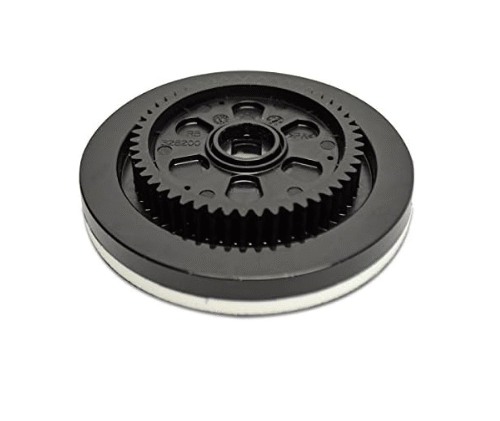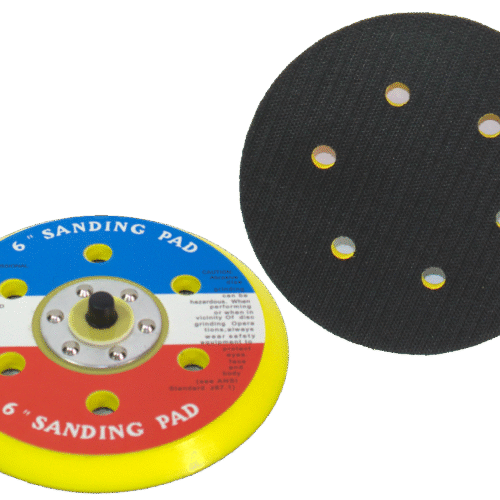
A 6 or 7-inch backing plate does an efficient job on hoods, roofs, and large door panels — but every professional detailer reaches a point in a correction job where the size becomes a liability. Tight areas around door handles, the contoured sections around mirrors, the A-pillar and window frame trim line, small body panel sections on sports cars and compact vehicles — these are the spots where a large plate physically cannot maneuver without making contact with adjacent trim and potentially causing damage.
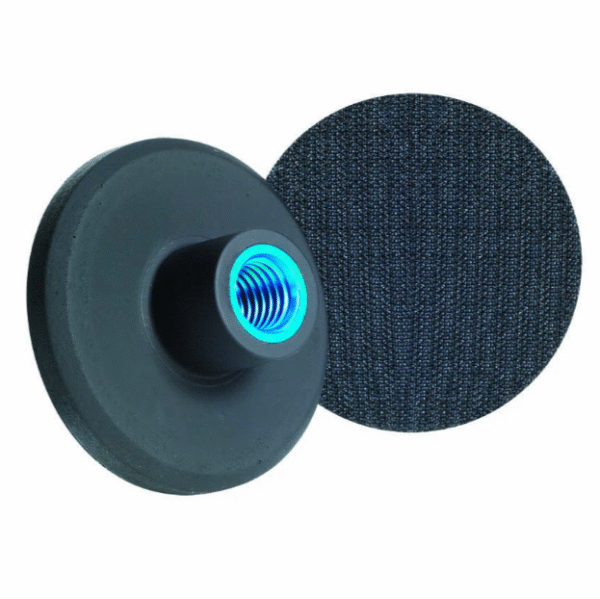
The 3″ Backing Plate with 5/8″-11 Metal Threads (SKU BS358) from Polishing Systems Inc is the precision-work plate for exactly those situations. At 3 inches in diameter, it fits into working spaces a standard backing plate cannot enter, and pairs with 3-inch foam pads for spot correction work, chip touch-up prep, and tight-area polishing on any vehicle type. The 5/8″-11 metal thread ensures secure, rattle-free attachment to standard polisher spindles.
What This Product Is
This is a 3-inch diameter hook-and-loop (Velcro) backing plate with a 5/8″-11 threaded metal insert for direct attachment to polisher spindles with that thread size. Compatible with 3-inch foam pads. Used for spot correction, touch-up polishing, and precision work in tight vehicle areas where standard 5–7-inch plates cannot be used safely.
Key Features and Why They Matter
- 3-inch small-format diameter — the plate size for working in areas where standard plates cannot go safely. Precise control for spot correction around trim, handles, and body line transitions.
- 5/8″-11 metal thread insert — the standard spindle thread found on most professional rotary polishers and many variable-speed orbital units. Metal thread insert vs. plastic ensures durability through thousands of thread cycles without stripping.
- Hook-and-loop face — accepts any 3-inch foam pad with a hook-and-loop backing. Standard across the 3-inch foam pad market.
- Rigid or semi-rigid construction — maintains pad face position without flex distortion in small-format high-speed rotary work, giving consistent pad contact at the small working area.
What This Is NOT For
This 3-inch plate is not a general polishing plate for full-panel work — it is too small to be efficient on large panels and the small diameter creates hot spots if used at standard correction speeds and pressures across a large surface. It is a specialty precision plate for tight areas and spot work. For full-panel polishing, 5, 6, 7, and 8-inch plates are the appropriate sizes. Also confirm that your polisher accepts 5/8″-11 thread — some DA polishers use 8mm or other thread sizes. 5/8″-11 is the standard rotary polisher spindle thread in North America.
Who Uses This
Professional paint correction detailers keep a 3-inch plate in their backing plate collection specifically for the tight-area work that comes up on every correction job. Body shop technicians doing spot correction and wet-sanding refinement on limited repair areas use small plates for the precision required. Show prep detailers working around badges, trim, and highly contoured body panels on custom and exotic vehicles use 3-inch plates for the sections where a larger plate cannot work safely. Any detailer doing full paint correction work should have at least one small-format plate as part of their standard kit alongside their main 5 or 6-inch plates.
How to Use
- Thread onto polisher spindle: Thread the 5/8″-11 plate onto the spindle clockwise until fully seated. Do not over-torque — firm hand-tight is sufficient for most rotary applications.
- Mount 3-inch foam pad: Press a compatible 3-inch hook-and-loop foam pad firmly onto the backing plate face. Ensure complete contact across the full pad face.
- Set polisher speed: For spot correction work with a 3-inch plate, start at lower RPM than you would use for the same compound on a larger plate — the smaller diameter concentrates the correction pressure significantly.
- Work the area: Use controlled, overlapping passes in the tight work area. Maintain consistent light pressure — the small plate concentrates force. Monitor surface temperature more frequently than with larger plates.
- Inspect: Check correction progress frequently. Tight areas around trim can be more difficult to inspect under a panel light — use a focused flashlight or inspection light positioned carefully.
Why Buy This vs. Just Using a Smaller Pad on a 6-Inch Plate
Mounting a 3-inch pad on a 6-inch backing plate creates a situation where the outer edge of the large plate contacts trim and surrounding surfaces while only the center area of the pad is doing correction work — this is both ineffective and a damage risk. A 3-inch backing plate paired with a 3-inch pad gives you a compact working footprint that the plate edge itself defines, allowing precise work in tight areas without the interference of a large plate. Browse the full range of backing plates and foam polishing pads at Polishing Systems Inc for a complete precision polishing kit.
Frequently Asked Questions
Is 5/8″-11 the standard thread for all rotary polishers?
5/8″-11 is the standard spindle thread for most professional rotary polishers made for the North American market. DA (dual-action) orbital polishers, however, often use 8mm threads — particularly Porter Cable, Meguiar’s, and many European brands. Confirm your polisher’s spindle thread before ordering. If you have an 8mm DA polisher, you need an 8mm thread backing plate, not a 5/8″-11 plate.
What 3-inch pads are compatible with this plate?
Any 3-inch foam or microfiber pad with a hook-and-loop backing is compatible with this plate. The hook-and-loop face on the backing plate accepts standard hook-and-loop pad backing material. For 3-inch pads in cutting, polishing, and finishing densities, contact Polishing Systems Inc for current availability.
How fast should I run a 3-inch plate on a rotary polisher?
Use lower speeds with smaller plates — the small diameter means each revolution covers less surface distance than a larger plate at the same RPM, but the contact pressure is concentrated on a small area. Start at 1,000–1,200 RPM for spot correction work with a 3-inch plate and monitor heat buildup carefully. Smaller plates can create localized heat much faster than larger plates.
Can I use this backing plate on a DA polisher?
Only if your DA polisher has a 5/8″-11 spindle thread — many DA polishers use 8mm threads, which are not compatible. Check your DA polisher’s specification sheet for spindle thread size before purchasing a 5/8″-11 plate. Using an incompatible thread size will damage the spindle or the plate.
Is the 3-inch plate appropriate for headlight restoration work?
Yes — 3-inch pads and plates are commonly used for headlight lens restoration where working on a lens contour requires precise control that a full 6-inch plate does not allow. Pair with an appropriate cutting foam pad and headlight-specific or general-purpose compound for the initial clearing, followed by a finishing pad for final clarity.