
Drying a wet vehicle with towels alone is slow and puts friction-contact risk on the paint with every pass. A water blade or squeegee removes the bulk of water in a single controlled stroke per section, leaving only a light surface film that a soft microfiber can remove without heavy pressure. The result is faster drying with less microfiber contact — especially valuable on large vehicles and in production wash settings where drying speed is a throughput factor.
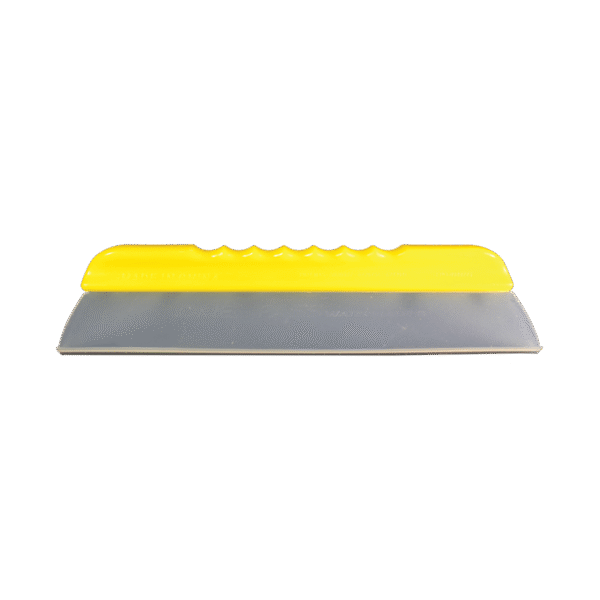
The California Style Jelly Blade 12″ Yellow is a wide-format flexible silicone squeegee designed specifically for automotive paint and glass. The 12-inch blade width covers significantly more surface per stroke than smaller squeegees, and the flexible silicone construction follows body panel curves without the stiff-edge risk of harder rubber blades.
What the Jelly Blade Is
A 12-inch wide flexible silicone squeegee blade for vehicle drying. The soft, flexible silicone conforms to curved automotive surfaces and channels water off the paint cleanly without edge marks or paint contact risk when used correctly. Designed for use on automotive paint, glass, and smooth gel coat.
Key Features and Why They Matter
- 12-inch blade width — removes water from three times the surface area per stroke of a standard 4-inch squeegee. So what? Faster drying cycles on large vehicles and in production wash environments.
- Flexible silicone construction — conforms to the slight curves of automotive hoods, roofs, and panels without rigid edge marks. Safer on paint than harder rubber squeegees.
- Streak-free water removal — silicone channels water off the surface cleanly, leaving a minimal residue film for microfiber finishing.
- Yellow color identification — easy to identify in a multi-tool detailing kit.
What This Is NOT For
The Jelly Blade is for post-rinse water removal on clean automotive paint, glass, and gel coat. It is not a replacement for final microfiber drying — use a clean microfiber towel after the blade to remove the remaining water film and achieve a spot-free finish. Do not use on heavily contaminated or gritty surfaces — dragging a squeegee across surface contamination risks scratching. Not for use on matte or satin paint finishes that are sensitive to contact-drag.
Who Uses This
Car wash operations drying vehicles in production, mobile detailers who need fast drying in their workflow, RV and boat owners dealing with large flat surfaces, and enthusiasts who have adopted water blade drying as a paint-protective alternative to heavy towel use. Browse the full exterior wash and drying accessories category for microfiber towels and complementary drying tools.
How to Use the Jelly Blade
- After rinsing the vehicle, start at the roof and work down the vehicle in sections (roof, hood, trunk, then doors and fenders).
- Hold the Jelly Blade at a 30–45 degree angle to the surface.
- Draw the blade across the surface in a single controlled stroke, channeling water off the panel edge.
- Shake or wipe the blade to clear water between strokes.
- Follow with a soft, clean microfiber towel to remove the remaining water film for a spot-free finish.
Why Buy a Jelly Blade vs. Drying Only with Towels
Microfiber towels require significant physical contact with the paint surface during drying — and that contact multiplies the risk of light scratching from residual grit or towel texture. A water blade removes the bulk of water in a low-contact controlled stroke, drastically reducing the amount of microfiber contact the surface needs. The 12-inch Jelly Blade makes that process fast enough to be practical in a production wash environment.
Frequently Asked Questions
Will the Jelly Blade scratch my paint?
Flexible silicone blades are designed to be softer than automotive paint surfaces. The primary marring risk with any squeegee is dragging grit that remains on the surface after rinsing. Always ensure the vehicle is thoroughly rinsed and free of visible surface contamination before using the blade. On freshly corrected or delicate paint, test on a small area first.
Can I use the Jelly Blade on my windshield?
Yes — the Jelly Blade is appropriate for use on automotive glass. Squeegees are commonly used for glass drying in car wash operations. Keep the blade clean and free of debris before glass contact to avoid scratching the glass surface.
How do I clean and maintain the Jelly Blade?
Rinse thoroughly after each use. Inspect the silicone blade edge for nicks or debris that could mark the paint surface on subsequent use. Store the blade in a clean, covered holder or bag to protect the silicone edge from cuts or contamination. Replace when the blade edge shows visible damage or distortion.
Is the 12-inch size appropriate for small vehicles?
The 12-inch blade is efficient on vehicles of all sizes — the larger blade simply removes water faster per stroke. On smaller vehicles with tighter curved surfaces, the flexibility of the silicone allows it to conform to tighter panel geometries. If very tight corners or complex panel shapes are a priority, a smaller blade may provide more control in those specific areas.
What is the blade made of?
The Jelly Blade uses a flexible silicone compound for the blade element. Silicone is softer and more flexible than standard rubber squeegee blades, providing better surface conformance on curved automotive panels while remaining durable for repeated professional use.