
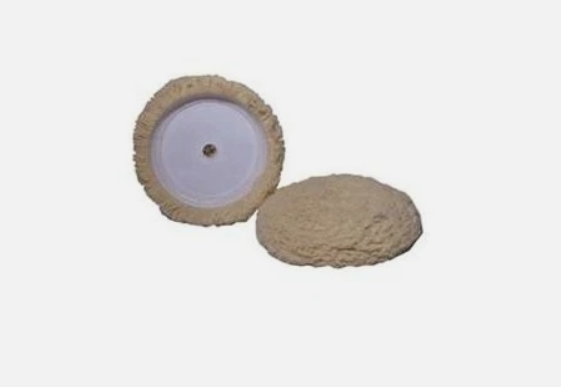
Wool pads occupy a specific and important role in heavy-correction work. They are the tool of choice when you need to remove material quickly — severe oxidation on RV sidewalls, marine gel coat that has chalked over a full season, fleet vehicles with multi-year paint neglect — work where foam pads either require too many passes or cannot generate the sustained cutting action needed to clear the defect level in a reasonable time. Wool’s natural fiber structure generates abrasion in a way that foam chemistry does not replicate for the hardest correction tasks.
The Wool Buffing Pad 7.5″ x 1.5″ from Polishing Systems Inc is the full-size cutting pad in natural wool for professional rotary and DA polisher use. The 7.5-inch face provides efficient coverage on standard-sized vehicle panels, and the 1.5-inch pad depth gives the compound enough material to work into across multiple correction passes before the pad needs to be cleaned or turned. Natural wool construction for reliable cutting performance on the applications where this category of pad is the right tool.
What This Product Is
This is a 7.5-inch diameter by 1.5-inch thick natural wool buffing pad for rotary and dual-action polishers. Natural wool construction provides an aggressive cutting action for heavy oxidation removal, compound applications, and initial correction passes on paint and gel coat. The pad attaches to 7-inch backing plates via the standard backing plate attachment system. Not a synthetic wool or blended pad — this is natural wool fiber construction.
Key Features and Why They Matter
- Natural wool fiber construction — produces aggressive cutting through fiber-tip abrasion that foam pads do not replicate for the heaviest correction tasks. So what? Significantly faster material removal on severe oxidation and heavy defect correction versus foam, reducing total machine time on difficult jobs.
- 7.5-inch face diameter — wide coverage for efficient panel-by-panel work. Full-size working format for professional rotary operators doing hood-to-bumper correction work.
- 1.5-inch pad thickness — substantial depth for compound absorption and consistent cutting pressure across multiple passes before pad saturation.
- Rotary and DA compatible — primary use is on a rotary polisher for maximum cutting performance; also works on high-speed DA polishers for a somewhat moderated but still effective cutting result.
- Washable and reusable — proper hand-washing and air-drying restores wool pad performance through many correction sessions.
What This Is NOT For
Wool pads are not designed for finishing polishing or swirl removal on modern soft clear coat paints at high rotary speeds. The wool fiber leaves marring that requires a follow-up foam polishing pad to remove — using a wool pad as the last step in a correction sequence leaves a visibly marred surface. Wool is the starting tool for heavy correction; foam pads close the sequence. Also not appropriate for very thin single-stage paint systems where aggressive wool cutting at high rotary RPM carries a high burn-through risk. Experienced operators only for high-speed rotary use.
Who Uses This
Marine detailers polishing fiberglass hulls and gel coat, RV detailers removing heavy chalking and oxidation from roof and sidewall surfaces, truck-and-trailer detailers doing initial correction passes on severely neglected fleet vehicles, and production body shops using the rotary for compound stages are the core users of a wool cutting pad at this size. Any operation that has heavy-correction work as a regular part of their service menu should have wool pads in the kit.
How to Use
- Pre-wash the pad before first use to remove manufacturing residue and open wool fibers for consistent performance.
- Prime with compound: Work a small amount of heavy-cut compound into the wool before starting the machine.
- Set speed: Start at low speed to spread compound. Increase to working RPM (typically 1500-2000 RPM for heavy cutting on a rotary).
- Work in overlapping passes with moderate pressure. Watch panel temperature — wool-rotary combinations generate significant heat. Work sections and check frequently.
- Clean the pad regularly with a pad cleaning brush or spur to prevent compound buildup in the fiber that reduces cut effectiveness.
- Follow with foam pads for medium-cut and finishing steps to remove wool marring and bring paint to a polished, high-gloss finish.
Why Wool When Foam Is Available
On the right job, wool is faster. That matters in production environments where correction time equals revenue. For severe oxidation, gel coat polishing, and paint that has been neglected beyond what medium-density foam can address in reasonable time, wool is the more efficient starting tool. The tradeoff — wool marring that requires foam follow-up — is acceptable in a proper multi-step correction workflow. See our full polishing pads and accessories for companion foam pads including the prewashed 6.5-inch lambswool buffing pad.
Frequently Asked Questions
Is this a 100% natural wool pad or a synthetic blend?
This is a natural wool fiber pad. Natural wool is the standard for cutting pads in professional detailing and marine polishing applications. The natural fiber structure is what provides the characteristic cutting action that synthetic blends partially replicate but generally do not match on the hardest correction tasks.
How do I clean and maintain this wool pad?
Hand-wash in warm water with a mild detergent. Work compound residue out of the fiber gently — do not aggressively wring or twist the pad. Rinse thoroughly and press out excess water (do not wring). Lay flat to air dry completely before storage. Never machine-wash or tumble-dry a wool buffing pad.
Can I use this pad with a DA polisher instead of a rotary?
Yes — the 7.5-inch wool pad works with a dual-action polisher on a 7-inch backing plate. DA operation is less aggressive than rotary for wool pads — the cutting action is meaningful but more moderated. For the heaviest correction work, a rotary delivers the full cutting performance of natural wool. A DA with wool is a reasonable option for detailers who do not own a rotary but need more cut than foam provides.
What compound should I use with this wool pad?
A heavy-cut machine compound rated for rotary use is the standard pairing with a wool cutting pad. For gel coat, use a gel-coat-rated compound. Choose the compound based on the severity of the defects and the substrate being corrected, not just the pad.
How does this compare to the 6.5-inch lambswool pad?
The 7.5×1.5 wool pad has a larger face for broader panel coverage and more pad depth for extended compound absorption. The prewashed 6.5-inch lambswool pad is the smaller-format option for tighter access areas or operators who prefer the 6-inch backing plate system. Both are natural wool cutting pads — the choice is primarily based on backing plate size and coverage preference.