
Paint correction is a precision process — but paint defects are not always visible until you know exactly how to look for them. Under shop lighting, a panel that appears clean and corrected may still carry fine holograms left by a finishing pad, micro-scratches that did not fully remove, or areas where the compound cut unevenly. Catching these issues before the coating goes on is the difference between a warranty-backed ceramic coating result and a correction job that gets a comeback two weeks later when the customer sees it under afternoon sunlight.
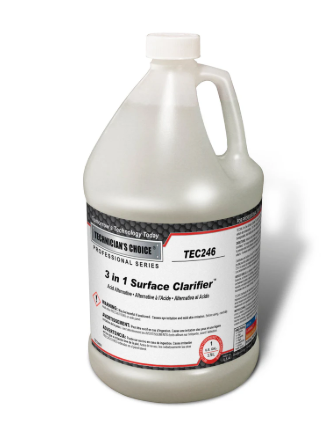
Surface Clarifier 1 Gallon from Polishing Systems Inc is the professional inspection and final-prep product for paint correction specialists. It enhances paint surface clarity temporarily, making defects visible under inspection lighting so the detailer can confirm correction completeness before applying the final finish step.
What Surface Clarifier Does
Surface Clarifier is a liquid paint inspection product. Applied to a corrected panel, it fills microscopic surface imperfections temporarily and enhances light reflectivity — making holograms, swirl marks, and fine scratches more visible, not less. This is the opposite of a finishing product: where a finishing polish hides remaining defects, Surface Clarifier reveals them. It cleans off cleanly with a microfiber after inspection, leaving the surface in the same corrected state it was in before application.
Key Features and Why They Matter
- Reveals rather than hides defects — the correct tool for inspecting correction quality before coating. A product that hides swirls gives false confidence; Surface Clarifier shows you what remains.
- Removes cleanly without residue — wipes off with a clean microfiber, leaving the corrected paint surface ready for the next step without introducing new contamination.
- Compatible with pre-coating inspection workflow — use as the inspection step after final polish and before solvent wipe-down and coating application.
- 1-gallon professional size — consistent supply for shops doing regular paint correction work. Refills spray bottles efficiently without constant reordering.
What Surface Clarifier Is NOT For
Surface Clarifier is not a polishing compound, finishing polish, or coating. It does not remove defects — it reveals them. Do not apply it as a finishing step and leave it on the vehicle. It is a diagnostic tool for the paint correction process, used between correction steps or before the final wipe-down and coating.
Who Uses Surface Clarifier
Professional paint correction specialists doing multi-stage paint correction on high-value vehicles, ceramic coating installers who inspect every panel before coating application, detail shop quality control technicians checking correction work before handoff, and detailing instructors teaching students to identify and verify correction results.
How to Use
- After completing each correction stage, apply a small amount of Surface Clarifier to a clean microfiber applicator pad.
- Wipe over the corrected panel in straight passes.
- Inspect under a focused light source — LED inspection light, shop light, or sunlight — for remaining swirls, holograms, and fine scratches.
- If defects remain, mark the area and return to the appropriate correction step.
- Wipe the Surface Clarifier off with a clean microfiber towel before applying additional correction product or proceeding to the final wipe-down and coating.
Why Use Surface Clarifier vs. Just Wiping with IPA
A solvent wipe-down removes polish fillers and shows the true paint condition — but it does not enhance defect visibility. Surface Clarifier actively improves the signal-to-noise ratio of the inspection: it makes the defects you need to catch more visible, not just strips the polish that was hiding them. Pair with Super Solvent for the final wipe-down after inspection. Browse the full range of paint correction and coating prep products for the complete professional prep lineup.
Frequently Asked Questions
Will Surface Clarifier interfere with ceramic coating adhesion?
Surface Clarifier must be completely removed with a clean microfiber before proceeding to coating application. After removal, complete the standard solvent wipe-down step with Super Solvent or equivalent prep product before coating. Do not apply ceramic coating over Surface Clarifier residue.
How does Surface Clarifier compare to a paint gauge for quality control?
Paint thickness gauges measure remaining clearcoat depth — critical for understanding how much correction is possible without risking burn-through. Surface Clarifier is a visual inspection tool for identifying what defects remain in the existing surface. Both tools serve different quality control functions in a professional paint correction workflow.
Can I use Surface Clarifier on dark-colored vehicles where defects are most visible?
Yes — Surface Clarifier is particularly valuable on black, dark gray, and dark navy vehicles where even minor swirls and holograms show clearly. Dark paint correction work typically requires the most thorough inspection before proceeding to coating, making Surface Clarifier an especially useful tool in those workflows.
What inspection lighting works best with Surface Clarifier?
A high-intensity focused LED inspection light (such as a Scangrip or similar detail inspection light) used at a low angle to the surface provides the best defect visibility. Rotate the light angle around the panel to catch holograms from different directions — some defects only appear when the light hits at a specific angle.