After spending time correcting paint — removing swirls, polishing out water spots, restoring oxidized gel coat — protecting that work matters. A carnauba wax will give you gloss for a few weeks. A properly applied synthetic paint sealant locks in that corrected surface for months, through repeated washes, rain, and UV exposure, without requiring the frequent reapplication that natural waxes demand.
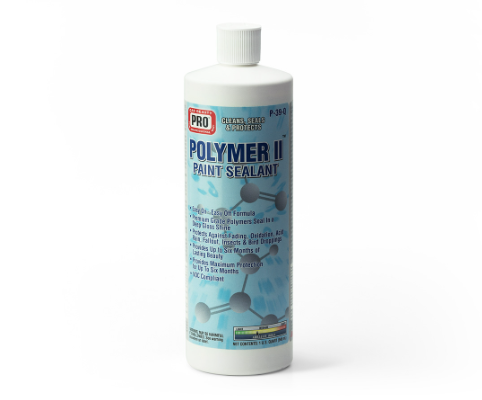
Polymer II Sealant Quart is the polymer-based protection step for paint correction workflows and standalone protection services. The synthetic polymer formula bonds chemically to the paint surface on application, creating a durable hydrophobic layer that repels water, resists UV degradation, and maintains gloss through conditions that strip carnauba wax within a week.
What Polymer II Sealant Is
Polymer II Sealant is a synthetic polymer-based paint protection product for automotive and marine paint surfaces. Unlike carnauba wax, which sits on top of the paint as a temporary sacrificial layer, a polymer sealant bonds to the paint via chemical adhesion — creating a more durable, longer-lasting hydrophobic layer. It is applied to freshly polished, decontaminated paint and cured to a hard protective film. Browse the exterior protection products for the complete sealant and coating lineup.
Key Features and Why They Matter
- Synthetic polymer bonding chemistry — chemically adheres to paint rather than sitting on top as a temporary coating. Significantly more durable than carnauba wax in real-world weather and wash exposure.
- Hydrophobic surface protection — repels water, causing it to bead and sheet off the treated surface. Keeps paint cleaner between washes and reduces water spot formation in hard-water environments.
- UV-resistant formulation — resists UV degradation that accelerates paint oxidation and fading, particularly on vehicles with sun-exposed parking exposure.
- High-gloss enhancement — adds a noticeable depth-of-gloss improvement on corrected paint. The polymer layer acts as an optical enhancement layer over the paint surface.
- Quart working size — sufficient for multiple full-vehicle applications in a professional workflow. Economical per-application cost compared to consumer-grade wax and sealant products.
What Polymer II Sealant Is NOT For
Polymer II Sealant must be applied to clean, decontaminated, and polished paint — it cannot bond effectively over wax residue, contamination, or polish dust. Do not apply on uncleaned surfaces, over existing wax layers, or on surfaces that have not been properly prepared. It is also not designed for use as a base layer under ceramic coatings — for ceramic coating applications, use a ceramic-compatible primer or apply the coating directly to bare, IPA-wiped paint per the coating manufacturer’s instructions.
Who Uses This
Detail shops offering a paint protection step at the conclusion of paint correction work, mobile detailers who include a polymer sealant application in their standard detail packages, and vehicle owners who want to protect a freshly detailed vehicle for a full season without the need for monthly wax reapplication. The quart size covers multiple vehicles and provides a meaningful per-application cost advantage over retail wax products.
How to Use
- Prep the surface: Wash, clay, decontaminate, and polish the paint before applying sealant. Final wipe with IPA (isopropyl alcohol) or panel wipe to remove all polish residue and oils.
- Apply by machine or hand: A foam applicator pad on a DA polisher at low speed (1–2) produces the most even coverage. Hand application with a foam or microfiber applicator pad is also effective on smaller areas.
- Apply in thin, overlapping passes: A thin coat bonds and cures more effectively than a thick one. Work panel by panel.
- Allow to flash: Let the sealant haze slightly on the surface (2–5 minutes depending on temperature).
- Buff off: Remove with a clean, soft microfiber towel using light pressure. Turn frequently to a clean surface.
- Cure time: Allow 12–24 hours before exposing to water or washing after initial application for maximum bond strength.
Why Polymer Sealant vs. Carnauba Wax
Carnauba wax is a natural product with warm visual depth, but it degrades relatively quickly under wash exposure, heat, and UV. A polymer sealant provides measurably longer protection — typically 4–6 months versus 4–6 weeks for carnauba wax. For customers who want to protect their vehicle from a single spring detail through the summer driving season, polymer sealant is the right recommendation. For customers who prefer the warm depth of carnauba and don’t mind quarterly reapplication, carnauba remains a legitimate choice.
Frequently Asked Questions
How long does Polymer II Sealant last?
Applied to properly prepared paint, Polymer II Sealant provides durable hydrophobic protection for approximately 4–6 months under normal driving and washing conditions. Heavy use, frequent high-pressure washing, and continuous UV exposure in hot-climate regions may reduce longevity. Reapply annually or biannually for continuous protection.
Can I apply Polymer II Sealant over an existing wax layer?
No — the sealant requires a bare, clean paint surface to bond effectively. Existing wax residue prevents proper polymer adhesion and significantly reduces longevity. Remove existing wax with a wax stripper or thorough IPA wipe before applying the sealant.
Can Polymer II Sealant be topped with carnauba wax?
Yes. Applying a layer of carnauba wax over a cured polymer sealant is a common professional detailing approach — it combines the durability of the polymer base with the warm visual depth of carnauba on top. Allow the sealant to fully cure (at least 24 hours) before applying carnauba wax over it.
Is Polymer II Sealant safe on marine gel coat?
Yes — the sealant is compatible with marine gel coat surfaces as well as automotive paint. Marine applications benefit particularly from the UV-resistance and hydrophobic properties, which help maintain gel coat appearance through constant sun and water exposure.
How many vehicles does one quart cover?
At standard thin-coat application rates, one quart of Polymer II Sealant covers approximately 8–15 full vehicle applications depending on panel count and vehicle size. Larger vehicles (trucks, SUVs, vans) use more product per application than compact passenger cars.