A vehicle can be washed perfectly and still have paint that feels rough or gritty to the touch. That texture is embedded surface contamination — iron particles from brake dust, industrial fallout, rail dust, and other contaminants that have physically bonded to or embedded in the clear coat. Washing removes surface dirt; clay bar removes what is in the surface. It is the contamination removal step between washing and polishing or protection, and without it, polish and sealant are applied over a contaminated substrate.
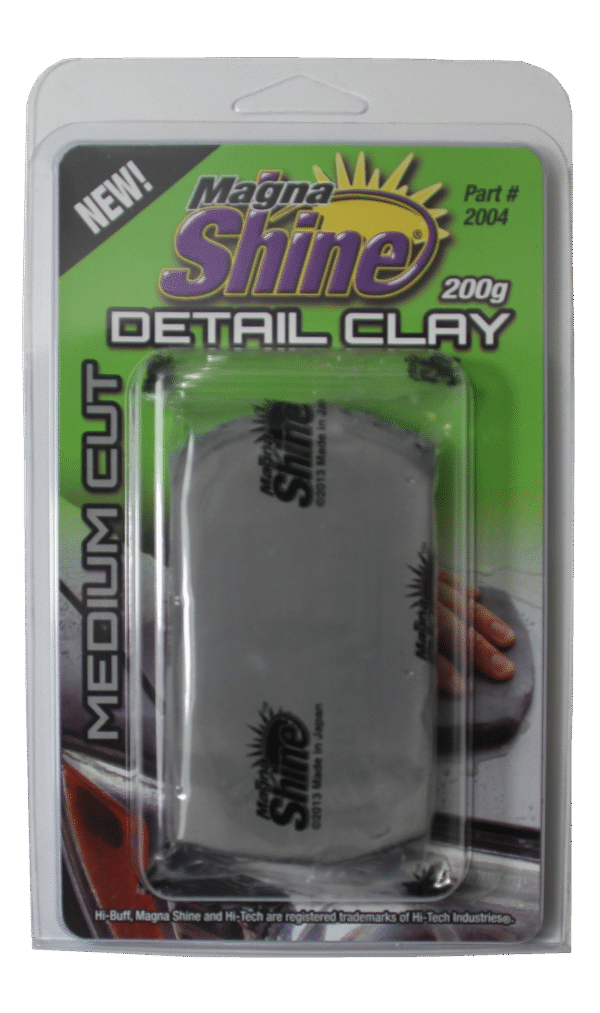
The Magna Shine 200g Medium Cut Clay Bar MS2004 is a professional medium-cut clay bar for vehicle surface decontamination. The 200 gram size provides a working supply substantially larger than the typical consumer 100 gram clay bar — enough for multiple full vehicle clay sessions without running the bar thin prematurely. The medium cut formula removes embedded iron particles, brake dust, industrial fallout, rail dust, tree sap misting, and bonded surface contamination efficiently without the excessive paint marring of an aggressive-cut clay.
What This Clay Bar Is
This is a surface decontamination clay bar — a pliable compound that is kneaded flat, lubricated with a clay lubricant spray, and glided across the paint surface. The clay’s sticky polymer matrix physically grabs and removes embedded surface contamination that washing cannot dislodge. The medium-cut formula is between the mildest (fine) and most aggressive (heavy cut) clay bar options — removing more contamination than a fine bar without the surface marring of a heavy cut bar when used with proper technique.
Key Features and Why They Matter
- 200 gram size — twice the mass of most consumer clay bars. Means more working material to fold and reform as the clay surface loads with contamination, extending the effective life of a single bar across multiple full vehicle clay sessions.
- Medium cut formula — effective on embedded iron, rail dust, tree sap misting, and moderate surface contamination. Means one clay type covers the majority of decontamination needs without needing to stock multiple cut levels for common professional applications.
- Professional Magna Shine formulation — calibrated for professional use on the contamination types typical in automotive and fleet detailing environments. Consistent performance batch to batch.
- Pliable, easy to work — kneads easily for folding and reforming during use. Means efficient clay management — fold to a clean surface when the working face loads, extending the bar’s effective working life.
- Works on paint, glass, and smooth plastics — covers the primary decontamination surfaces on a vehicle in one product.
What This Product Is NOT For
Clay bar is not a paint correction tool — it removes surface contamination, not scratches, swirls, or oxidation. Those defects require compound and polish after claying. Do not use without clay lubricant spray — dry clay application will scratch paint severely. Do not use on rubber seals, matte or satin paint, or plastic cladding. If the clay is dropped on the ground during use, discard that piece — ground grit embedded in the clay will cause scratches. Always follow clay treatment with a polish, sealant, or ceramic coating application. See the compounds and polishes lineup for post-clay polishing products.
Who Uses This
Professional detailers performing pre-correction or pre-coating decontamination, ceramic coating installers who clay every vehicle before paint correction and coating application, fleet decontamination services working on vehicles with heavy iron contamination from brake dust exposure, and detail shops that offer clay bar treatment as a standalone or add-on service. The 200 gram format is the right size for operations that clay multiple vehicles per session or per week — the bar stays workable and productive through a full professional day of use without thinning prematurely.
How to Use
- Wash the vehicle first: Clay bar should be used after a thorough wash to remove surface dirt. Never clay an unwashed vehicle.
- Knead the bar: Warm and soften the bar in your hands, then flatten it into a disc approximately 3×3 inches for a working face.
- Apply clay lubricant: Spray a generous amount of clay lubricant on a 2×2 foot section of paint and on the clay face.
- Work the section: Glide the clay bar across the lubricated section with light to moderate pressure using straight, overlapping passes. You will feel the clay grabbing and removing contamination — the surface will become smoother as the clay works.
- Fold the clay: When the clay face becomes discolored with contamination, fold to a clean face. Repeat as needed until the working face is no longer clean after folding.
- Wipe the section: After claying, wipe the clay lubricant residue with a clean microfiber.
- Proceed to polish or protect: Clay leaves a bare, contamination-free paint surface ready for polishing, sealant, or ceramic coating application.
Why 200 Grams vs. a Standard 100 Gram Clay Bar
Clay bars have a finite working life — as the clay picks up contamination, it must be folded to a clean face. Eventually, all faces of the bar are contaminated and it must be discarded. A 200 gram bar has twice the volume and therefore twice as many fold cycles before depletion. For operations that regularly clay full vehicles or work on heavily contaminated fleet vehicles that load clay quickly, the 200 gram bar is significantly more economical per vehicle than buying two 100 gram bars. The MS2004 is the professional supply answer to the constant restocking friction of consumer-sized clay bars.
Frequently Asked Questions
What lubricant should I use with this clay bar?
A dedicated clay lubricant spray or a diluted detailer spray provides the necessary lubrication for safe clay use. Do not use clay dry — lubrication is not optional. Some detailers also use diluted car wash soap as a clay lubricant with good results. Avoid using wax-containing lubricants before correction or coating steps, as the wax interferes with the next product’s bonding.
How do I store unused clay bar?
Store the clay bar in its original packaging or in a ziplock bag with a small amount of water or clay lubricant to prevent drying out. Store at room temperature — do not freeze. Clay that has dried hard will not knead properly and may be too stiff to use safely without risking scratching.
How often should a vehicle be clayed?
The frequency depends on contamination exposure. Vehicles parked near rail lines, industrial facilities, or areas with heavy brake dust exposure may need claying every 3–6 months. Garaged vehicles in low-contamination environments may only need claying once or twice per year before seasonal wax or coating renewal.
Does clay bar remove water spots?
Clay bar removes surface-bonded contamination. Mild water spots that are sitting on the paint surface can sometimes be removed by claying. Mineral-etched water spots that have chemically bonded with the clear coat surface require a water spot remover or light polishing step — clay does not remove chemically etched contamination.
Can I use this on fresh ceramic coating?
Do not clay bar over an existing ceramic coating — clay bar can abrade and potentially damage the coating layer. Ceramic-coated vehicles require gentle maintenance washing and dedicated ceramic coating maintenance products, not clay decontamination on the coated surface. Clay decontamination is a pre-coating step, performed before the coating is applied.