
A razor blade in a professional detailing context is a precision removal tool, not a last-resort scraper. Used correctly on the right surfaces, a sharp, fresh blade removes contamination — window tint adhesive residue, hard water scale baked onto glass, overspray on chrome, paint transfer, and cured sealant deposits — more cleanly and with less risk of surface damage than mechanical or chemical alternatives that attack the substrate instead of the contamination. The key word is fresh: a dull razor blade drags and scratches where a sharp one glides and cuts.
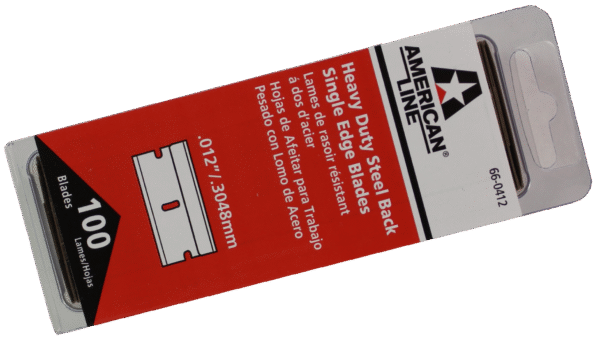
Metal Razor Blades #12 — 100-Count Sleeve provides a full professional-supply quantity of single-edge razor blades for detailing and body shop use. The #12 blade profile fits standard single-edge blade scraper handles — the most common professional razor scraper tool. At 100 blades per sleeve, this is the working supply format for operations that use blades regularly and understand that blade replacement is the difference between clean removal and scratched glass.
What These Blades Are
These are single-edge industrial razor blades — one sharp cutting edge, one protected spine. They fit into single-edge blade scraper handles for controlled removal of surface contamination on glass, metal, and other hard surfaces. The #12 designation refers to the blade profile and handle compatibility. The blades are manufactured to a consistent thickness and sharpness that makes them effective and predictable in professional use.
Key Features and Why They Matter
- #12 single-edge blade profile — fits most standard single-edge blade scraper handles used in auto detail and body shop applications. Means direct compatibility with the scraper handles already in your tool kit.
- 100-count sleeve — professional supply quantity for operations using blades regularly. Means on-hand stock for consistent blade replacement without constant restocking from limited quantities.
- Sharp, consistent edge — manufactured to a professional-use standard. Means the blade performs predictably on each new use rather than starting dull from the package.
- Single-edge design — the protected spine prevents accidental cuts from the non-cutting side during handling and installation. Safer for rapid blade changes during work sessions.
- Wide application range — glass, metal panels, chrome, ceramic tile, and other hard smooth surfaces. Multiple job types covered by one blade type.
What These Blades Are NOT For
Never use razor blades on automotive paint, clear coat, soft plastics, vinyl, or any surface that cannot withstand razor blade contact. On glass, always use with adequate lubrication (soapy water or appropriate glass cleaner) and hold the blade at a shallow angle — 15 to 30 degrees — to prevent scratching. Never dry-scrape painted or lacquered surfaces. Dispose of used blades in a proper sharps container — do not loose-discard worn blades. Always install blades in a proper blade scraper handle — never use bare blades by hand.
Who Uses These
Window tint installers and removal specialists, auto glass technicians, professional detailers removing overspray from glass and chrome, body shop technicians cleaning surface contamination from metal panels, and any professional who regularly needs fresh, sharp blades for controlled surface removal work. The 100-count sleeve format is for operations where blade consumption is high enough that buying in smaller quantities creates restocking friction and higher per-blade cost. Browse interior detailing tools for compatible scraper handles.
How to Use
- Install safely: Insert the blade into a single-edge blade scraper handle per the handle’s installation method. Never handle bare blades without the scraper holder.
- Lubricate the surface: Apply soapy water or appropriate cleaner to the surface being scraped. Never dry-scrape — lubrication is required to prevent scratching.
- Hold at shallow angle: Maintain a 15–30 degree angle between the blade and the surface. Steeper angles increase scratch risk.
- Push with controlled, short strokes: Push the blade in short, forward strokes rather than dragging back and forth. Lift and re-position for each stroke on glass.
- Replace blades frequently: A blade that has lost its sharp edge does not glide — it drags and scratches. With a 100-count sleeve, there is no reason to extend the life of a dull blade.
- Dispose safely: Place used blades in a dedicated sharps container or a folded piece of cardboard before discarding.
Why Buy 100-Count vs. Small Packs
Small blade packs cost more per blade and run out quickly in professional use. Operations that use blades daily — window tinting shops, heavy detail operations, body shops doing regular paint overspray cleanup — find that the 100-count sleeve provides both a lower per-blade cost and the operational convenience of not constantly reordering a consumable. The price difference between small packs and the 100-count is significant at professional usage rates.
Frequently Asked Questions
What blade scraper handle does this blade fit?
The #12 blade fits most standard single-edge razor scraper handles available through professional tool and detail supply sources. Verify your handle’s blade specification before ordering if you are unsure of compatibility. The most common single-edge holder sizes accept #12 blades.
Can I use these on automotive glass without scratching?
Yes — with proper technique. Glass must be lubricated (wet), the blade must be fresh and sharp, the angle must be shallow (15–30 degrees), and the stroke must be short and controlled. Dry scraping, steep angles, and dull blades are the causes of glass scratching from razor blade use, not the blade itself when used correctly.
Are these the same as utility knife blades?
No — utility knife (box cutter) blades have a different geometry and are not the same as single-edge razor blades used in blade scrapers. Do not substitute utility blades for single-edge razor blades in a razor scraper handle.
How do I dispose of used razor blades safely?
Place used razor blades in a dedicated sharps disposal container (available at pharmacies and medical supply sources), wrap in heavy cardboard tape before placing in solid waste, or use the blade sleeve from the packaging to contain used blades. Never loose-discard unwrapped used razor blades in a bin or bag.
Do these work for removing window tint?
Yes — razor blades are used in tint removal to lift the adhesive layer remaining on the glass after the tint film has been stripped. Apply an adhesive remover, allow dwell, then use the blade to carefully remove the softened adhesive residue with lubricated, shallow-angle passes on the glass.