Foam pads are the right tool for a lot of paint correction work — but not all of it. When paint is heavily oxidized, severely scratched, or carrying years of neglect, foam pads at any reasonable machine speed require pass after pass to achieve the same defect removal a wool pad accomplishes in one or two. Rotary wool exists for exactly those situations: the cases where cutting efficiency is the first priority and the surface condition is too far gone to start with a gentler approach.
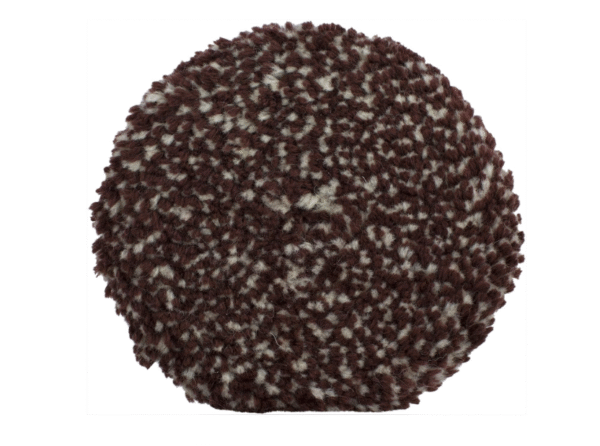
The Meguiar’s Rotary Wool Heavy Cutting Pad — 7 inch is a professional heavy-cut wool pad designed for use on a rotary polisher. The dense, natural wool fiber construction moves compound across the surface with high mechanical aggression, removing oxidation, severe paint defects, and deep scratches more efficiently than foam in the same time window. The 7 inch diameter covers a working area that keeps production speed high while maintaining controllability on panels and contours.
What This Pad Is
This is a natural wool buffing pad. Natural wool fibers are more aggressive than foam, foam composites, or microfiber pads at equivalent machine speed. That aggression is its value — and its responsibility. Wool pads remove defects fast, which is why they are paired with cutting compounds and run on rotary polishers by trained operators. The pad is mounted on a Velcro (hook-and-loop) backing plate and sized at 7 inches for coverage and maneuverability balance.
Key Features and Why They Matter
- Dense natural wool fiber — the highest-aggression pad construction for mechanical cutting. Means faster defect removal on heavy-condition paint than foam or microfiber alternatives.
- 7 inch working diameter — matches the most common professional rotary polisher backing plate size. Means broad panel coverage and efficient production speed on large surfaces like hoods, roofs, and long flat panels.
- Hook-and-loop Velcro attachment — mounts to standard 7 inch backing plates securely. Means fast pad changes during production runs without tools.
- Machine-washable construction — wool pads can be cleaned and reused across multiple sessions when properly maintained. Means lower per-job pad cost over time compared to single-use disposable pads.
- Rotary polisher optimized — the pad geometry and fiber density are calibrated for the RPM and pressure range of rotary polishers, not DA machines. Means consistent cutting performance in the machine type it is designed for.
What This Pad Is NOT For
This is a rotary-specific pad — do not use it on a dual-action polisher. Wool pads on a DA polisher do not generate enough friction to cut effectively, and the backing plate dynamics of a DA are not suited to wool fiber construction. Do not use on single-stage paint at high speed without operator experience — wool pads on rotary can burn through single-stage paint quickly. Always test technique on a hidden panel. This is not a finishing pad — plan to follow with at least one foam polishing step.
Who Uses This
Paint correction specialists, reconditioning shops, marine detailers working on gel coat, and RV restoration operators are the primary users of heavy cutting wool pads. If your shop regularly works on vehicles or boats with severe paint neglect — multiple seasons of oxidation, heavy swirl damage from machine car washes, or coarse wet-sand scratches — this pad is part of your tool kit. Pair with the right cutting compound from the Meguiar’s compound lineup.
How to Use
- Prime the pad: Apply a cross-pattern of compound to the pad face and spread at low speed before increasing RPM.
- Speed setting: Start at 1,000 RPM to spread the compound, then increase to 1,200–1,800 RPM for the cutting pass depending on paint hardness.
- Pressure: Apply moderate, consistent pressure. Wool cutting does not require excessive downward force — let the fiber do the work.
- Work in sections: Use a cross-hatch pattern on 2×2 foot sections. Keep the pad moving — do not dwell in one spot.
- Wipe and inspect: Remove compound residue with a microfiber towel and inspect under light.
- Clean the pad: Spur or wash the pad between vehicles to maintain fiber performance.
- Follow with foam: Step down to a foam polishing pad and medium polish to refine the surface.
Why Buy This vs. a Foam Cutting Pad
Foam cutting pads are the right choice for moderate defects on paint in reasonable condition. For paint that is heavily oxidized, carrying years of machine-wash swirls, or holding coarser sanding marks, foam cutting pads require more passes to achieve the same result as a single wool cutting pass. The Meguiar’s Rotary Wool Heavy Cutting Pad is not a replacement for foam — it is the first step when conditions call for maximum cutting efficiency. Use it to get to a state where foam polishing takes over, and see the full Meguiar’s professional pad lineup for a complete system.
Frequently Asked Questions
Can I use this on a DA polisher?
No — this pad is designed for rotary polisher use. The mechanical dynamics of a DA polisher are not compatible with wool pad construction for cutting purposes. For DA polishing, use foam cutting pads sized for your DA backing plate.
How do I clean and maintain the wool pad?
Use a pad spur or stiff brush during the session to remove compound buildup from the pad face and maintain fiber performance. After the session, machine wash on a gentle cycle with a pad cleaning detergent and air dry flat. Do not dry in a machine dryer — heat damages the wool backing.
Does it work on gel coat?
Yes — wool cutting pads on a rotary are a standard approach for heavy gel coat oxidation removal on boats and RVs. Gel coat is harder than most automotive clear coats, which means you can be more aggressive. Start in a hidden area to calibrate speed and pressure.
What compound pairs best with this pad?
Meguiar’s Mirror Glaze M84 Power Cleaner Compound or Pro Speed Compound are natural pairings. For the heaviest gel coat or severe automotive oxidation, M105 Ultra Cut Compound paired with a wool cutting pad is a common professional combination.
How many uses can I expect before replacing the pad?
With proper cleaning and maintenance, a quality wool cutting pad typically lasts 20–50 sessions depending on compound type and surface hardness. Monitor the pad for compacted, matted fiber or backing delamination — either indicates it is time to replace.