Leather in a vehicle interior is not the same material it was when the car was new. Sun exposure, body oils, regular friction, and product buildup degrade leather over time — drying it out, causing surface cracking, dulling the color, and creating the texture that makes aged leather feel rough rather than supple. Most of the leather damage detailers are asked to reverse was preventable with consistent cleaning and conditioning. Most of the damage that cannot be reversed came from using the wrong product — or no product at all — for too long.
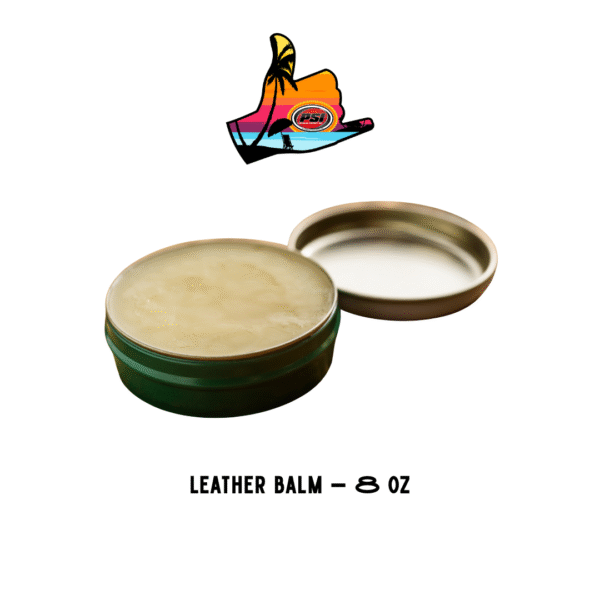
Leather Balm 8 oz is a conditioning treatment in a concentrated balm (paste/cream) phase rather than a liquid. The higher concentration of conditioning agents in the balm format delivers more conditioning per application than most liquid conditioners — effective on leather that is moderately dry, slightly faded, or in need of restoration without reaching the level of full leather repair. It is applied in a thin coat, worked into the leather surface, and allowed to absorb — restoring the soft, supple hand feel that aged leather loses over time.
What Leather Balm Is
Leather Balm is a concentrated conditioning and restorative treatment in a paste/cream formulation. It contains conditioning agents, oils, and protectants that penetrate dried leather fiber to restore flexibility, deepen color, and deposit a light protective layer against further drying and UV degradation. The balm consistency is thicker than liquid conditioners, which allows the product to stay in contact with the leather surface longer during absorption — particularly useful on severely dried surfaces that absorb quickly and need more product contact time.
Key Features and Why They Matter
- Concentrated balm formula — higher active conditioning agent concentration per application than liquid conditioners. One coat of balm delivers more conditioning than multiple liquid conditioner applications on dry leather.
- Restores suppleness to dried leather — the conditioning agents penetrate beyond the surface to address dryness in the leather fiber itself, not just the surface coating. The result is leather that feels soft and flexible, not just looks treated.
- Color-deepening effect — conditioning agents restore the color richness that faded or dried leather loses, bringing color back toward the original depth without dyeing or painting.
- Light UV and aging protection — the protective layer deposited by the balm slows the drying and fading cycle that UV exposure causes. Not a substitute for keeping leather out of direct sustained sun exposure, but meaningful protection for regularly maintained leather.
- 8oz working size — appropriate for 3-6 full leather interior applications depending on leather coverage area and condition. Economical for regular maintenance use without over-purchasing.
What Leather Balm Is NOT For
Leather Balm is a conditioning and restoration product — it is not a leather cleaner. Always clean the leather thoroughly with a dedicated leather cleaner before applying balm, as any dirt or body oils present will be sealed in place under the conditioning layer. Not for use on vinyl, synthetic leather (pleather/leatherette), suede, or nubuck — these materials require specific products different from treated automotive leather. Do not over-apply — too much conditioner on leather creates a greasy, slippery surface. A thin coat absorbed fully is the correct application. Not for cracked leather that has split through to the base material — those areas require leather filler and repair before conditioning.
Who Uses Leather Balm
Mobile detailers offering leather conditioning as a service add-on for clients with leather interiors. Enthusiasts who maintain their own vehicle’s leather on a regular schedule. Detail shops treating moderately dry or lightly neglected leather that does not require full leather restoration. Boat and RV owners conditioning leather cabin surfaces that face higher UV and humidity stress than automotive interiors.
How to Use
- Clean the leather first: Apply a dedicated leather cleaner, work with a soft brush or cloth, and wipe clean. The leather must be free of dirt, oils, and product residue before conditioning.
- Allow to dry: The leather surface should be clean and dry before applying the balm.
- Apply a small amount: Work a pea-sized amount of Leather Balm onto a soft applicator or microfiber for each seat section. Less is more — a thin coat absorbed fully is better than a heavy coat that cannot penetrate.
- Work into the leather: Spread in a circular or back-and-forth motion, working the balm into the grain. Allow 5-10 minutes for absorption.
- Buff off excess: Wipe any surface residue with a clean dry microfiber. The leather should feel soft and slightly tacky initially, then soft and clean as the balm fully absorbs.
Leather Balm vs. Liquid Leather Conditioner
Liquid conditioners are faster to apply and appropriate for lightly dry leather in good condition. Leather Conditioner in liquid form is the standard maintenance product. Leather Balm is the step up for leather that has not been conditioned in a long time, shows visible fading or tightness, or needs more conditioning depth than a liquid can deliver in one application. It is also appropriate for clients who want a premium conditioning service that goes beyond a standard liquid conditioner result. For complete leather care, pair with Leather Cleaner as the first step.
Frequently Asked Questions
How often should leather be conditioned with Leather Balm?
For regularly maintained leather in good condition, liquid conditioner every 2-3 months and Leather Balm 1-2 times per year is a reasonable schedule. For leather that has been neglected or is drying faster than average (high UV exposure, low humidity environments), conditioning with balm every 2-3 months is appropriate until the leather recovers its normal suppleness.
Is Leather Balm safe on light-colored or white leather?
Yes — Leather Balm does not contain heavy pigments or darkening oils that would visibly alter light-colored leather. However, any conditioning product can slightly deepen the apparent color of very pale leather, particularly on first application. Test in an inconspicuous area on white or very light leather before full application.
Can Leather Balm repair cracked leather?
Leather Balm can prevent and slow cracking by keeping leather conditioned and flexible. It cannot repair leather that has already cracked through the surface coating or split through the grain. For visibly cracked leather, a leather filler or repair compound is needed before conditioning, followed by conditioning to prevent further damage.
Does Leather Balm leave a greasy residue?
Applied correctly — a thin coat allowed to fully absorb, with excess buffed off — Leather Balm leaves no greasy residue. The common mistake is over-application. If the leather still feels greasy after 15 minutes, there is too much product on the surface; buff off the excess with a clean dry microfiber.
Is this product suitable for marine leather?
Yes — Leather Balm is appropriate for treated automotive and marine leather. Marine leather faces additional challenges from UV, moisture, and salt air, making regular conditioning especially important. In high-UV marine environments, more frequent application may be needed to offset the accelerated drying that sun and salt air cause.