
HVAC vents collect more dust per square inch than almost any other interior surface — constant airflow through the slats deposits particulate continuously, and the louvered geometry makes a simple wipe ineffective. You need a brush that fits between and behind the slats, not just across the face. The challenge is finding a brush that fits interior vent openings while covering enough width to clean a full vent bank efficiently.
The Large Vent Brush is sized for the standard to large HVAC vent profiles found in most passenger vehicles — a head width that covers multiple slats per pass while maintaining the slim profile needed for insertion between the louvers and into the vent opening itself.
What the Large Vent Brush Is
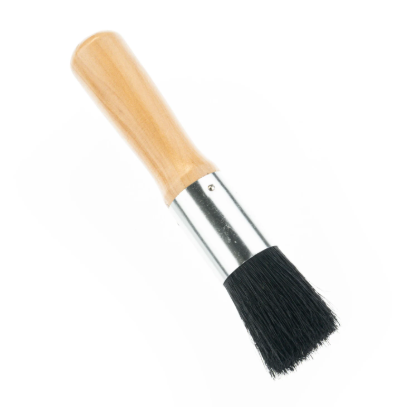
This is a professional interior detail brush with a slim, fan-shaped or rectangular brush head designed for HVAC vent cleaning. The large designation indicates a wider head than the standard vent brush, covering more slat area per pass on wider vent openings while still fitting the vent profile without forcing. The bristles are soft enough for plastic interior surfaces and trim without scratching.
Key Features and Why They Matter
- Vent-profile head shape — sized and shaped to enter vent openings and work between slats, not just brush the vent face. Interior dust lives between and behind the slats — not just on the front surface.
- Soft bristles for plastic trim — appropriate for contact with interior plastics, painted trim, and textured finishes without scratching. Interior surfaces are sensitive; bristle selection matters.
- Large head width for efficiency — covers standard to large vent widths in fewer passes compared to a narrow brush, reducing the time spent on each vent bank during an interior detail.
- Dry or wet use capable — effective for dry dust removal and for applying a light mist of interior APC to vent surfaces that need more than dust removal.
What This Brush Is NOT For
The Large Vent Brush is an interior cleaning tool. Do not use for exterior wash, wheel cleaning, or agitating chemical products on non-interior surfaces. The bristle softness is selected for interior plastics — not for agitating carpet, fabric, or heavily soiled surfaces. For very large HVAC vent banks on full-size trucks and vans, the Jumbo Vent Brush provides a wider head for greater efficiency. Keep the brush free of grit and debris — contaminated bristles will scratch vent surfaces on subsequent applications.
Who Uses This Brush
Interior detailers performing thorough vent cleaning as a standard part of full-detail services. Reconditioning teams processing vehicles for dealership lot-ready delivery. Mobile detailers who need one vent brush that covers the majority of passenger vehicles in their client base. Enthusiasts who want a professional result when detailing their own vehicles rather than settling for a compressed air can.
How to Use
- Dry brushing: Insert the brush head into the vent opening and sweep between the slats in a back-and-forth motion. Dislodged dust falls to the dash below — vacuum immediately after to prevent redistribution.
- Wet brushing: Lightly mist the brush with interior APC for sticky contamination or product buildup on vent surfaces. Work between slats as above and wipe residue with a microfiber.
- Work systematically: Clean each vent bank from top to bottom, then vacuum the dash surface before moving to the next vent location.
- Clean the brush: Tap out loose debris after each vehicle. Rinse periodically with water and allow to dry before storage.
Vent Brush Size Comparison
Polishing Systems Inc carries both the Large Vent Brush and the Jumbo Vent Brush for different vehicle types. The large fits standard-width vents on compact through mid-size passenger vehicles. The jumbo covers the wider vent banks on full-size trucks, vans, and large SUVs where the standard large brush requires too many individual passes to clean the full vent bank efficiently. Many professional detailers carry both sizes. Browse the full interior tools lineup at Polishing Systems Inc.
Frequently Asked Questions
Should I clean vents before or after vacuuming the vehicle?
Clean vents before vacuuming — vent brushing dislodges dust that falls to the dashboard and floor. Vacuuming after vent cleaning picks up that dislodged debris. Reversing the order means re-vacuuming after brushing, which wastes time.
Can I use compressed air instead of a vent brush?
Compressed air dislodges dust but redistributes it throughout the cabin rather than removing it — you end up with the same dust settled on different surfaces. A vent brush followed by immediate vacuuming actually removes the dust. Compressed air is a supplement to brushing, not a replacement.
Will the brush fit all vent types?
The Large Vent Brush is sized for standard to large HVAC vent profiles on most passenger vehicles. Very narrow louvered vents (common on some European vehicles) may require a narrower profile brush for slat insertion. Very wide vent banks on large trucks are more efficiently handled with the Jumbo Vent Brush.
How do I keep the brush from spreading dust around?
Use short, controlled strokes rather than wide sweeping passes. Have a vacuum nozzle positioned near the vent as you brush to capture dislodged dust immediately. Working one vent at a time — brush, vacuum, move on — prevents redistributed dust from settling elsewhere.
Is this brush suitable for speaker grilles?
Yes — the large vent brush works on speaker grilles with sufficient spacing for bristle insertion. Very fine speaker grille perforations may require a narrower or softer brush for access into individual openings.