
A boat hull that sits in saltwater accumulates a specific type of contamination that freshwater rinsing and general cleaner chemistry cannot fully address. Algae, rust staining from metal fittings, barnacle cement residue after pressure washing, and water line mineral deposits all require acid-based chemistry to dissolve and release from the gelcoat or painted hull surface. Without the right chemistry, these deposits remain even after significant scrubbing — because the problem is chemical adhesion, and the solution is chemistry that breaks that bond.
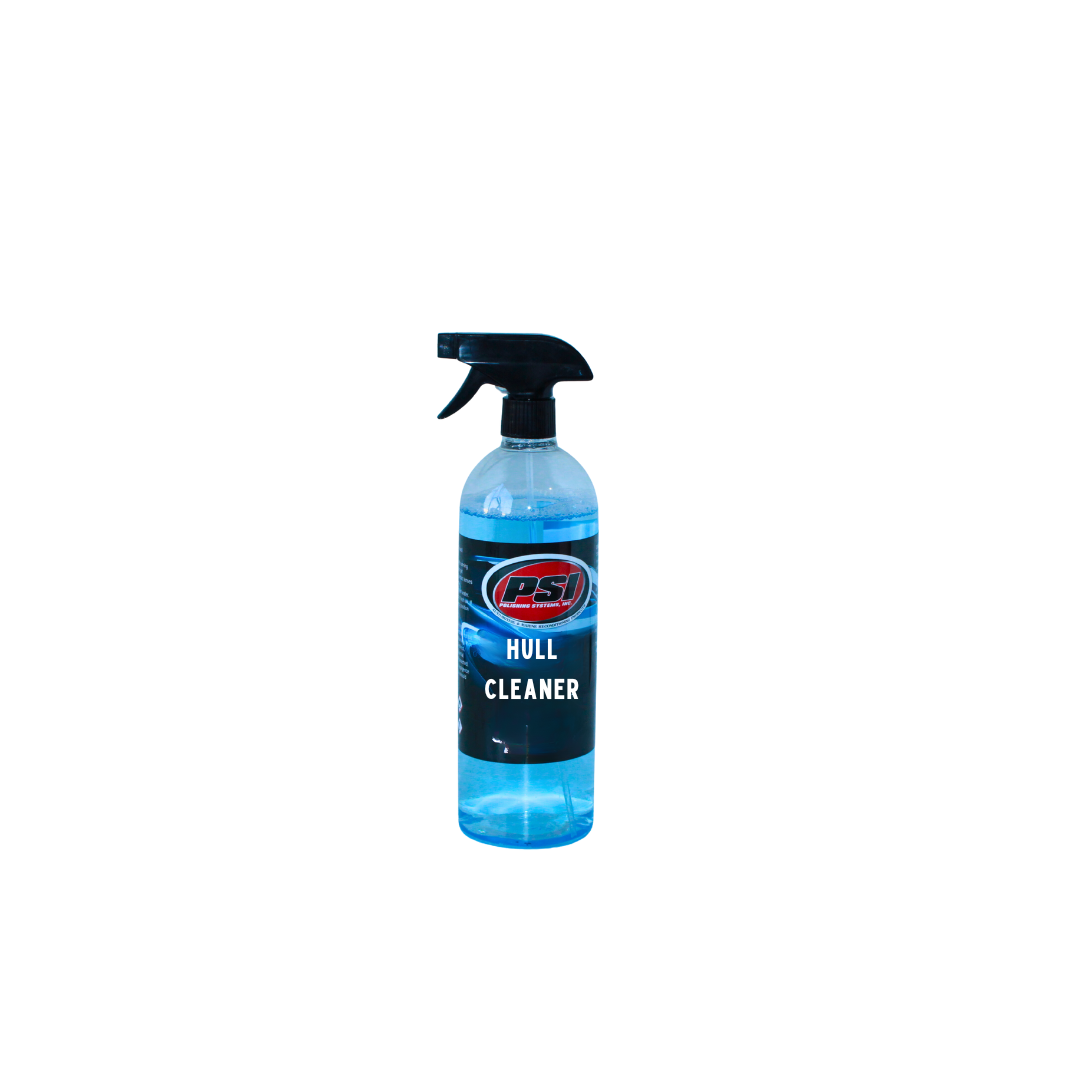
Hull Cleaner 32 oz from Polishing Systems Inc is an acid-based concentrated hull cleaner formulated for exactly this purpose. It dissolves the marine fouling compounds that general-purpose cleaners leave behind, cutting cleaning time and delivering a brighter, cleaner hull surface with far less mechanical work.
What Hull Cleaner Is
Hull Cleaner is an acid-based concentrated marine cleaning product. The acid chemistry works by dissolving the mineral bonds in rust staining, barnacle cement, and water line deposits — compounds that are chemically incompatible with alkaline or neutral cleaners. The 32-oz concentrate dilutes to a working cleaning solution appropriate for application to hull surfaces at the waterline and below on fiberglass and gelcoat boats. This is a chemical cleaning product, not an abrasive compound — it removes fouling by chemistry, reducing the scrubbing burden to minimal agitation or none at all on fresh deposits.
Key Features and Why They Matter
- Acid-based chemistry — dissolves rust staining, barnacle cement residue, mineral waterline deposits, and algae fouling that neutral cleaners cannot break down. Means genuine deposit removal with less labor than mechanical scrubbing.
- Concentrated formula — dilutable to working strength for different fouling levels and hull conditions. Means one bottle covers multiple cleaning sessions at different dilution ratios.
- Works on fiberglass, gelcoat, and painted hulls — the acid concentration is calibrated for marine hull surfaces. Means applicable to the hull types most recreational boaters and professional marine detailers work with.
- 32-oz working size — appropriate for 1-3 vessels per cleaning cycle. The right format for recreational boaters doing seasonal haul-out cleaning and small marina detail operations.
What This Product Is NOT For
Hull Cleaner acid concentrate is not safe on metal boat components — aluminum outdrives, stainless steel fittings, bronze hardware, and aluminum hulls should be protected or avoided during application. Acid chemistry will etch and damage these materials. It is also not appropriate for interior vessel surfaces, fabric, rubber, or any surface not confirmed compatible with acid chemistry. Always rinse thoroughly from all surfaces after use, especially in saltwater environments where acid residue can accelerate corrosion. Wear chemical-resistant gloves and eye protection during application and rinsing. Not for use on freshly painted hulls — confirm paint compatibility before application.
Who Uses This
Recreational boaters doing annual or biannual haul-out cleaning on their own vessels use Hull Cleaner 32 oz as their primary hull cleaning product during haulout. Professional marine detailers cleaning multiple boats at a marina or boatyard carry the 32-oz size for individual vessel cleaning sessions. Boat delivery crews and yacht charter preparation services use it for pre-season hull brightening. The 32-oz bottle is the practical working size for any operation cleaning one to three hulls between supply purchases. For higher volume use, see the 1-gallon, 5-gallon, and 55-gallon drum sizes.
How to Use
- Pre-rinse the hull: Rinse the hull surface with fresh water to remove loose marine growth, dirt, and salt.
- Protect metal components: Mask or protect stainless, aluminum, and bronze hardware and fittings adjacent to the areas being cleaned.
- Dilute the concentrate: For moderate fouling (waterline stains, algae): dilute 1:4 to 1:8. For heavy mineral deposits and barnacle cement residue: dilute 1:2 to 1:3 or apply close to full strength.
- Apply to the hull: Apply the diluted solution to the hull surface using a spray bottle or soft brush. Work in small sections.
- Dwell: Allow 3-10 minutes of dwell depending on fouling severity. Do not allow to dry on the surface.
- Agitate lightly: For stubborn deposits, agitate lightly with a soft bristle brush during the dwell period.
- Rinse thoroughly: Rinse with copious fresh water immediately after dwell time. Neutralize with a light baking soda-and-water rinse on very sensitive surfaces if desired.
Why Use Marine Hull Cleaner vs. General APC
Barnacle cement, rust staining, and waterline mineral deposits are chemically bonded to the hull surface — they are not simple surface soiling that rinses away with water and surfactant. Attempting to remove them with general all-purpose cleaner requires extensive mechanical scrubbing and often leaves residue that still discolors the surface. Acid-based hull cleaner dissolves the chemical bond that holds these deposits to the gelcoat or paint, releasing them with minimal scrubbing. Marine cleaning products from Polishing Systems Inc are formulated for the specific fouling chemistry of saltwater and freshwater marine environments.
Frequently Asked Questions
Is Hull Cleaner safe on antifouling bottom paint?
Antifouling paints vary in their acid tolerance. Some formulations are compatible with dilute hull cleaner; others are damaged. Always test on a small inconspicuous area of the antifouling paint before applying to the full bottom. When in doubt, contact your antifouling paint manufacturer for acid cleaner compatibility data.
Will this remove barnacles, or just the cement residue after scraping?
Hull Cleaner dissolves barnacle cement residue and staining left after mechanical removal. Living barnacles that are firmly attached need to be scraped or pressure-washed off first, then the cement and staining can be cleaned with the hull cleaner. Do not expect hull cleaner to release firmly attached living barnacles without prior mechanical removal.
Is this safe to use in the water, or only when hauled out?
Hull Cleaner is designed for above-waterline and waterline area cleaning on a hauled-out or dry-stored vessel. Using acid-based cleaners in the water can harm aquatic environments and may violate marina regulations. Always use hauled-out or in an appropriate land-based cleaning area with proper wastewater collection.
How long does 32 oz last for regular boat maintenance?
At a 1:5 dilution, 32 oz of concentrate produces approximately 1.5 gallons of working solution. For a 25-30 foot recreational boat with moderate waterline fouling, a 32-oz bottle typically covers 2-4 full haul-out cleaning sessions.
What should I do if the cleaner contacts my aluminum outdrive?
Rinse the aluminum surface immediately with copious fresh water if acid cleaner contacts it. Acid-on-aluminum contact causes rapid etching that worsens the longer the acid remains in contact. After rinsing, inspect the surface — if etching occurred, neutralize with a baking soda solution rinse and contact a marine service professional if the damage is significant.