
Tilting a 5-gallon pail or a full carboy to pour into a spray bottle is imprecise, messy, and a real spill risk for concentrated chemicals. For shops that pull from large containers multiple times per day — refilling foam cannon reservoirs, topping off spray bottles, filling applicator containers from bulk chemical stock — a dedicated siphon pump is not an accessory item, it is a basic tool for safe and efficient chemical handling.
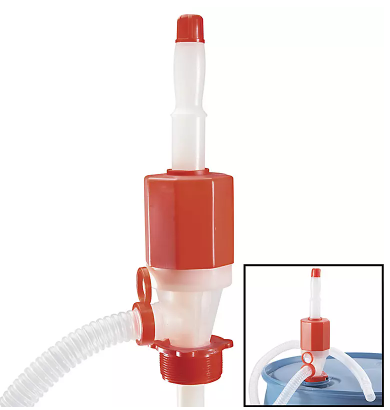
High Output Siphon Pump Red from Polishing Systems Inc is a manual siphon pump designed for the fluid transfer volume and chemical compatibility that auto detailing and fleet maintenance shops actually encounter. The high-flow design keeps fill times short, and the chemical-resistant materials hold up to the alkaline detergents, degreasers, and cleaning concentrates that are the standard chemistry of professional shop work.
What This Pump Is
This is a manual, suction-operated siphon pump in a compact, hand-operated format. The red color-codes this pump for easy identification in a multi-pump shop setup where different pumps may be dedicated to different products. It is designed for use with drums, 5-gallon pails, carboys, and similar open-top or bung-accessible containers for transferring liquid product into smaller containers. It operates by manually pumping the handle to build suction and draw fluid through the tube.
Key Features and Why They Matter
- High-output flow rate — moves fluid faster than standard siphon pumps, reducing the time spent on container filling tasks. Means less time between jobs waiting for spray bottles and foam cannon tanks to fill.
- Chemical-resistant materials — compatible with the common aqueous chemistry of detailing and fleet maintenance work, including alkaline detergents, acidic cleaners, and water-based concentrates. Means the pump does not degrade on contact with these products.
- Manual operation — no electricity or compressed air required. Means the pump works anywhere in the shop, at a mobile detailing site, or in the field without requiring a power connection.
- Red color identification — visible color-coding allows dedicated pump assignment to specific product types to prevent cross-contamination in a multi-product shop environment.
What This Pump Is NOT For
This siphon pump is not rated for flammable solvents such as acetone, mineral spirits, or gasoline — a static-grounded, explosion-proof pump is required for those materials. Do not use with bleach or oxidizing chemistry without verifying specific material compatibility. This is a manual pump and is not powered by electricity or air — for very high-volume drum dispensing in a high-throughput production environment, an electric or air-powered drum pump provides faster output. Verify tube length is appropriate for the container depth before use.
Who Uses This
Detail shops that pull from 5-gallon or 15-gallon bulk chemistry containers multiple times per day use this pump to fill foam cannon tanks, dilution mixing containers, and spray bottles cleanly and quickly. Mobile detailers who carry bulk chemical supply and fill working spray bottles from larger containers use the portable siphon pump to avoid spills during vehicle-side chemical preparation. Fleet maintenance shops dispensing truck wash concentrate, degreaser, or APC from pails into smaller application containers find this pump a standard tool for safe chemical handling.
How to Use
- Insert into the source container: Lower the siphon tube into the chemical drum, pail, or carboy. Ensure the tube end is below the liquid level.
- Position output end: Place the pump output tube into the receiving container (spray bottle, foam cannon reservoir, mixing bucket).
- Prime and pump: Operate the pump handle in repeated strokes to build suction and draw liquid through the tube. The high-output design fills containers quickly once flow is established.
- Stop flow: Lift the input tube above the liquid level to stop flow when the receiving container is full.
- Rinse after use: Pump a small volume of clean water through the pump after use to prevent product residue from drying in the tube and valves.
Why Use a Dedicated Pump vs. Pouring Directly
Pouring concentrated chemical from a 5-gallon pail is a controlled spill waiting to happen — the container is heavy, the pour is difficult to control precisely, and a slip can send concentrated alkaline or acidic chemistry across the shop floor. A siphon pump eliminates the tipping, the imprecision, and the spill risk. It also reduces waste from overfilling and makes dilution-ratio measurement significantly more accurate. Chemical handling tools from Polishing Systems Inc are part of a complete professional shop setup alongside our hose connectors and accessories.
Frequently Asked Questions
Is this pump safe for alkaline truck wash concentrate?
Yes — the pump is constructed of chemical-resistant materials compatible with alkaline aqueous chemistry including truck wash and fleet detergent concentrates. For extremely high-pH or caustic products, confirm specific material compatibility before regular use.
Can I use this for acid-based cleaners?
For dilute acid-based cleaners (wheel brighteners, aluminum cleaners at working concentration), verify the pump material is compatible. Contact us for material specifications if you have questions about a specific acid product.
Does this pump work with carboys?
The pump is designed for open-top containers and bung-accessible drums. For sealed carboys with bung openings, confirm the input tube diameter fits the bung opening. For closed-top containers, a different pump configuration may be needed.
How long is the input tube?
Contact us for the specific tube length included with this pump. For use with deep drums or tall carboys, tube length is a practical consideration to ensure the tube reaches the bottom of the source container.
How do I prevent cross-contamination between products?
Color-coding the pump (this pump is red) for a specific product or product type is the standard approach. Flush the pump with clean water after each product to prevent residue carryover. Dedicate separate pumps to incompatible chemistry categories (acids separate from alkalines, for example).