Orange peel and surface texture on freshly sprayed automotive paint are not defects that polish away — they are a dimensional surface condition that requires a leveling compound to actually flatten the high points before polishing can refine the finish. Using a medium polish on significant orange peel is like trying to sand rough wood with 600 grit — you may see some improvement, but the underlying condition is still there. True leveling requires a product built for leveling, not finishing.
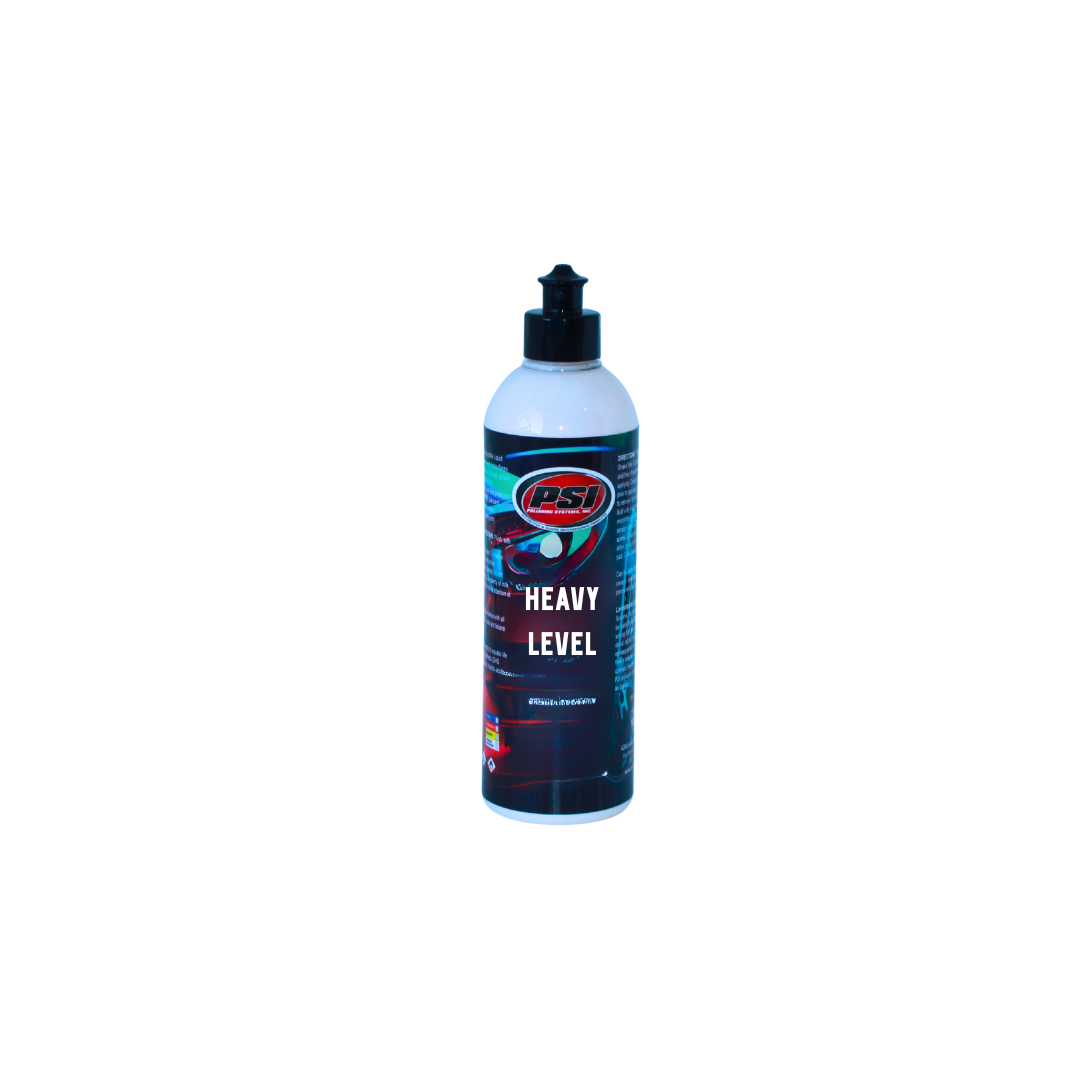
Heavy Level 16 oz from Polishing Systems Inc is that product: a heavy paint leveling compound designed for cutting through orange peel, wet-sanding residue, surface texture, and overspray on automotive paint. The 16-oz size is the practical working bottle for detail shops and body shop detail departments doing occasional or moderate leveling work without the volume commitment of a larger container.
What Heavy Level Compound Is
Heavy Level is a cut-focused paint leveling compound with abrasive chemistry calibrated for mechanical paint surface leveling on automotive clear coat and single-stage paint. “Leveling” in the paint correction context means removing the dimensional high points from orange peel, surface texture, or coarse sanding residue to create a flatter surface that then polishes to a higher gloss than would be achievable on the unlevel surface. This compound operates in the aggressive range of the correction chemistry spectrum and should be followed by a medium polish and finishing polish in a complete paint correction workflow.
Key Features and Why They Matter
- Heavy leveling abrasive chemistry — formulated to flatten orange peel, surface texture, and overspray rather than just removing fine swirls. Means genuine leveling on post-paint surfaces, not just surface refinement.
- Machine application formula — designed for rotary or DA polisher use with cutting or leveling pads. Means the heat and mechanical action of the polisher work the abrasive properly for real leveling performance.
- Works on clear coat and single-stage paint — applicable to both modern two-stage automotive paint systems and single-stage paint on older vehicles and custom finishes.
- 16-oz working bottle — the right size for body shop detail departments and mobile detailers doing occasional leveling work. Enough product for multiple full-panel or partial-panel correction sessions.
What This Product Is NOT For
Heavy Level compound is not the right product for routine maintenance detailing or swirl mark removal on paint in good condition — for those tasks, a medium polish produces better results with less risk. This compound is also not the final step: it must always be followed by a medium polish and finishing polish to complete the correction. Do not use on extremely thin or soft clear coats without first confirming sufficient paint film thickness — heavy leveling compounds remove significant paint material. Not for use on bare metal, plastic trim, rubber, or vinyl.
Who Uses This
Body shop technicians doing post-spray correction on freshly painted panels use this compound as their first machining step to level surface texture before polishing to gloss. Detail shops doing full paint corrections on vehicles with significant orange peel use it to achieve the leveling that medium polishes cannot. Automotive restoration shops working on older vehicles with thick single-stage paint use it for heavy oxidation and paint defect removal. The 16-oz size fits all of these workflows for moderate volume use.
How to Use
- Confirm paint condition and thickness: Use a paint film gauge to verify there is adequate paint thickness for aggressive compounding before starting. Verify the paint is fully cured — do not compound fresh spray paint before manufacturer-specified cure time.
- Select the right pad: Use a heavy-cut foam pad or a wool cutting pad for maximum leveling effectiveness.
- Apply compound: Apply 4-6 pea-size drops to the pad face and spread across the panel section at low machine speed before ramping up.
- Level the surface: Work one panel section at a time at medium-high polisher speed. Focus multiple passes on orange peel peaks until the surface appears uniformly leveled.
- Wipe off and inspect: Remove compound residue with a clean microfiber and inspect under a light. Repeat if significant texture remains.
- Proceed to medium polish: Follow immediately with a medium polish to refine the compound cut and remove compound buffer marks before the finishing polish step.
Why Heavy Level vs. a Standard Cutting Compound
Not all cutting compounds are calibrated for paint leveling. A standard cutting compound is designed primarily for defect removal (swirls, scratches, oxidation), while a leveling compound is specifically calibrated to flatten dimensional surface texture — orange peel and coarse surface irregularities — on freshly sprayed paint. Using the wrong product means more passes, more paint removal, and less complete leveling. Paint correction compounds from Polishing Systems Inc are matched to specific correction tasks. For the companion medium polish step, see our Heavy Level Compound 32 oz or our full compounds and polishes lineup.
Frequently Asked Questions
Do I need to wet-sand before using Heavy Level compound?
Not necessarily. For standard factory or respray orange peel without other surface damage, Heavy Level compound on a cutting pad can accomplish the leveling without a wet-sand step, depending on the severity of the texture. For very coarse orange peel or surface contamination, wet sanding at 1500-2000 grit before compounding produces a more efficient starting point for the compound step.
How many passes does it take to level typical orange peel?
Moderate factory orange peel typically responds in 4-8 machine passes with a cutting pad and heavy leveling compound. Coarser respray texture may require 10-12 passes or more. Inspect under a direct light after each set of passes to evaluate progress — the surface goes from high-peak texture to progressively flatter as the leveling proceeds.
Will this compound scratch the paint under the orange peel?
Heavy leveling compounds create buffer marks and fine scratches that must be refined out in subsequent polishing steps. The complete workflow — leveling compound, medium polish, finishing polish — produces a final scratch-free finish. Do not stop after the compound step and expect a finished result.
Can I use this on gel coat?
Yes — Heavy Level compound is effective on marine gel coat for leveling orange peel and surface texture on newer gel coat finishes or after gel coat repairs. Gel coat is generally thicker than automotive clear coat, providing more working margin, but follow the same cure time verification before compounding freshly sprayed or repaired gel coat.
Is the 16-oz size the right amount for a full vehicle?
For a complete full-vehicle orange peel leveling job at moderate texture severity, 16 oz is sufficient for one full session. For multiple vehicles or heavily textured surfaces requiring multiple passes, the 32-oz size provides better working supply continuity. See the Heavy Level 32 oz for higher-volume applications.