
Streak-free glass is a safety and quality standard in detailing, not just an aesthetic preference. A hazy, film-covered windshield that passes the quick-glance test in the shop reveals itself the moment the customer drives into a low sun angle or faces oncoming headlights at night. The cause is almost always the cleaning chemistry: either residue from the cleaner itself, residue from silicone-containing interior protectants on the glass, or dilution that is too weak to cut through the film effectively.
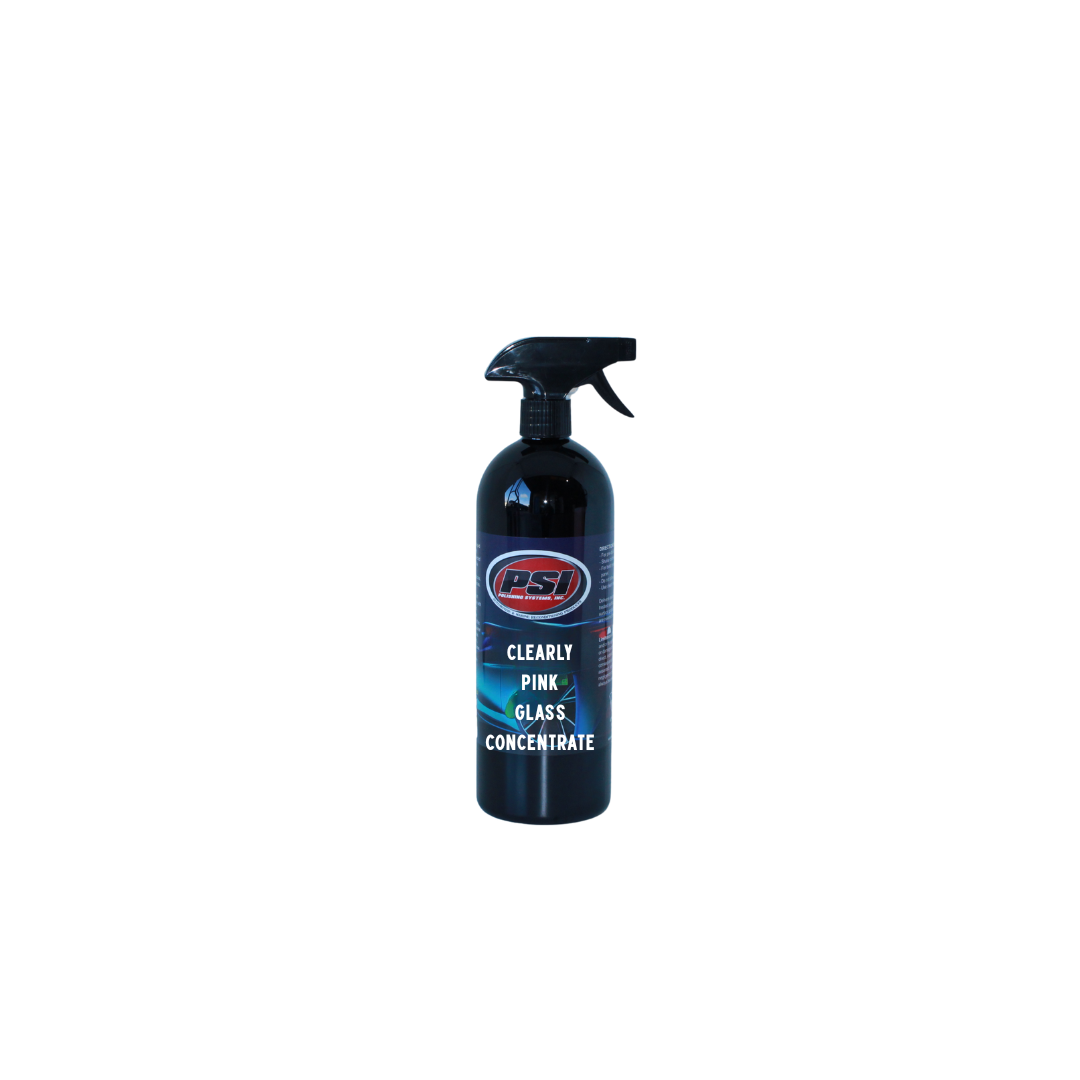
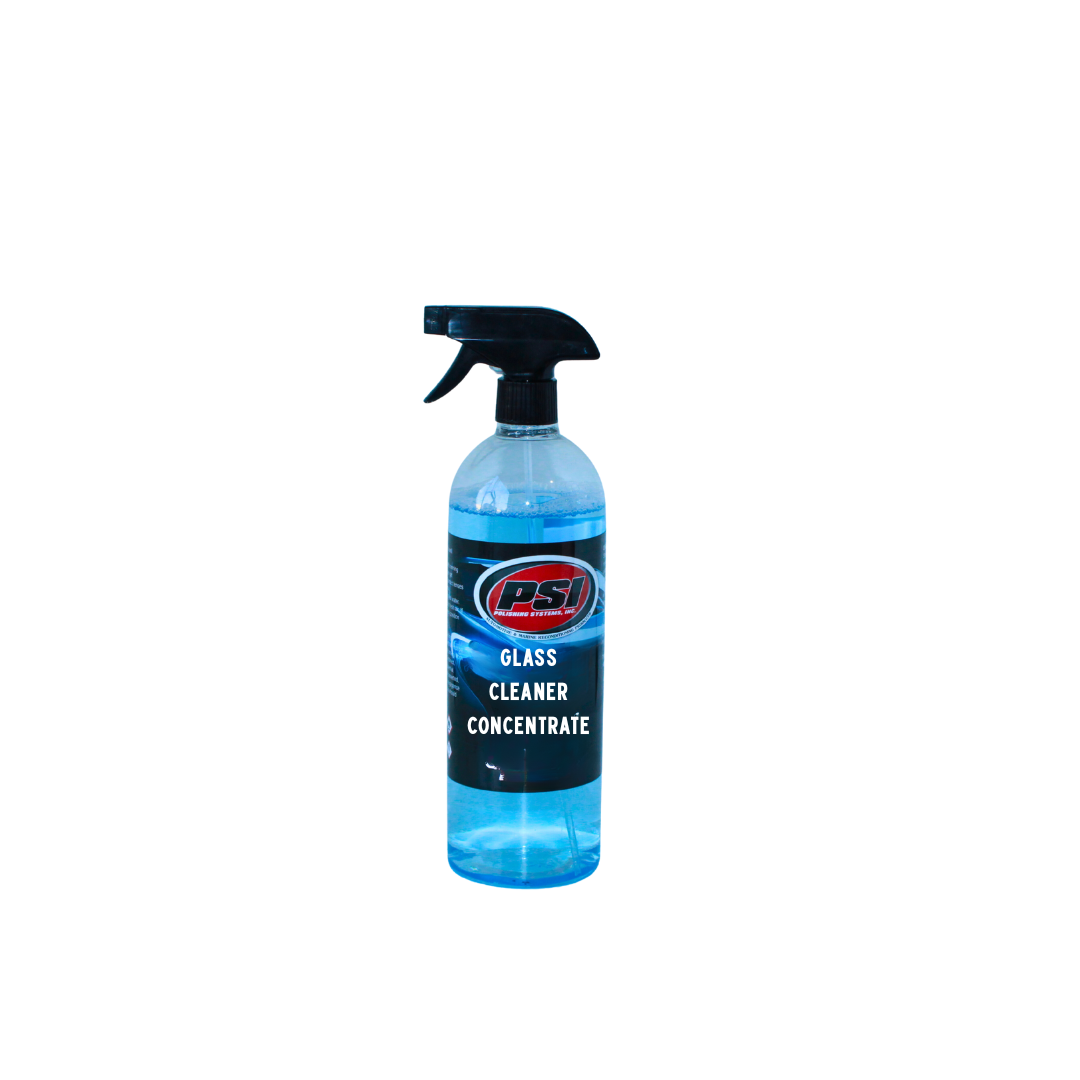
Glass Cleaner Concentrate 32oz from Polishing Systems Inc is a professional glass cleaner designed to cut through automotive glass film, interior fogging residue, and light contamination without leaving the haze or streaks that consumer glass cleaners often produce. The concentrate dilutes economically for production use, and the ammonia-free formula is safe on all tinted windows and glass surfaces without the tint film damage that ammonia-based cleaners cause over time.
What This Product Is
Glass Cleaner Concentrate is a professional-strength glass cleaning formula supplied in concentrated form for dilution before use. The active chemistry cuts through glass film, light road grime, interior condensation residue, and cleaning chemical carryover on automotive and marine glass without leaving streak or film residue. Ammonia-free formula is safe for tinted windows, factory film applications, and aftermarket window tint. The 32oz bottle is the trial and mobile-use format in the full Glass Cleaner Concentrate family.
Key Features and Why They Matter
- Concentrated formula — dilutes at recommended ratio (typically 4:1 to 8:1 water-to-concentrate) for production-use cost efficiency. Means lower per-window cost than pre-diluted glass cleaners without sacrificing cleaning performance.
- Ammonia-free chemistry — does not degrade window tint film adhesive or cause tint to bubble, haze, or peel over time. Means safe use on factory-tinted glass, aftermarket tinted windows, and specialty film applications without risk.
- Streak-free formulation — designed to evaporate cleanly without leaving surfactant or solvent residue that causes streaking or fogging. Means a genuinely clear result that passes the sun-angle inspection.
- Interior and exterior compatibility — effective on interior glass film (the residue from off-gassing dashboard plastics and cigarette smoke) and exterior road grime and water spots. Means one product handles the full glass cleaning step in an interior and exterior detail.
- 32oz working format — enough concentrate for multiple spray bottle refills for mobile and shop use.
What This Is NOT For
This is a glass cleaner — it will not remove etched water spots or mineral deposits that are chemically bonded to the glass surface. Those require a dedicated glass water spot remover or mechanical polish. Do not use on polycarbonate (plastic) windows — use only on glass surfaces. Not for windshield treatment prior to rain repellent application — clean with concentrate first, then ensure the surface is completely free of cleaner residue before applying any glass coating or rain repellent.
Who Uses This Product
Auto detail shops cleaning interior and exterior glass as a standard service step. Mobile detailers carrying a compact concentrate that produces multiple working-strength bottles from one container. Boat detailers cleaning marine windshields, hatch glass, and cabin windows. Dealership service writers doing glass clean-up on service vehicles. Fleet maintenance operators cleaning windshields during regular vehicle inspection rounds.
How to Use
- Dilute the concentrate per the recommended ratio — typically 4–8 parts water to 1 part concentrate. Mix in a clean spray bottle.
- Mist the diluted solution onto the glass surface or onto a clean, lint-free microfiber glass towel.
- Wipe in overlapping straight passes with the microfiber, working from top to bottom on vertical windows.
- Buff to a streak-free finish with the clean, dry side of the glass towel. Inspect from multiple angles — including against a bright light — to confirm no streaks or film remain.
- For volume pricing, see the Glass Cleaner Concentrate 1 Gallon and the 5 Gallon pail.
Why Buy Concentrate vs. Pre-Diluted Glass Cleaner
Pre-diluted glass cleaners in spray bottles are priced at the retail rate for ready-to-use product. Concentrate at the same professional strength costs significantly less per application when you account for the dilution ratio — the actual glass-cleaning chemistry in the bottle is the same, but you are not paying for packaged water. For shops cleaning glass on 5–10+ vehicles per day, the per-application cost difference is measurable. The 5 Gallon pail delivers the highest per-ounce value for high-volume glass cleaning operations.
Frequently Asked Questions
What is the correct dilution ratio for regular glass cleaning?
A standard working dilution for most glass cleaning applications is 6:1 (6 parts water to 1 part concentrate). For heavy interior film or very dirty glass, use a stronger ratio of 4:1. For routine maintenance cleaning on already-clean glass, 8:1 is appropriate. Adjust based on the actual glass condition — stronger solution for dirtier glass, lighter for maintenance cleaning.
Will this remove the interior film that forms on windshields?
Yes — interior glass film (the hazy residue from off-gassing plastics, smoke, and condensation) is one of the primary applications for this concentrate. The surfactant chemistry cuts through the film effectively without leaving residue of its own. On very heavy film buildup from years of smoking in the vehicle, multiple cleaning passes may be needed to fully remove the accumulated residue.
Is this formula safe on aftermarket window tint?
Yes — the ammonia-free formula is specifically designed to be safe on both factory-tinted and aftermarket window tint films. Ammonia degrades the adhesive layer of window tint over time, causing bubbling, peeling, and discoloration. This concentrate uses an ammonia-free chemistry that does not affect tint film adhesive.
Can I use this on boat windshields with UV-yellowing?
Glass Cleaner Concentrate effectively cleans marine windshield glass and can reduce light surface haziness from environmental exposure. It will not remove UV yellowing from within the glass itself or from polycarbonate windshield material — UV discoloration in the substrate requires polishing or replacement, not cleaning. For polycarbonate boat windshields, use a plastic-compatible cleaner rather than a glass cleaner.
What is the difference between 32oz and 16oz size?
The 16oz Glass Cleaner Concentrate is the entry-level compact format for mobile use and trial. The 32oz is the standard working bottle for regular use — it provides twice the concentrate without significantly more storage space. Both are the same formula. Scale up to the 1 Gallon or 5 Gallon for higher-volume shop use.