
Some interior stains resist extraction. Blood, urine, vomit, food dye, and deeply set biological contamination survive normal upholstery cleaning because the compounds causing the stain are bonded to the fabric fibers at a level that surfactants alone cannot break. These are the jobs that separate an interior detailer who can get results from one who sends the customer home with an apology. The chemistry for these stains is oxidizing treatment — and the professional-grade option is hydrogen peroxide.
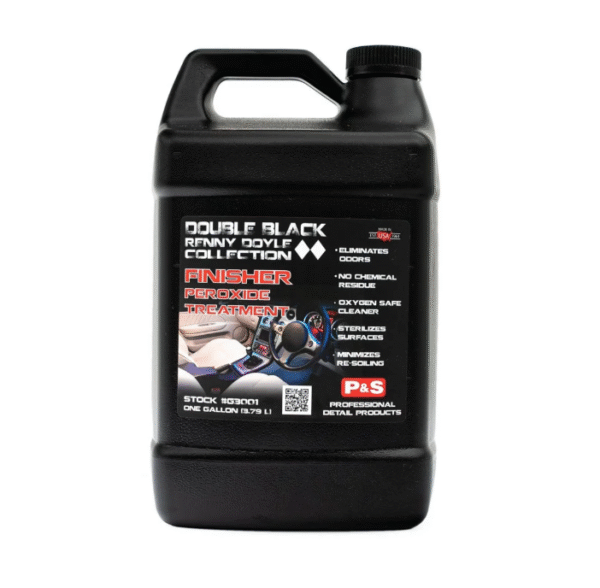
Finisher Peroxide Treatment Gallon is a hydrogen peroxide-based treatment that uses oxidizing chemistry to break the molecular bonds of organic stain compounds — bleaching the color and destroying the odor-causing molecules at their source without the fabric damage of chlorine bleach. The 1-gallon size makes it economical for shops that perform stain removal regularly.
What This Product Is
Finisher Peroxide Treatment is a professional hydrogen peroxide (H2O2) formulation for use on vehicle interior fabric, carpet, and upholstery. Hydrogen peroxide oxidizes organic stain compounds — the reactive oxygen molecules break down the colored and odor-causing organic materials into colorless, water-soluble byproducts that can be extracted or dried away. Unlike chlorine bleach, hydrogen peroxide breaks down into water and oxygen, leaving no harmful residual chemistry on the treated surface.
Key Features and Why They Matter
- Hydrogen peroxide oxidizing chemistry — breaks down organic stain compounds at the molecular level. Effective on blood, urine, food dye, plant-based stains, and other organic colorants that resist surfactant-based cleaners.
- No chlorine bleach — peroxide treatment works without chlorine, which destroys fabric dye and weakens fibers. Safer on colored fabrics than chlorine bleach while still providing strong stain oxidation.
- Deodorizing action — the oxidizing action destroys the organic molecules responsible for biological odors (urine, vomit, blood). More thorough odor elimination than enzyme treatment alone for severe biological contamination.
- 1-gallon working size — economical format for shops performing stain removal on multiple vehicles per week. Reduces per-treatment cost significantly vs. smaller retail-size bottles.
- Works on carpet, upholstery, and fabric — safe on colorfast automotive fabrics and carpet at correct dilution and with proper testing. One product for the full soft surface range in vehicle interiors.
What This Product Is NOT For
Hydrogen peroxide is an oxidizer — it will bleach non-colorfast fabrics and can lighten some dyes with extended contact or at high concentration. Always test on a hidden area before treating visible fabric surfaces. Do not use on leather, suede, Alcantara, or silk. Not for painted surfaces, glass, or hard interior trim — this is a fabric and carpet treatment product. For light stains on colorfast fabrics, the pint size may be sufficient.
Who Uses This Product
Interior detail specialists performing biohazard remediation and deep stain removal on vehicle upholstery. Mobile detailers handling rideshare vehicles, rental cars, and customer vehicles with severe organic staining. Detail shops that offer stain removal as a premium interior service. Any professional who has tried standard upholstery cleaning on biological stains and needs the chemistry that actually works.
How to Use Finisher Peroxide Treatment
- Test for colorfastness: Apply a small amount to an inconspicuous area and allow to dwell for 5 minutes. Check for color change before treating visible surfaces.
- Pre-clean the area: Extract or blot up as much of the original contamination as possible before treatment. Remove solids, blot liquids. The less contamination present, the more effectively the peroxide can reach the stain itself.
- Apply treatment: Apply Finisher Peroxide Treatment directly to the stained area. For set stains, agitate lightly with a soft brush to work product into the fiber structure.
- Dwell: Allow the product to react with the stain for 5-15 minutes. Do not let it dry completely on the fabric during the treatment period.
- Extract or blot: Use a wet/dry extractor on carpet and upholstery to recover product and loosened stain material. Blot with clean towels if extraction is not available.
- Rinse: Rinse the treated area with clean water and extract again to remove all peroxide residue.
Frequently Asked Questions
Will this product bleach my car’s fabric seats?
Hydrogen peroxide can bleach non-colorfast or dye-sensitive fabrics. Most modern automotive fabrics and carpets are colorfast enough to tolerate a properly diluted peroxide treatment applied correctly. Always test on a hidden area first — no exceptions. If the hidden test shows color change, do not treat the visible surface.
How does peroxide treatment compare to enzyme treatment?
Enzyme treatments break down organic compounds biologically and are effective for odor elimination and organic soil removal. Peroxide treatment oxidizes stain compounds chemically and is more effective for visible stain color removal and severe biological contamination. Many professionals use enzyme treatment for odor and peroxide for visible stain work — they complement each other.
Is the pint size the same formula?
Yes — the Finisher Peroxide Treatment Pint is the same formula in a smaller format. The pint suits occasional stain treatment; the gallon is for shops treating stains on a regular basis. Same chemistry, different volume.
Can I use this product on pet urine stains?
Yes — hydrogen peroxide is particularly effective on urine stains, which are both a visible stain and an odor problem. Peroxide treatment handles both: the oxidizing action breaks down uric acid crystals (the primary odor compound in urine) and oxidizes the stain color simultaneously.
Does peroxide leave a residue after it dries?
Hydrogen peroxide breaks down into water and oxygen as it reacts and dries — it leaves no harmful chemical residue. Rinse and extract after treatment to remove any remaining product and loosened stain material from the fabric.