
The final polishing step is where a paint correction job either succeeds or reveals its weaknesses. If a compound or medium polish leaves behind haze, micro-marring, or a dull buffer trail, the finishing step has to remove those artifacts and bring the paint to the wet, jeweled gloss that distinguishes professional correction from a quick buff. A finishing polish does that — but only if it has the chemistry to actually fill and level without leaving residue of its own.
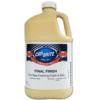
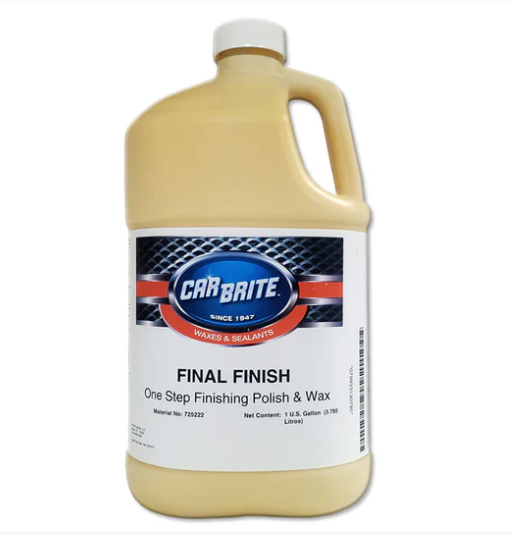
Final Finish 1 Gallon from Polishing Systems Inc is a professional finishing polish and optical glaze for the last step of any paint correction process. It removes the fine swirl marks and haze left by medium polishes, enhances paint depth, and leaves a smooth, optically clear surface ready for protection. At 1 gallon, it is the practical production size for detailers and shops running consistent correction work.
What Final Finish Is
Final Finish is a combination finishing polish and glaze. The polish component contains ultra-fine diminishing abrasives that remove micro-marring and light swirl marks from the previous polishing step. The glaze component fills extremely minor surface irregularities and enhances the optical depth and clarity of the paint. The result is a surface that looks deeper, wetter, and more uniform than polishing alone achieves. It works on automotive clear coat, single-stage paint, gel coat, and marine finishes by hand or machine application.
Key Features and Why They Matter
- Ultra-fine diminishing abrasives — polish down to near-zero during the working cycle, leaving a haze-free finish. Means no additional swirl removal step after Final Finish if application is correct.
- Optical glaze component — fills microscopic surface irregularities to enhance paint depth and gloss. Means the paint looks deeper and more uniform after the final wipe-off than it would from polishing alone.
- Compatible with paint, clear coat, gel coat, and single-stage — one product covers automotive and marine applications in a detailing bay. Means less product inventory for shops handling both car and boat work.
- Hand or machine applicable — works with a soft finishing foam pad on a dual-action polisher or by hand with a foam applicator. Means flexibility when switching between large-panel machine work and small-area hand finishing.
- 1-gallon production size — reduces refill frequency for high-volume operations. Enough product for dozens of full-vehicle final polish passes before reordering.
What Final Finish Is NOT For
Final Finish is a finishing/jeweling step — it is not a compound and will not remove deep swirl marks, 1500-grit sanding scratches, or heavy oxidation. Those defects require a cutting compound first. Do not use Final Finish as your sole product on heavily oxidized or scratch-damaged paint. It is also not a standalone wax or paint protection — follow with a wax, paint sealant, or ceramic coating for durability. Do not apply in direct sunlight or to surfaces above 90°F.
Who Uses Final Finish
Professional detailers who run 2-step or 3-step paint correction systems and need a reliable final step product. Body shops doing blending and refinish work that need paint correction after panel repairs. Marine detailers finishing gel coat after compound and medium polish. Any professional running high volume who wants a gallon-format finishing product they can dispense and keep on the shelf without constant reordering.
How to Use
- Confirm previous steps are complete: Surface should be free of compound residue from the preceding polish step. Wipe with an IPA prep spray before Final Finish to reveal any remaining haze or marring.
- Apply a small amount (quarter-size or smaller) to a clean soft finishing foam pad.
- Work one panel at a time on a dual-action polisher at 1,200–1,800 OPM, or by hand with a foam applicator pad using light circular pressure.
- Work until the product becomes clear (the diminishing abrasives have fully broken down) — this is the signal the polish cycle is complete.
- Wipe off with a clean microfiber in straight, overlapping passes. Inspect under LED lighting for remaining haze or swirl marks.
- Apply protection immediately — see the exterior protection lineup for waxes, sealants, and ceramic coating options that bond to the freshly polished surface.
Why Buy Final Finish vs. Consumer Finishing Sprays
Retail finishing sprays are formulated for DIY use on already-good paint. They conceal, but do not correct. Final Finish contains actual diminishing abrasives and an optical glaze — it removes the micro-marring left by machine polishing and produces a measurable improvement in clarity that a spray detailer cannot match. The 1-gallon size is far more economical per application than retail bottles for shops doing weekly correction work. Polishing Systems Inc carries the full compound-to-finish sequence — see the compound and polish category to build the complete correction system.
Frequently Asked Questions
Do I still need to apply wax after using Final Finish?
Yes — Final Finish is a polishing and glaze step, not a protection step. It corrects and enhances the paint’s optical quality but does not provide lasting UV protection, water repellency, or contamination resistance. Always follow with a carnauba wax, paint sealant, or ceramic coating for protection. The paint surface is especially receptive to bonding immediately after polishing, so apply protection the same session.
Can Final Finish be used on plastic trim?
Use with caution on black plastic trim — the glaze component can leave a whitish haze on porous plastics that is difficult to remove. Mask trim pieces before machine application, or apply Final Finish by hand and wipe thoroughly before the product dries on uncoated plastic surfaces.
Will this remove water spots?
Final Finish will remove light etched water spots that sit on the surface of clear coat or gel coat. Deep etched water spots that have penetrated into the clear coat require a cutting compound first. For water spot removal on windshields or other glass surfaces, use a dedicated glass compound — Final Finish is not formulated for glass.
How much product per vehicle?
For a full-size sedan or SUV, a typical final polish pass with a DA polisher uses 1–2 oz of product for the full vehicle — about 64–128 full-vehicle applications per gallon. Exact usage varies with panel size, pad type, and number of passes needed to reach a haze-free result.
Is this compatible with ceramic-coated paint?
Do not use Final Finish on paint that already has an active ceramic coating — the abrasives will degrade the coating. If you are installing a new ceramic coat, Final Finish is an excellent pre-coat polishing step. Wipe the surface with an IPA prep solution after Final Finish and before ceramic application to remove any glaze residue that could interfere with coating bonding.