
Steel razor blades have one job in automotive detailing: removing water spots and overspray from glass. The moment a steel blade touches a painted surface, clear coat, or polished paint film, you risk permanent scratching — and once the scratch is in the paint, you are doing paint correction work that the customer did not ask for. Plastic razor blades exist precisely to solve this problem: they have enough edge to cut through adhesive deposits, sticker residue, tree sap, and film lifting edges on painted and coated surfaces, without the hardness that causes irreversible scratch damage.
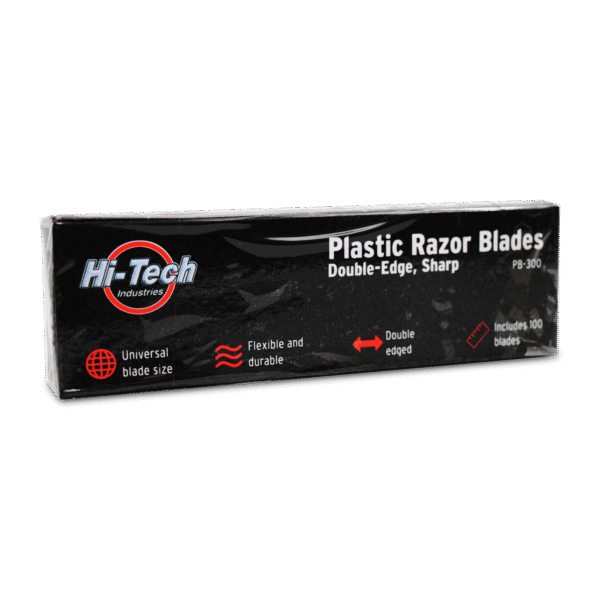
Double-Edge Sharp Plastic Blades (100/Sleeve) from Polishing Systems Inc are the working quantity for professional detailers, tint shops, PPF installers, and body shop techs who use plastic blades daily. Each blade has two usable cutting edges — flip to a fresh edge when the first dulls — and the 100-blade sleeve keeps you stocked without constant reordering.
What These Blades Are
Double-edge plastic razor blades made from a rigid polymer material precision-ground to a sharp cutting edge. They are compatible with standard single-edge razor blade handles (the blade design fits tool holders that accept single-edge-format blades). Each blade offers two distinct cutting edges — one on each long side — so when the working edge dulls, you flip the blade to use the second edge before discarding. At 100 blades per sleeve, this is a professional working quantity.
Key Features and Why They Matter
- Plastic material, not steel — eliminates the risk of irreversible scratching on painted surfaces, clear coat, and soft films. So what? You can use these on automotive paint, PPF, vinyl wraps, and headlight covers without the consequence of a steel blade slip.
- Double-edge design — two usable cutting edges per blade doubles the effective service life compared to single-edge alternatives, reducing blade cost per job.
- 100-blade working quantity — enough blades for a production tint shop or detail operation to run for weeks without reordering. Per-blade cost at sleeve quantity is a fraction of retail single-blade pricing.
- Precision-ground edge — a sharp, consistent edge that lifts adhesive, sticker residue, and film deposits cleanly without tearing or dragging.
- Compatible with standard blade holders — fits standard single-edge-style razor blade handles and tool holders for controlled, ergonomic blade use.
What These Are NOT For
Plastic blades are softer than steel and cannot replace steel blades for removing hardened water deposits and stubborn mineral scale from glass — for glass, steel blades used with proper lubrication and technique remain the standard. Plastic blades also have lower rigidity than steel, so aggressive pressure on very hard adhesive deposits can cause blade flex and inconsistent cutting. Do not use dry — always use with a lubricant (detail spray, water, or a dedicated lubricant) to prevent drag marks on the surface.
Who Uses These Blades
PPF installers removing finger adhesive from edges. Tint installers cleaning residue from glass and paint surrounding tint film. Detail shops removing sticker residue, overspray, or dealer decal adhesive from painted surfaces. Body shops cleaning surface prep areas before paint application. Vinyl wrap installers lifting and repositioning film during installation. For interior trim-detail work, pair these blades with our Detail Brush Set for a complete crevice and adhesive-removal toolkit.
How to Use
- Insert blade into a compatible holder — use a standard single-edge blade holder for controlled application.
- Lubricate the surface — apply detail spray, soapy water, or a dedicated surface lubricant to the work area. Never use a plastic blade dry on painted or coated surfaces.
- Hold at a 20-30 degree angle to the surface — a low angle reduces the risk of edge catching and reduces the force required to slide the blade under adhesive deposits.
- Use light, consistent pressure — let the blade edge do the work. Heavy downward pressure increases the risk of edge catching or surface marking.
- Change to a fresh edge or new blade frequently — a dull edge requires more pressure, increasing risk. Blade economy at 100 per sleeve means there is no reason to push a dull blade.
Why Buy 100-Sleeve vs. Small Retail Packs
Retail plastic blades sold in packs of 5 or 10 carry a significant per-blade markup for the packaging convenience. At 100-blade sleeve pricing, the per-blade cost drops to a fraction — and for a shop doing daily adhesive removal or tint work, that reduction compounds into real savings over a year of use. You also eliminate the constant reorder cycle of running out mid-job. Browse the exterior detailing tools category for complementary prep tools.
Frequently Asked Questions
Will plastic blades scratch clear coat?
Plastic blades are significantly less likely to scratch clear coat than steel blades because plastic is softer than the metal particles in paint and clear coat. However, no blade is risk-free on painted surfaces — use with lubrication, maintain a low angle, and use light pressure. Test on a hidden area on any unfamiliar surface before working on visible panels.
Can these blades be used on tinted windows?
Yes — plastic blades are widely used by tint installers precisely because they do not scratch the tint film or the glass. For removing old tint film, lift an edge and use a plastic blade to slide under the film. Always use with soapy water or a dedicated tint removal spray as lubricant.
What handle fits these blades?
Standard single-edge razor blade holders accept these double-edge plastic blades — the blade thickness and width are compatible with most professional blade holders used in detailing and film installation. If you need a blade holder, any standard single-edge utility blade holder works.
How do I know when to change to the second edge?
When the blade requires noticeably more pressure to lift adhesive, or when it starts dragging rather than sliding cleanly under the deposit, the working edge has dulled. Flip the blade to the second edge. When both edges dull, discard and use a new blade — at 100 per sleeve, blades are inexpensive enough that there is no reason to work with a dull edge.