
When the paint is genuinely damaged — heavy oxidation across an entire panel, deep buffer trails from previous mechanical work, 1200- or 1500-grit sanding marks, or full-panel swirling on a high-oxidation single-stage finish — you need a pad that can generate enough cutting action to move paint. Foam cutting pads have their place. But for the heaviest compounding work on the most damaged surfaces, a wool pad on a rotary polisher is the professional tool that makes the job viable in a production timeframe.
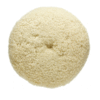
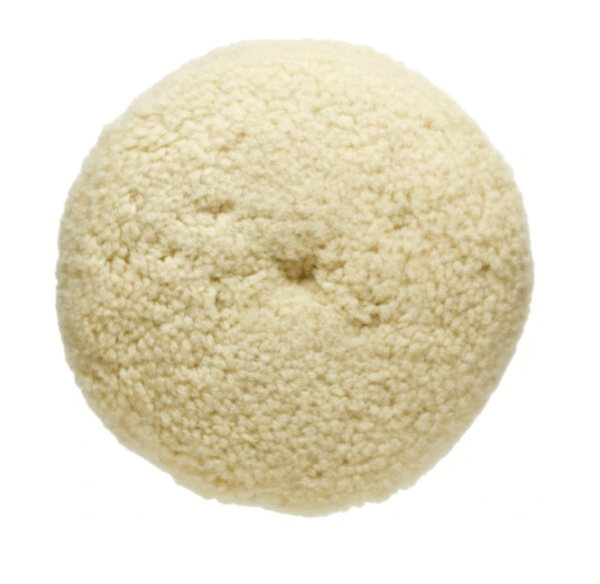
The Double-Sided White Wool 8″ Compounding Pad is built for that level of work. 100% natural wool fiber delivers aggressive cut that breaks through oxidation and heavy defects faster than foam. The double-sided construction gives you twice the usable surface before the pad needs to be cleaned or replaced.
What This Pad Is
This is a 100% natural white wool compounding pad, 8 inches in diameter, with a usable wool surface on both sides. It mounts to an 8-inch hook-and-loop backing plate on a rotary polisher. The natural wool construction generates cutting action through fiber contact and mechanical abrasion — the fibers cut through the surface oxidation and defect layer, allowing the compound’s abrasives to do their work more efficiently than a foam pad of the same aggression level.
Key Features and Why They Matter
- 100% natural wool construction — natural wool fibers deliver fast, aggressive cut on heavily oxidized and defective paint. Wool is the traditional choice for the heaviest rotary compounding work for good reason.
- Double-sided usable surface — two wool sides means you can flip the pad when one side loads up with compound and continue working without stopping to swap pads. Keeps production moving.
- 8-inch diameter — the large-format size for rotary polisher work on hoods, roofs, quarter panels, and large flat surfaces. Covers more surface area per pass and generates more cutting force per revolution.
- White color designation — white wool identifies this as a cutting/compounding grade, consistent with the convention used across professional polishing pad systems.
- Hook-and-loop backing — standard hook-and-loop mount for compatible 8-inch rotary backing plates. Installs and removes without tools.
What This Pad Is NOT For
This is a heavy-cutting compounding pad — it is not a polishing or finishing pad. Using a wool compounding pad with a finishing polish will not produce a finished surface; it will leave wool buffer trails and holograms that require further polishing to remove. Wool pads are for the compounding stage only. Always follow a wool pad compounding stage with a foam polishing pad and medium polish to remove the haze and holograms the wool stage leaves behind. Also: wool pads are primarily for rotary polisher use. While they can be used on a DA polisher, their aggressive cut is most effective and controllable on a rotary.
Who Uses This Pad
Paint correction detailers running the compounding stage of heavy multi-step paint corrections. Body shop technicians compounding fresh respray or color-sanding paint before polishing. Marine detailers compounding heavily oxidized gel coat on boats and RVs. Reconditioning operations processing heavily defective used vehicle paint. Any professional who knows that a foam cutting pad is not going to get through what they are looking at.
How to Use
- Prime the pad: Break in a new wool pad by applying a small amount of compound and working it into the pad at low rotary speed before the first panel.
- Apply compound: Apply a working amount of cutting compound directly to the pad surface or spread lines across the panel.
- Work at appropriate speed: Rotary speed for wool compounding is typically 1200-1800 RPM depending on the compound and surface hardness. Start lower and increase as needed.
- Work section by section: Work in 18″x18″ sections with overlapping passes. Maintain consistent arm movement to avoid concentrating heat in one area.
- Monitor surface: Check your progress frequently — wool pads cut faster than foam, and it is easier to over-cut than under-cut on a rotary.
- Flip when loaded: When one side loads with compound residue, flip to the clean side and continue. Clean both sides when the compounding session is complete.
Frequently Asked Questions
How do I clean a wool compounding pad?
During compounding, blow or spur out accumulated compound with a pad conditioning spur while the rotary is running. Between vehicles, wash wool pads thoroughly with a pad-cleaning solution, work the fibers clean, rinse until water runs clear, and air-dry completely. Machine washing is acceptable on a gentle cycle.
How many correction jobs does a wool pad last?
With proper cleaning and care, a quality wool pad will last 20-40 compounding sessions before the fibers mat down or the wool sheds excessively. Regular spur conditioning during use and thorough washing after each session extends pad life significantly.
Can I use this pad on a dual-action polisher?
Yes, but the aggressive cut of a wool pad is best utilized on a rotary polisher. DA polishers are designed for foam pad use and operate at a lower effective cut level. For heavy compounding work on a DA machine, a foam cutting pad designed for DA use is typically more effective than a wool pad.
What compound pairs best with a white wool pad?
White wool pads pair with heavy-cut compounds like 1500 Plus for the most aggressive correction work. For moderately severe defects, a medium-cut compound on the wool pad provides good correction with less risk of burning through thin clear coat on modern vehicles.
Is this pad safe on single-stage paint?
Use with caution on single-stage paint — it is softer than modern clear coat and cuts much faster. Use lower rotary speed, lighter pressure, and check your progress very frequently. Many experienced detailers prefer foam cutting pads on single-stage paint to maintain better control over the cut rate.