
Large-panel paint correction is where pad size and pad geometry matter more than almost any other variable. Working a hood, roof, or boat deck with a 6-inch pad is achievable, but it takes significantly more passes and more time than the same correction with a 9-inch pad. The catch with large foam pads on curved panels is that a rigid large pad loses contact on inside curves — it bridges the low point and only polishes the high points on either side. On a car hood with a center crease or a curved fender with a character line, that means uneven correction.
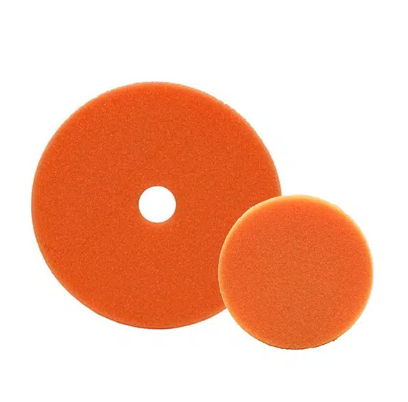
The Contour Edge 9″ High-Density Heavy Polish Foam Pad addresses this with its contoured edge geometry. The edge of the pad is beveled to allow flex into body panel transitions rather than lifting flat off the surface. The result is more consistent compound contact across large panels with complex geometry — fewer missed spots, more even correction, and less time spent re-addressing the areas a flat-edge large pad skipped. The high-density foam provides the mechanical stiffness needed for effective compound work without the dead-spot feel of over-soft foam that cannot generate proper friction.
What This Pad Is
This is a 9-inch high-density foam polishing pad with a contoured (beveled) edge profile designed for heavy-polish compound application on rotary and large-format dual-action polishers. The pad is appropriate for the medium-to-heavy correction phase of a paint correction workflow — removing swirls, light oxidation, and compound marks — with a high-density foam construction that supports consistent compound distribution across a large working face.
Key Features and Why They Matter
- Contour edge design — beveled pad edge allows the outer radius of the pad to flex into panel transitions and curves. Means more consistent surface contact on curved hoods, fenders, and boat decks versus a flat-edge large pad.
- High-density foam construction — provides the foam stiffness needed to distribute compound efficiently under polisher pressure across a 9-inch working face. Avoids the flex-and-skip behavior of low-density foam on large format pads.
- 9-inch diameter — the large-format production size for fast coverage on flat panels. Reduces the total pass count required to correct a full hood or roof compared to a 6-inch pad.
- Heavy-polish compound rating — the foam density and construction match the requirements of medium-to-heavy cut polishing compounds. Appropriate for the correction phase after a cutting compound or as a single-step medium correction.
- Compatible with rotary and large DA polishers — the 9-inch format requires a compatible backing plate and polisher — confirm machine and backing plate compatibility before use.
What This Pad Is NOT For
This is not a finishing or jeweling pad. The high-density foam and heavy-polish rating mean this pad should not be the last pad before wax or coating — follow with a medium or finishing pad and appropriate polish for the final gloss step. This pad is also not appropriate for tight contour work on bumpers, side skirts, or complex body kit elements where a 5-6 inch pad provides better control. The 9-inch format is a large-panel production tool, not a general-purpose detail pad. Confirm backing plate size and polisher head compatibility before use.
Who Uses This Pad
Professional paint correction shops use the 9-inch format for high-production-rate work on large fleet vehicles, RVs, and marine gel coat — surfaces where speed of coverage matters as much as correction quality. Body shops use it for the blend-and-polish step after wet sanding, where a large format pad reduces the time needed to bring a large panel to correction standard. Mobile correction detailers who specialize in full-paint-correction services carry the 9-inch pad for hood and roof correction stages to reduce job time on large-format vehicles.
How to Use
- Confirm machine and backing plate compatibility — a 9-inch foam pad requires a 8-9 inch backing plate and a polisher with the power and speed range appropriate for large-format pads.
- Prime the pad with 4-5 drops of polishing compound before the first use to condition the foam.
- Apply compound — use 5-6 pea-sized drops spread across the working face of the 9-inch pad, or apply directly to the panel in a cross pattern.
- Spread at low speed before increasing to working speed to prevent compound from throwing off the pad.
- Work in overlapping passes with medium machine speed and consistent arm pressure. The contour edge will flex into panel transitions as you move across curves.
- Clean between panels using a pad brush or compressed air to clear compound buildup that reduces cutting effectiveness.
Why Buy This vs. a Standard Large Foam Pad
A flat-edge 9-inch foam pad works on perfectly flat surfaces but loses edge contact on curved panels, leaving an uncorrected ring around the inner pad radius on every pass on curved sections. The contoured edge is not a cosmetic difference — it is a functional geometry that maintains consistent surface contact and pressure on the real-world curved panels that make up the majority of a vehicle’s exterior. For production shops where quality and speed both matter, this translates to fewer re-work passes and more consistent customer results. Browse our complete polishing pad lineup for complementary medium and finishing pads to complete the correction sequence.
Frequently Asked Questions
What polisher is this pad designed for?
The 9-inch diameter is appropriate for large dual-action polishers and rotary machines with adequate power for large-format pad use. Smaller DA polishers (those typically used with 5-6 inch pads) do not have the power or backing plate size to use a 9-inch pad effectively. Confirm your polisher’s maximum pad size before ordering.
What compounds work best with this pad?
The high-density heavy-polish foam rating pairs best with medium-to-heavy-cut polishing compounds — products designed for correction work, not final finishing. Avoid using jeweling products or waxes with this pad. For the compound-to-polish transition, follow this pad with a finishing pad and light polish to achieve the final gloss.
Can this pad be used on gel coat?
Yes — the 9-inch contour edge pad is frequently used for gel coat correction on boat decks and RV exteriors. Gel coat correction with a large pad is efficient for the flat hull sections and deck panels that make up most of a boat’s surface. Use compounds formulated for gel coat and monitor surface temperature carefully to avoid heat buildup in the gel coat.
How do I clean a 9-inch foam pad?
Clean after each use with a pad brush between panels (during correction) and a pad washer or bucket-wash system after the job. Allow the pad to air dry completely before storage — storing damp foam pads in a sealed bag accelerates degradation. Replace when the foam face shows significant glazing or deformation that cannot be restored by cleaning.
What backing plate should I use with a 9-inch pad?
Use an 8-9 inch backing plate matched to your polisher’s thread specification. The backing plate diameter should be 1 inch smaller than the pad diameter for proper edge contact and safety. Check our backing plates category for compatible options.