
Concrete is a manageable problem when it is fresh — a quick rinse and wipe takes care of most spatter. Concrete that has fully cured on a painted panel or a chrome bumper is a different situation entirely. The calcium silicate matrix has hardened to a material that is chemically similar to stone, and using abrasive methods to remove it risks scratching the substrate. The professional answer is acid-based chemical removal: a product that dissolves the concrete’s binder chemistry while leaving the surface underneath largely intact.
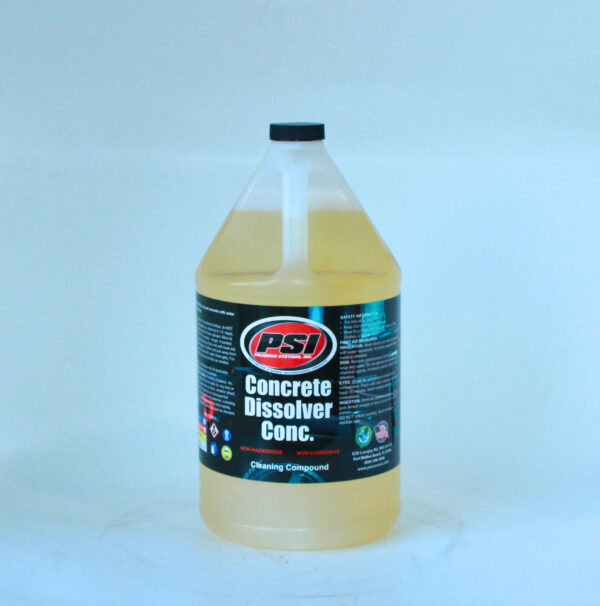
Concrete Dissolver 1 Gallon is that product in the standard working-shop size. It is an acid-based concrete and cement remover calibrated for use on automotive and marine surfaces — painted panels, glass, fiberglass, chrome, and uncoated metal — with a controlled reaction profile that gives you dwell time to work section-by-section without the immediate surface attack you get from raw muriatic acid. One gallon is enough to treat a full vehicle with moderate concrete overspray, or to maintain a small construction fleet on a regular wash schedule.
What Concrete Dissolver Is
Concrete Dissolver is an engineered acid-based formula targeting the calcium silicate chemistry of hardened concrete, mortar, grout, and mineral scale. It chemically converts the calcium carbonate and silicate matrix in cured concrete into soluble salts that rinse away cleanly. This is why acid works where mechanical methods struggle — the chemistry attacks the binding matrix of the concrete rather than requiring you to break it off the surface physically. Applied properly, it removes concrete that would otherwise require abrasive methods that damage the underlying surface.
Key Features and Why They Matter
- Acid-based cement-specific chemistry — formulated to target calcium silicate compounds, not to be an indiscriminate acid attack on all surfaces. Means a more controlled, surface-safer concrete removal than raw acid alternatives.
- Works on paint, glass, fiberglass, chrome, and metal — broad substrate compatibility for full-vehicle treatment of concrete overspray without needing a different product for each surface type.
- Spray-on, dwell, rinse application — minimal mechanical effort required. Spray, wait, rinse — repeat if needed for thick deposits.
- 1-gallon working size — enough for a full vehicle treatment pass or for maintaining a small fleet on a periodic schedule. The practical size for shops that handle concrete-contaminated vehicles periodically rather than daily.
- Scalable to the job — dilute for light cement film, use at full strength for heavily cured deposits.
What Concrete Dissolver Is NOT For
Concrete Dissolver is not safe for anodized or polished aluminum, acid-sensitive stone (marble, limestone), or painted surfaces with compromised clear coat without testing and caution. It is not a general cleaner or degreaser. Always use acid-resistant PPE — chemical-resistant gloves, eye protection, and acid-resistant footwear. Rinse surfaces thoroughly after treatment and neutralize metal surfaces with a mild alkaline solution. Do not allow product to dry on any surface. Test on a hidden area before full application on any surface you have not treated before.
Who Uses Concrete Dissolver 1 Gallon
Detail shops that service construction trades, municipalities, and utility companies receive vehicles with concrete overspray on a regular basis. The 1-gallon size is the standard stocking quantity for shops treating a few concrete-affected vehicles per month. Fleet operators with a handful of construction-adjacent vehicles use the gallon for periodic decontamination. Marine service shops clean dock-concrete splatter from boat hulls and gel coat. For higher-volume operations — ready-mix truck fleets or large construction vehicle fleets — the 5-gallon pail delivers better economics.
How to Use
- Pre-rinse the surface to remove loose grit before applying dissolver.
- Apply with an acid-resistant pump sprayer to the concrete-affected area. Saturate thoroughly for heavy deposits.
- Allow 2-5 minutes dwell time for light cement film; 10-20 minutes for heavier cured deposits. Do not let product dry on the surface.
- Agitate gently with an acid-safe soft brush if deposits have not fully released.
- Rinse thoroughly with high-pressure water. Follow with a mild alkaline neutralizer rinse on metal surfaces.
- Inspect and repeat as needed for thick concrete accumulation.
Why Buy Concrete Dissolver vs. DIY Acid Methods
Raw muriatic acid produces toxic fumes, attacks metal aggressively with little reaction control, and provides no formulation safeguards for automotive finishes. A formulated product like Concrete Dissolver is engineered to provide a more controlled, vehicle-surface-appropriate concrete removal experience — calibrated reaction rate, more manageable fumes, and a formula designed with automotive substrate compatibility in mind. For professional shop use, a purpose-built product is the reliable, repeatable choice.
Frequently Asked Questions
Will this remove concrete from a windshield?
Yes — when used as directed with appropriate dwell time, Concrete Dissolver effectively removes cement film and concrete splatter from automotive glass. Apply to the affected area, allow to dwell for 3-5 minutes (do not let it dry), and rinse thoroughly. For very thick accumulations, multiple applications may be needed.
Can I use Concrete Dissolver on a ceramic-coated vehicle?
Exercise caution on ceramic-coated surfaces. The acid chemistry may affect ceramic coating performance on areas where product contacts the coating. Spot-treat only the concrete-affected areas, minimize dwell time, rinse immediately and thoroughly, and follow with a ceramic maintenance product after treatment. Test on a hidden coated area first.
Is this safe for gel coat?
When used as directed with appropriate dwell time and thorough rinsing, Concrete Dissolver can be used on gel coat for concrete removal. Gel coat is more porous than automotive clear coat — limit dwell time to the minimum needed to loosen the concrete and rinse thoroughly. Always test on a hidden area first.
How long does 1 gallon last for fleet use?
For a light fleet application on a small number of vehicles with moderate concrete exposure, 1 gallon typically lasts through several treatment sessions. For heavy, regular use across a working fleet, consider the 5-gallon pail for volume economics and continuous supply.
Does Concrete Dissolver work on grout and mortar stains?
Yes — grout and mortar are cement-based materials with the same calcium silicate chemistry as concrete. Concrete Dissolver works on grout haze, mortar splatter, and similar cement-compound stains using the same application process as for concrete.