Sponges and flat microfiber wash pads are the leading cause of wash-induced swirl marks in amateur and production detailing. They sit flat against the paint, which means any grit particle on the surface gets dragged along under the wash tool — creating fine scratches across the paint’s clear coat on every single wash. On dark colors, this shows up as a spiderweb pattern of fine swirls under direct light. After a few months of regular washing with a sponge, the paint that was corrected looks worse than before the correction.
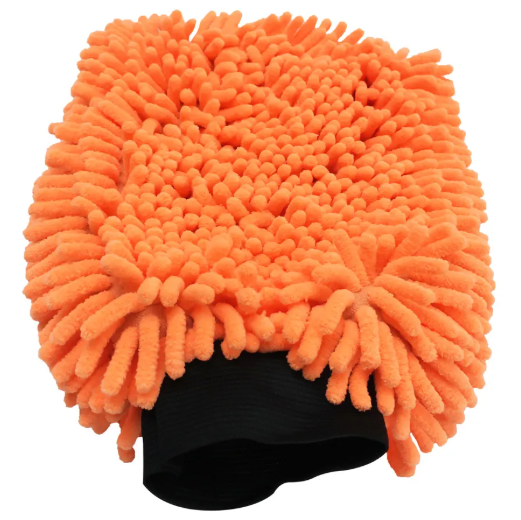
The Chenille Wash Mitt solves this problem through its construction. The long, individual chenille fiber fingers lift dirt particles away from the paint surface into the deep pile of the mitt — they stay suspended in the fiber, away from the painted surface, instead of being dragged back across it. The result is safer washing with less swirl induction, which is exactly what happens in a professional two-bucket wash method.
What This Wash Mitt Is
The Chenille Wash Mitt is a deep-pile microfiber washing glove. “Chenille” describes the fiber construction: individual loop or finger-type fibers that extend outward from the base material, creating a thick, textured pile. Unlike flat weave or foam, the chenille pile creates a physical gap between the paint surface and the contact face of the mitt, which is where the swirl prevention happens.
Key Features and Why They Matter
- Deep chenille pile — the extended fiber structure lifts dirt into the mitt rather than pushing it across the paint. Less dragging of grit means fewer wash-induced swirls per wash cycle.
- Microfiber construction — microfiber holds water and car wash soap well, releasing it onto the paint for good lubrication and soil removal. Better lubrication further reduces swirl risk during washing.
- Glove fit — the glove format allows the detailer’s hand to follow body contours, panel curves, and tight spaces more naturally than a flat pad or rectangular mitt. Better conformability means more consistent wash pressure across the panel.
- Safe for all paint protection types — the chenille fiber is soft enough for use on ceramic-coated, waxed, and sealed paint without stripping or scratching the protection layer.
- Machine washable — clean after each use in a dedicated microfiber wash and reuse for dozens of washes before replacement. Cost per wash is low compared to disposable wash pads.
What This Mitt Is NOT For
A wash mitt is not a decontamination tool — do not use the same mitt for wheel and tire cleaning as for paint washing. Wheel and tire surfaces carry heavy iron contamination, brake dust, and road tar that will transfer to the paint surface if you use the same mitt. Dedicate a separate wash mitt or brush to wheels. Also, do not use a chenille wash mitt to remove bug splatter, tar, or tree sap — mechanical agitation on these materials risks embedding contamination in the fiber and dragging it across paint. Use appropriate chemical pre-treatment before the wash mitt contact.
Who Uses This Mitt
Professional detailers running a two-bucket wash method on customer vehicles. Mobile detailers who need safe, consistent wash tools that do not create additional work in the form of wash-induced correction. Paint correction specialists who protect their correction work by washing clients’ cars with premium tools on each maintenance visit. Enthusiasts who take paint quality seriously and understand that regular washing with the wrong tool defeats the purpose of any correction or coating investment.
How to Use the Chenille Wash Mitt
- Two-bucket setup: Fill one bucket with fresh wash solution, one bucket with clean rinse water. Use a grit guard in each bucket.
- Load the mitt: Submerge the mitt fully in the wash bucket to saturate the chenille pile with soap solution.
- Wash top-to-bottom: Start at the roof and work down. Wash the cleanest surfaces first, saving lower panels and rocker panels for last.
- Rinse before reload: After each panel, rinse the mitt in the clean water bucket and wring out, then reload in the soap bucket before moving to the next panel.
- Dedicated wheel mitt: Use a separate, labeled mitt for wheel cleaning — never the same mitt you use on paint.
- Wash after use: Machine-wash the mitt in a dedicated microfiber wash without fabric softener and allow to air-dry.
Frequently Asked Questions
What is the difference between a chenille mitt and a regular microfiber mitt?
A regular microfiber mitt typically has a flat or short-pile weave face that sits close to the paint. A chenille mitt has long, individual fiber fingers that extend outward — creating more physical distance between the paint and the base of the mitt. This deeper pile is what captures and holds grit away from the painted surface more effectively during washing.
How do I clean a chenille wash mitt?
Machine-wash in warm water with a dedicated microfiber detergent or fragrance-free mild detergent. No fabric softener — it coats the fibers and reduces their ability to hold water and soap. Air-dry completely. Inspect for embedded grit or contamination before reuse.
Is a chenille mitt better than a wool wash mitt?
Both types use a deep pile to lift grit away from paint. Wool mitts are traditional and effective; chenille microfiber mitts are generally softer, easier to care for, and do not carry the risk of lanolin oil transfer or irritation from natural wool fibers. The choice comes down to personal preference — both are significantly better for paint than foam or flat-weave alternatives.
How many washes will this mitt last?
With proper two-bucket wash technique and regular machine washing between uses, a quality chenille mitt will last 50-100+ wash cycles before the pile degrades noticeably. Replace when the fibers mat down and no longer hold their textured shape after washing.
Can I use this mitt with foam cannon pre-soak?
Yes — the standard workflow is a foam cannon pre-soak to loosen surface dirt, then a rinse to remove the foam and the dirt it has loosened, followed by a two-bucket wash with the chenille mitt for safe physical agitation. This combination produces the lowest-swirl wash result possible in a standard detail workflow.