
Brake dust is not just cosmetic. The iron particles in brake dust embed into wheel finishes and begin oxidizing on contact — that reddish-brown staining you see on aluminum and alloy wheels after a few hundred miles is iron contamination starting to corrode the surface. Without a protective barrier, that cycle repeats after every wash: brake dust lands, embeds, stains. A ceramic wheel protectant interrupts that cycle by creating a hard, hydrophobic coating on the wheel surface that brake dust cannot easily bond to and wheels can rinse clean rather than requiring aggressive chemical intervention every time.
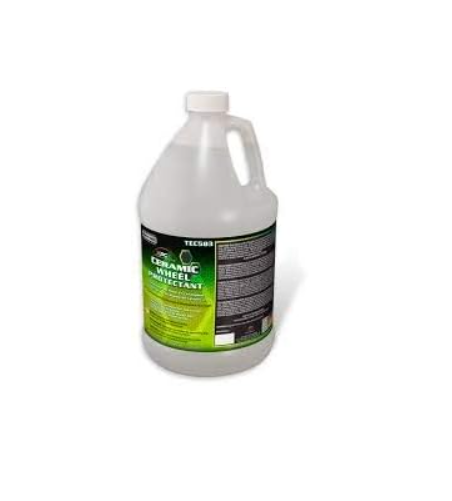
Ceramic Wheel Protector 1 Gallon from Polishing Systems Inc is the professional working-volume format for detail shops adding ceramic wheel protection to their service menu. A 1-gallon container at the active shop level covers a full month’s worth of ceramic wheel coating applications at moderate throughput — enough product to offer the service without managing a larger drum or pail.
What Ceramic Wheel Protectant Is
This is a SiO2-based ceramic wheel coating that bonds to alloy, painted, and powder-coated wheel surfaces to create a semi-permanent hydrophobic and heat-resistant protective layer. It is distinct from wheel wax (which washes off quickly) and wheel sealant (which lasts 3-6 months) — the ceramic chemistry provides measurably longer protection and better resistance to the heat cycles wheels experience during braking.
Key Features and Why They Matter
- SiO2 ceramic chemistry — cross-linked silica matrix on the wheel surface. Hydrophobic, heat-resistant, and significantly harder than wax or sealant. Brake dust does not bond as readily to the coated surface.
- Heat tolerance — wheels reach high temperatures during braking. Traditional waxes melt and migrate off the wheel face; ceramic chemistry maintains integrity at typical wheel operating temperatures.
- Hydrophobic surface — water and brake dust runoff bead and sheet off coated wheels, reducing the frequency of deep cleaning needed.
- Works on alloy, aluminum, painted, and powder-coated wheels — covers all common wheel finish types.
What This Product Is NOT For
Do not apply Ceramic Wheel Protectant to chrome-plated wheels — ceramic coatings may not bond properly to chrome and can affect the finish appearance. Not for use on raw, unfinished brake rotors or brake calipers that contact brake fluid. Wheels must be completely clean and dry before application — applying over brake dust or contamination prevents proper bonding and reduces protection duration.
Who Uses This
Detail shops performing ceramic wheel protection on 4-15 vehicles per month. Mobile detailers who have moved past the 32 oz spray bottle and need the lower per-application cost of a gallon format. Fleet operations applying wheel protection to moderate vehicle volumes. Body shops and reconditioning centers protecting freshly refinished wheels before delivery.
How to Apply
- Wash and decontaminate wheels with Brake Dust Buster or iron remover. Remove all contamination before coating.
- Rinse and dry wheels completely. No moisture on the surface at application time.
- Decant a working amount into a spray bottle or applicator bottle.
- Apply an even thin coat to one wheel, spreading with a foam applicator.
- Flash 2-5 minutes, then wipe off excess with a clean microfiber towel.
- Allow full cure 30-60 minutes before vehicle use.
Why Buy 1 Gallon vs. Smaller Sizes
The 1-gallon format delivers the professional working volume that makes ceramic wheel protection economically viable as a regular service add-on. The per-wheel-set cost from a gallon is significantly lower than from a 32 oz bottle. For shops doing more than 20 wheel sets per month, move up to the 5-gallon bulk pail.
Frequently Asked Questions
How many wheel sets does 1 gallon cover?
Approximately 12-20 passenger vehicle wheel sets at standard application rates. Wheel size, spoke complexity, and application method all affect exact coverage. Larger wheels and more complex spoke patterns use more product per set.
How long does the ceramic protection last on wheels?
6-18 months under typical daily driving and regular maintenance washing with a pH-neutral wheel cleaner. Performance vehicles or those in heavy brake-dust environments may need reapplication at the shorter end of that range.
Does this need to be applied in a controlled environment?
Clean, dry conditions are important — avoid application in rain, high humidity, or freezing temperatures. A shop bay or garage environment is preferred. Direct sunlight on hot wheels shortens the flash and wipe-off window, increasing the risk of high spots.
Is this compatible with the Ceramic Wheel Protectant 32 oz?
Yes — same chemistry, different container. The 1-gallon and 32 oz versions are the same product at different working volumes. You can top off a spray bottle from the 1-gallon container for the spray application convenience of the smaller format.