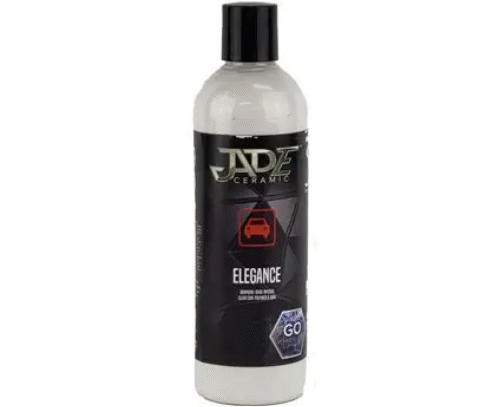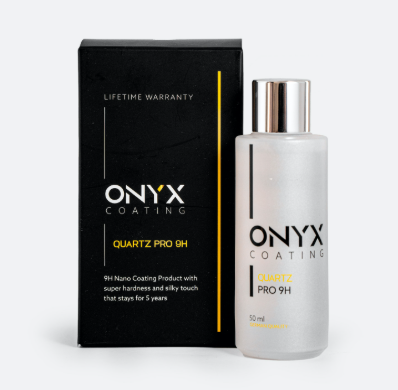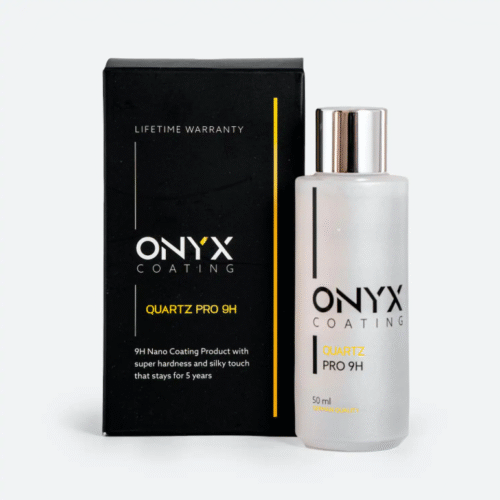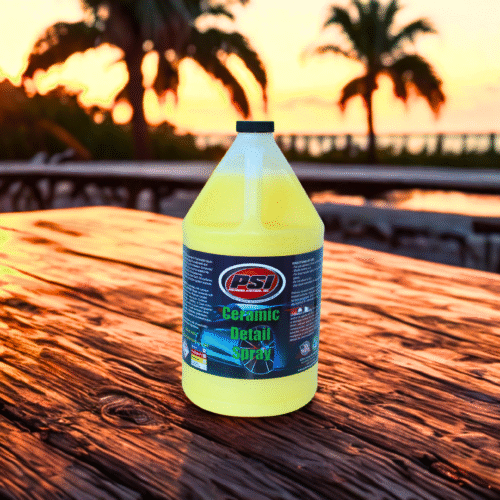
Wax and traditional paint sealants have a defined ceiling. They sit on top of the paint, they are soft, and they wash off over months of exposure. A vehicle that comes out of a detailing shop protected with wax will look noticeably different six months later than one that was ceramic coated — not because the wax failed, but because that is simply the nature of sacrificial protection products. Ceramic coating operates on a different level entirely: it bonds chemically to the clear coat rather than sitting on top of it.
This Professional Ceramic Coating creates a semi-permanent protective layer using silica (SiO2) chemistry that cross-links to the paint surface on cure. The result is a hardened, hydrophobic shell that repels water, bonds contamination less readily, resists light chemical exposure, and maintains gloss for years rather than months. It is the protection product used by detailers who want their work to last.
What This Ceramic Coating Is
This is a professional-grade SiO2-based ceramic coating for automotive and marine painted surfaces. It requires clean, polished, properly decontaminated paint for application — any imperfections present at coating time will be locked in. Once cured, it produces a hard, hydrophobic, high-gloss protective layer that is significantly more durable than wax, paint sealant, or spray ceramic products.
Key Features and Why They Matter
- Chemical bonding to clear coat — the coating bonds to the paint surface rather than sitting on top. So what? It does not wash off in the first rain or degrade as quickly as surface-sitting wax products.
- Hydrophobic water-beading surface — water sheets and beads sharply on coated paint. So what? Contaminants, minerals, and water spots have less opportunity to bond, making maintenance washes faster and easier.
- UV resistance — the hardened coating layer slows UV degradation of the clear coat underneath. So what? Paint stays brighter and more vibrant longer, particularly important for vehicles stored outdoors in high-sun environments.
- High gloss depth — ceramic coatings produce a wet, deep reflective gloss on polished paint. So what? The visual result is what clients pay for — a level of clarity and depth that wax cannot replicate.
- Professional-application formula — designed for detailers who prep surfaces correctly and apply coatings under controlled conditions. So what? Better adhesion and longer-lasting results than consumer spray coatings applied without proper prep.
What This Is NOT For
Ceramic coating must not be applied over contaminated, unpolished, or waxed paint. Any swirls, scratches, or oxidation present at coating time are locked in permanently. Do not apply in direct sun, on hot panels, or in dusty environments. Do not use on plastic trim, rubber seals, or glass without verifying compatibility. Proper surface preparation — clay bar, paint correction, IPA panel wipe — is mandatory for professional results. This is a professional-application product; improper application produces high-spots that require correction.
Who Uses This
Certified and independent ceramic coating installers. Professional detail shops offering paint protection packages. Enthusiast owners with the preparation skills to apply coating correctly in a controlled environment. Marine detailers protecting gel coat on vessels that sit in sun and saltwater environments year-round.
How to Use
- Decontaminate: Wash, clay bar, and iron-decontaminate the surface.
- Correct: Address any paint defects through paint correction — swirls, scratches, and oxidation must be removed before coating.
- IPA wipe: Wipe all panels with isopropyl alcohol to remove polishing oils and residue.
- Apply coating: Work in sections (18×18 inches or smaller). Apply to suede applicator, spread in crosshatch pattern.
- Flash and level: After flashing (product goes rainbow/hazy), level with a clean microfiber.
- Cure: Allow full cure time per product spec before water or rain contact.
Why Ceramic Coating vs. Paint Sealant
Paint sealants are polymer-based products that last 6-12 months in good conditions. Professional ceramic coatings, properly applied, deliver 2-5 years of protection at professional-grade hardness and hydrophobicity. The durability difference means fewer reapplications, lower total maintenance cost over the vehicle’s life, and a consistently better-looking result. For a complete range of ceramic coatings and maintenance products, browse the Ceramic category at Polishing Systems Inc.
Frequently Asked Questions
Do I need to polish the paint before applying ceramic coating?
Yes — this is mandatory for professional results. Any imperfection in the paint at coating time is permanently locked in. Complete all paint correction work, then perform a final IPA panel wipe before coating application.
How long does ceramic coating last?
Professional-grade coatings properly applied and maintained typically last 2-5 years. Consumer spray ceramic products last 3-12 months. Coating longevity depends on preparation quality, application technique, exposure conditions, and maintenance wash practices.
Can ceramic coating be applied in a garage at home?
Application requires a dust-free, climate-controlled environment with controlled temperature and humidity. A clean, enclosed garage with good lighting is workable for experienced applicators. Dusty environments or extreme temperatures compromise results.
Does ceramic coating prevent all scratches?
Ceramic coatings increase surface hardness and improve scratch resistance compared to unprotected paint. They do not prevent rock chips or deep scratches. For physical impact protection, paint protection film (PPF) is the appropriate product.
What maintenance does ceramic-coated paint require?
Coated paint should be washed with a pH-neutral ceramic-safe car wash soap. Avoid wax or sealant toppers that are not ceramic-compatible. Annual or bi-annual inspection and boost coating application maintains the protective layer at maximum performance.