
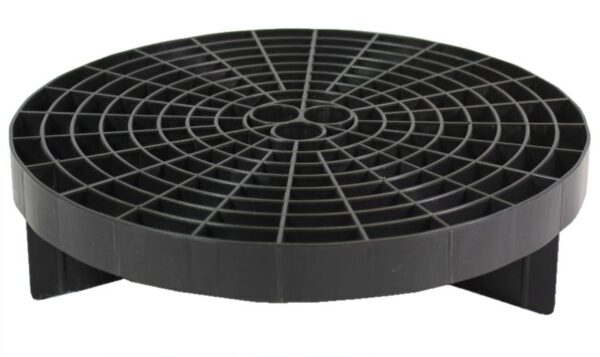
The most common cause of wash-induced swirl marks is not the car wash soap, the mitt, or the wash technique — it is the grit that gets into the wash water and makes it back onto the paint on the next pass. Every time you rinse a mitt in a contaminated bucket and put it back on the paint, you are dragging the grit from the last panel across the next one. A dirt trap grate addresses exactly this problem.
The Bucket Grate sits in the bottom of the rinse bucket in a two-bucket wash system. When you rinse your wash mitt by agitating it against the grate, the dirt and grit is captured below the grate surface and stays there. The clean water above the grate is what your mitt goes back into — not the settled contamination at the bottom. Simple, effective, and genuinely protective of your paint.
What the Bucket Grate Is
The Bucket Grate is a ribbed plastic insert that sits at the bottom of a standard 5-gallon bucket, creating a physical barrier between settled dirt and the rinse water above it. When a wash mitt is pressed against the grate and twisted, grit releases from the mitt fibers, falls below the grate, and is trapped there. Compatible with standard 5-gallon bucket profiles.
Key Features and Why They Matter
- Ribbed grate surface — provides agitation points for pressing mitt fibers against the surface to release embedded grit. So what? Your mitt rinse is more effective because grit is physically displaced, not just floated off.
- Below-waterline dirt trap — captures grit and sand below the grate so settled contamination cannot resurface into the rinse water with normal bucket movement or mitt agitation.
- Fits standard 5-gallon buckets — compatible with common 5-gallon detailing bucket profiles for easy integration into your existing wash setup.
- Low-profile design — sits at the bottom of the bucket without reducing usable water volume significantly.
What This Is NOT For
The Bucket Grate is a rinse bucket insert — it is not a wash bucket accessory. It belongs in the rinse bucket of a two-bucket wash setup, where its dirt-trapping function protects the rinse water quality. Using it in the wash soap bucket is not harmful, but it does not serve a meaningful protective function there.
Who Uses This
Any detailer running a two-bucket wash process should have a Bucket Grate in the rinse bucket. Car enthusiasts who have invested in paint correction or ceramic coating have the most to protect. Mobile detailers and professional detail shops use bucket grates as a standard part of every wash station setup. Pair with a 5 Gallon Bucket and Bucket Dolly for a complete ergonomic two-bucket wash station.
How to Use the Bucket Grate
- Place the Bucket Grate in the bottom of your rinse bucket before filling.
- Fill with clean rinse water — the grate sits on the bucket floor.
- After each wash panel, bring your mitt to the rinse bucket and agitate it against the grate surface to release embedded grit.
- Wring the mitt out and return to the wash soap bucket for the next pass.
- The grit falls through the grate and settles below it, away from the water your mitt contacts on the next rinse.
Why Buy a Bucket Grate vs. Washing Without One
Without a grate, the grit and sand your mitt picks up from the paint settles at the bottom of the rinse bucket and is stirred back up every time you agitate the mitt. Over the course of a wash session, your rinse water becomes a grit suspension that recontaminates the mitt. The Bucket Grate physically prevents that contamination cycle for under $15 — a straightforward trade for any detailer serious about swirl-free paint.
Frequently Asked Questions
Does the Bucket Grate fit a standard Homer bucket from a hardware store?
The Bucket Grate is designed for standard 5-gallon bucket interior dimensions. Most common 5-gallon buckets from hardware stores and detailing suppliers use similar internal profiles. Verify the grate diameter against your specific bucket’s internal measurement if using a non-standard bucket.
Do I need a grate in both the wash bucket and the rinse bucket?
The grate’s primary value is in the rinse bucket, where it traps the grit your mitt picks up from the paint before the mitt goes back to the wash soap. A second grate in the wash bucket is not harmful but does not serve a critical protective function in that position.
How do I clean the Bucket Grate after a wash session?
Rinse the grate with a hose to clear loose grit and soap residue. For heavy buildup, scrub with a dedicated cleaning brush. Allow to air dry before storage. Inspect periodically for cracks or warping that could affect fit in the bucket.
Will the Bucket Grate prevent all swirl marks?
The Bucket Grate eliminates the rinse water contamination cycle that causes wash-induced swirls. Swirl marks from other sources — worn mitt fibers, dirty wash media, incorrect technique, or drying with contaminated towels — require their own solutions. The grate is one component of a complete swirl-prevention wash process.
Is the Bucket Grate compatible with the Bucket Dolly?
Yes — the Bucket Grate sits inside the bucket, and the bucket sits on the Bucket Dolly. They are fully compatible and work together as part of a complete two-bucket wash station setup.